Impressionism

The Painter and the Camera

In The Annotated Mona Lisa, Carol Strickland positions her chapter on the French Impressionists immediately after a section in early photography. While she doesn’t discuss the influence of photography on the Impressionists in particular, several recent museum exhibits have done just that, arguing for “the crucial role of early photography in inspiring [not only] Impressionist iconography, but also, and more emphatically, Impressionist style and particularly its strategies of asymmetry, cropping and the blurring of motion” (source).

Reading:

  • Strickland, pp 92-96, 99-103, 106, 108.
  • Elena Martinique, “How Did Photography Influence The Impressionists?” (link).

Viewing 1, some representative Impressionists:
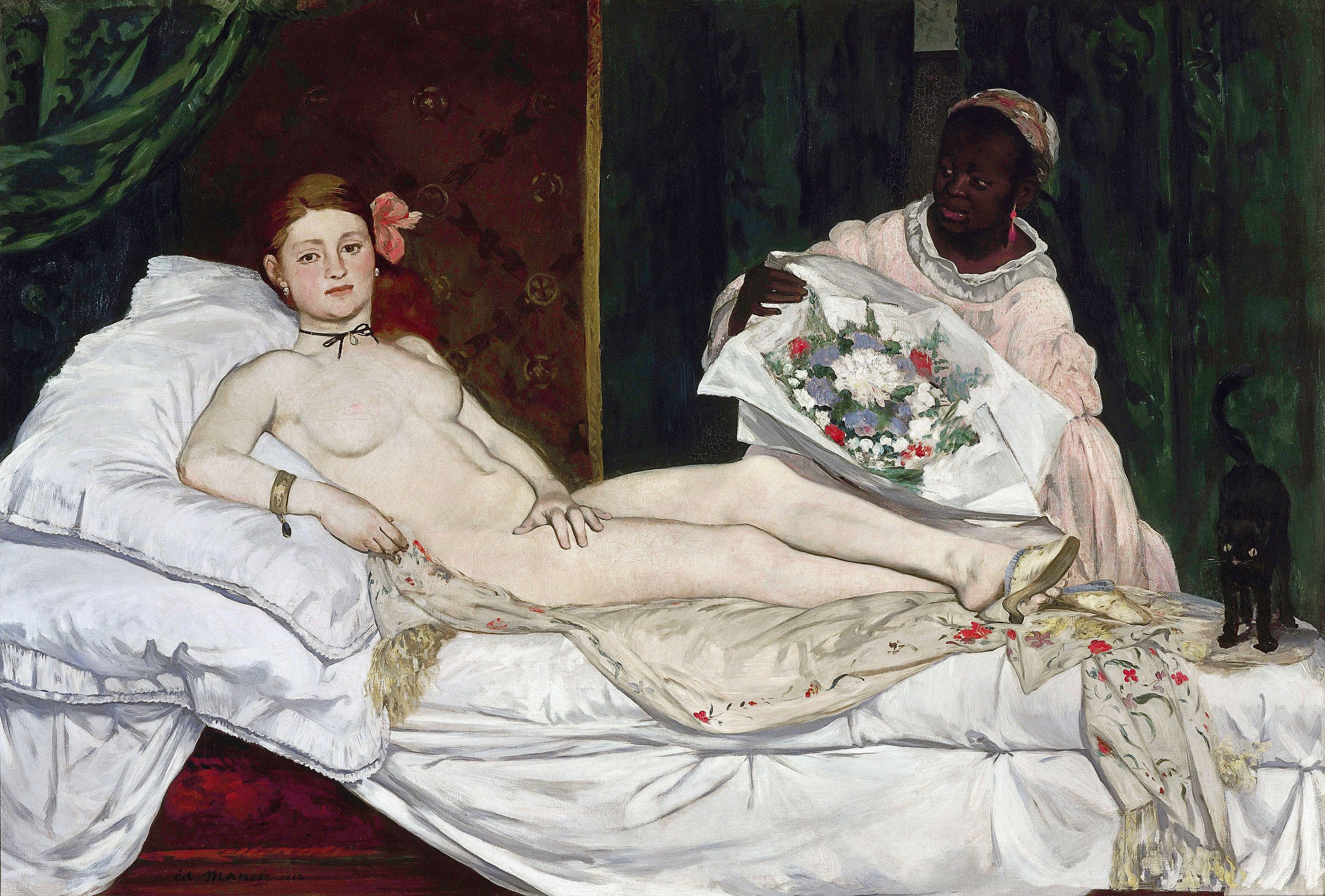
  • Édouard Manet, Olympia (1863)
  • Édouard Manet, Un bar aux Folies Bergère (1882)
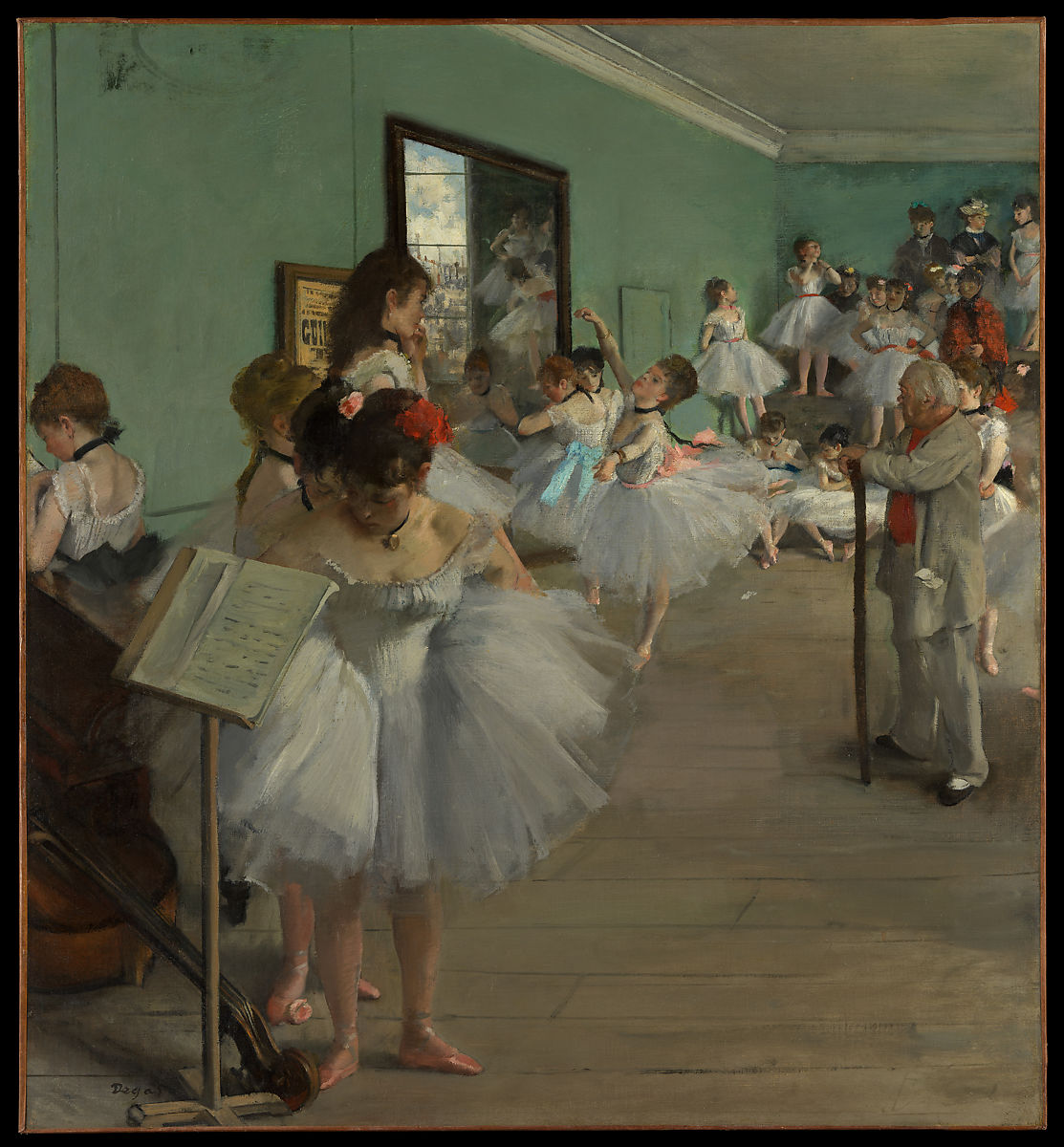
  • Edgar Degas, The Dance Class (1874)
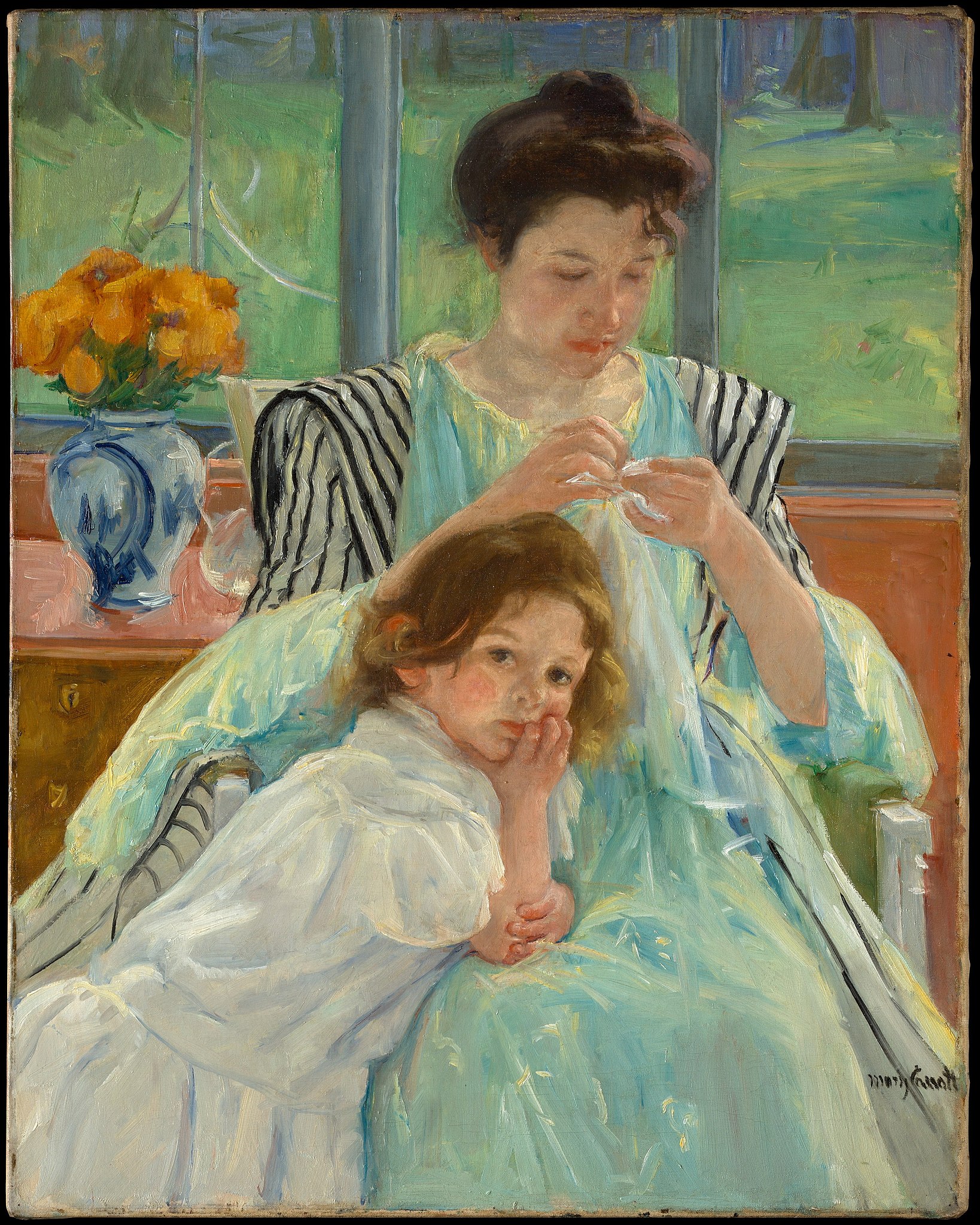
  • Mary Cassatt, Young Mother Sewing (1893)

Viewing 2, a close study of Claude Monet’s Houses of Parliament (1899-1904):

Monet created this exquisite series during a series of visits to London. Fascinated with the city’s fog and other atmospherics, he positioned himself across the river, in front of St. Thomas’ Hospital. The paintings were begun on site, then completed at his home in Giverny with the aid of photographs. A 2006 study published in the Proceedings of the Royal Society showed that the paintings are sufficiently accurate as to provide a useful empirical record of London’s fogs—a phenomenon caused by urban pollution and consigned to history following the passage of environmental legislation in 1956 (source).

Writing: Respond to ONE of the following prompts. Keep your response short, posting as a reply under the appropriate heading in the comments section:

  1. Point to a stylistic or thematic pattern you see in some or all of these paintings.
  2. Point to a striking detail in one particular painting.
  3. Point to a painting that strikes you as betraying the influence of photography’s “way of seeing.”

Victorian Sensuality

Love and Death

While the Victorians have a well-deserved reputation for sexual prudery, their poetry and art are often suffused with sensuality—yet a sensuality mixed with thoughts of death and the grave.

Reading: Three Poems: note that Keats dates two decades before Victoria’s reign (1837-1901). His widely popular poem can be seen as setting a trend followed by later writers and artists.

Viewing: four Pre-Raphaelite paintings:

  • William Holman Hunt, The Lady of Shalott (1888-1905)
  • John William Waterhouse, The Lady of Shalott (1888)
  • John Everett Millais, Ophelia (1851)
  • Dante Gabriel Rossetti, Lady Lilith (1866-68)

Note: if you’re unfamiliar with the legend of Lilith or with the role of Ophelia in Hamlet, take a moment to google those names.

Writing: Respond to ONE of the following prompts. Keep your response short, posting as a reply under the appropriate heading in the comments section:

  1. Call our attention to a particularly moving line or visual detail from one these paintings or poems.
  2. At the end of Part II, the Lady of Shalott declares “I am half sick of shadows.” Unfold the significance of this key line.
  3. It’s hard not to come away from Rossetti’s “Goblin Market” identifying the goblins’ fruit with sexuality. What details in the poem help to create this association? On the other hand, what details in the poem complicate or undermine the association?

Empire and Commerce

Part 3: Commerce and Empire

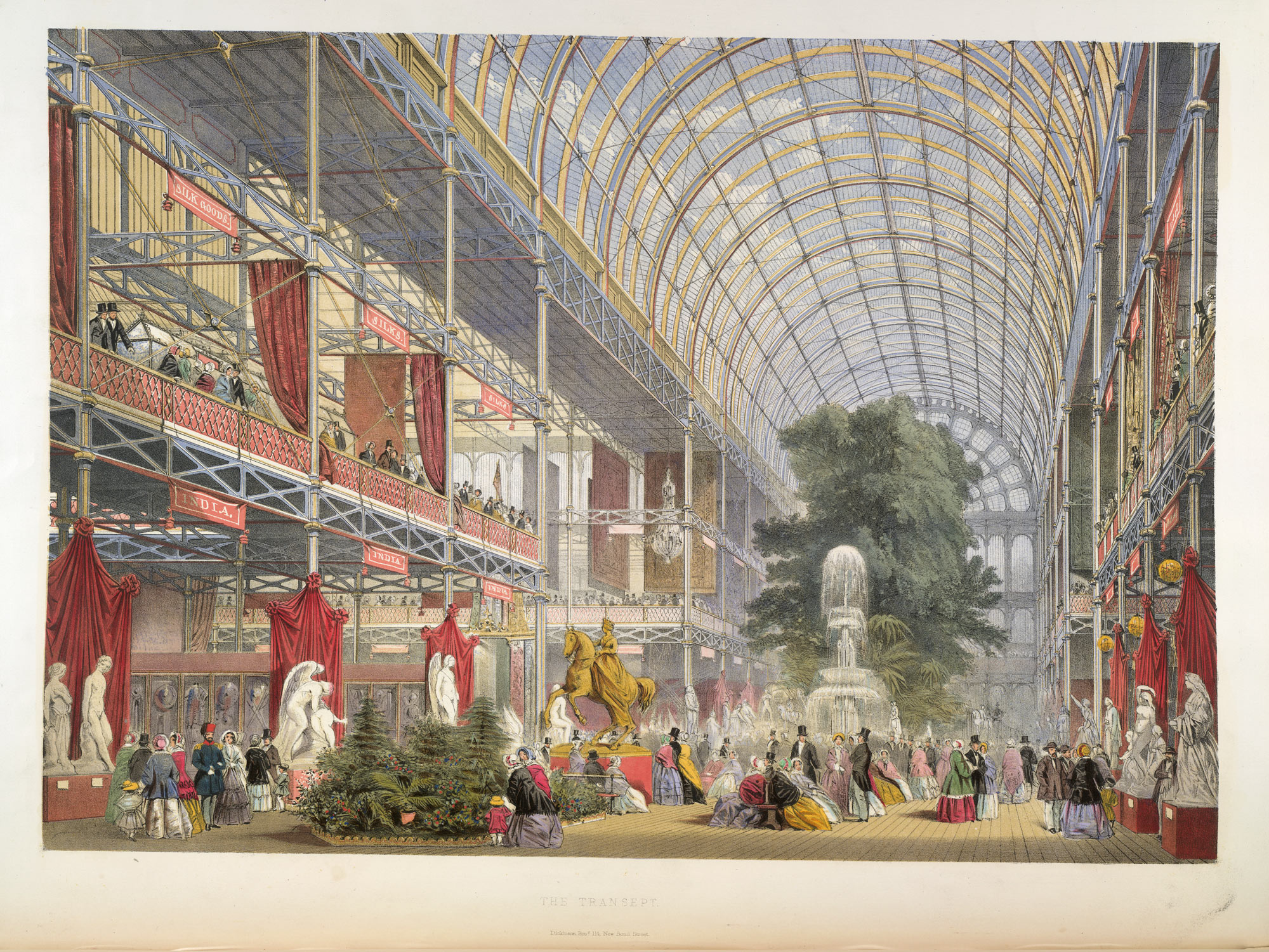
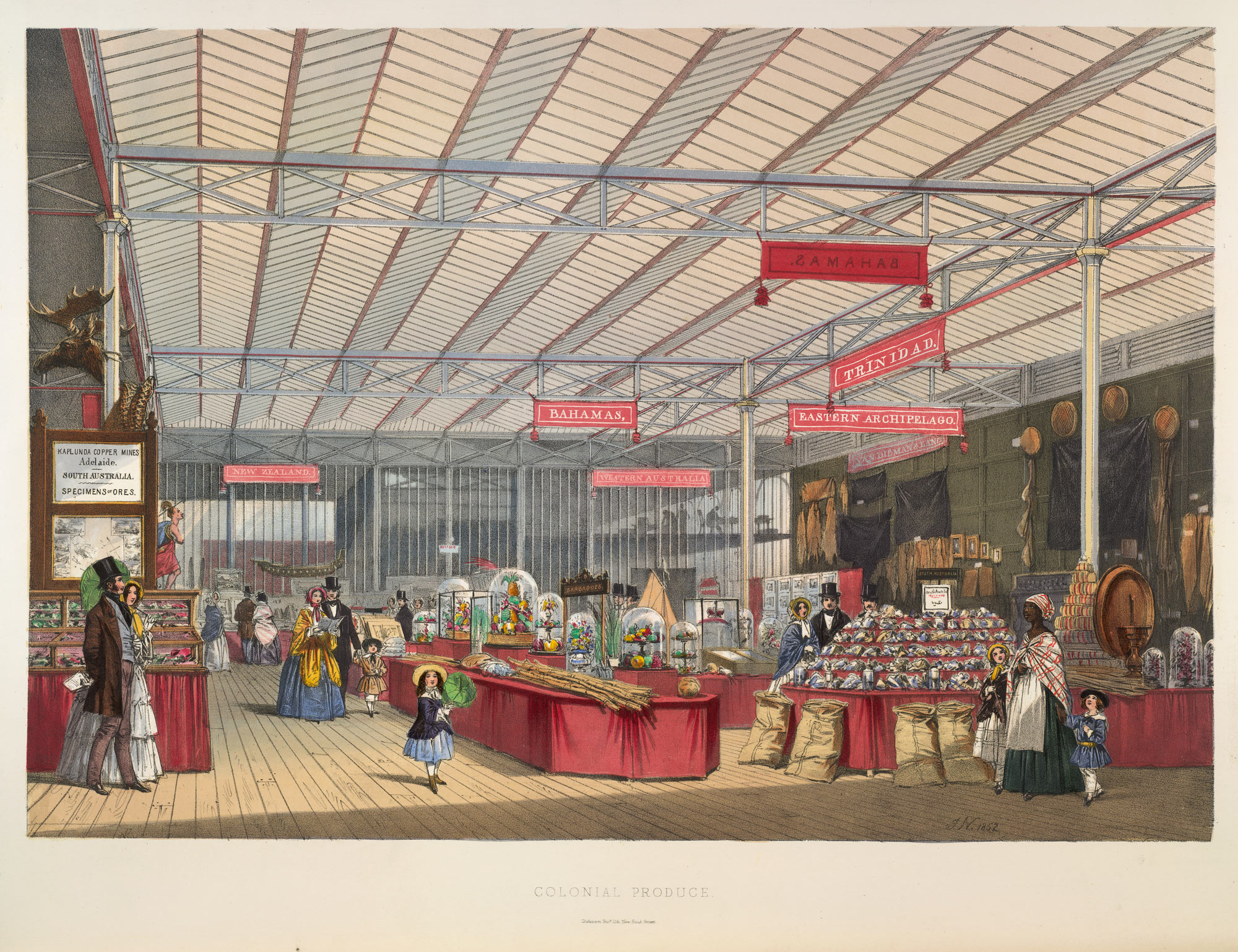
Whereas Victoria ruled over a rapidly expanding empire, her cousin Albert was the junior member of an obscure German noble house. When they married, the terms set by Parliament denied him any English title (though Victoria later proclaimed him “Prince Consort”). Yet Albert proved adept in the use of soft power, campaigning for liberal causes like free trade, educational reform, the end of child labor, and the worldwide abolition of slavery. These passions came together in his plan for the Great Exhibition of 1851, which brought together goods and technologies from around the world in a vast “Crystal Palace.”

Viewing: Period Images of the Crystal Palace

Credits:

  • Opening Ceremony: Eugene-Louis Lami, watercolor 1851 (link).
  • Interior 2: J McNeven, print 1851 (link)
  • Remaining images: Hague, Nash and Roberts, illustrated book (link)

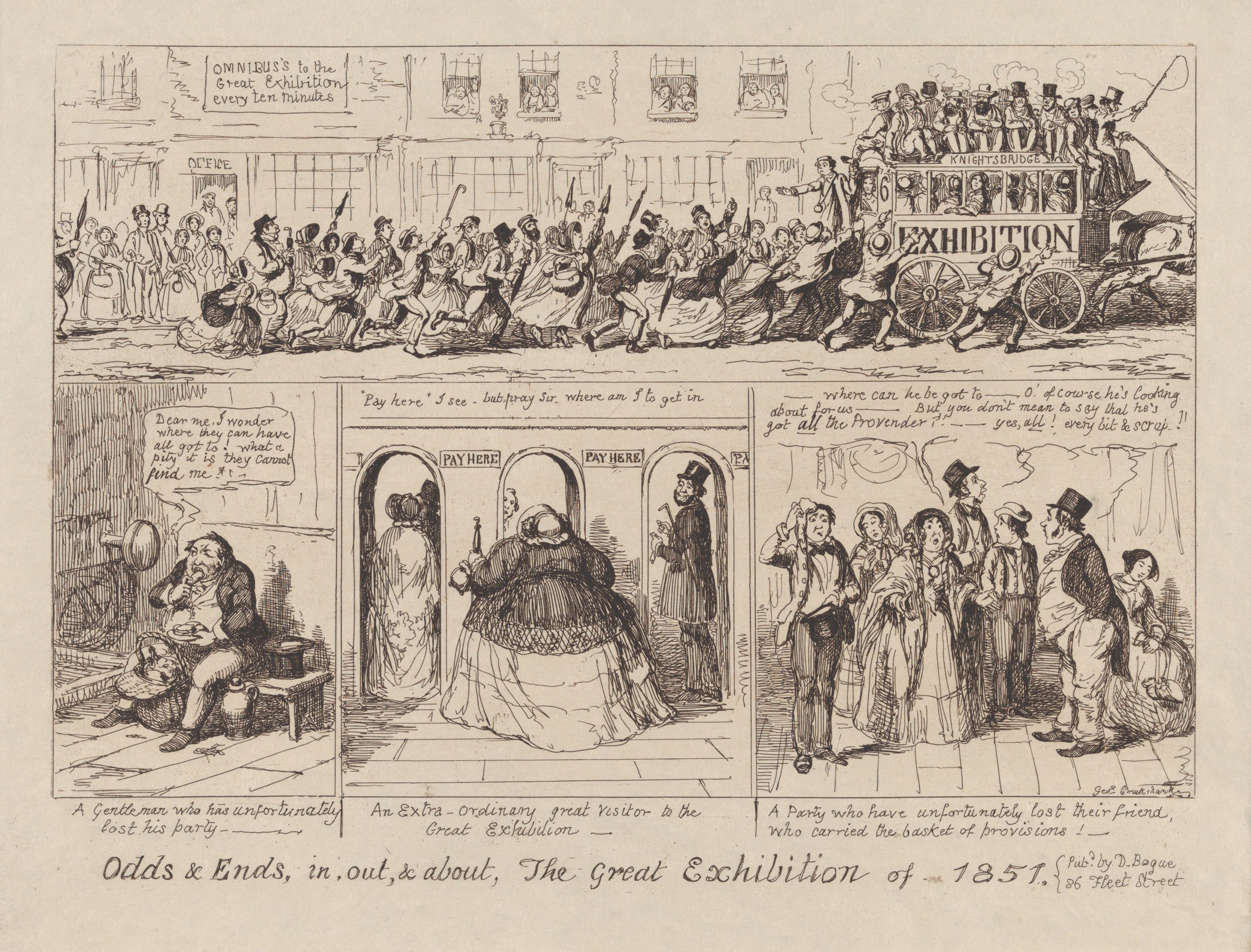
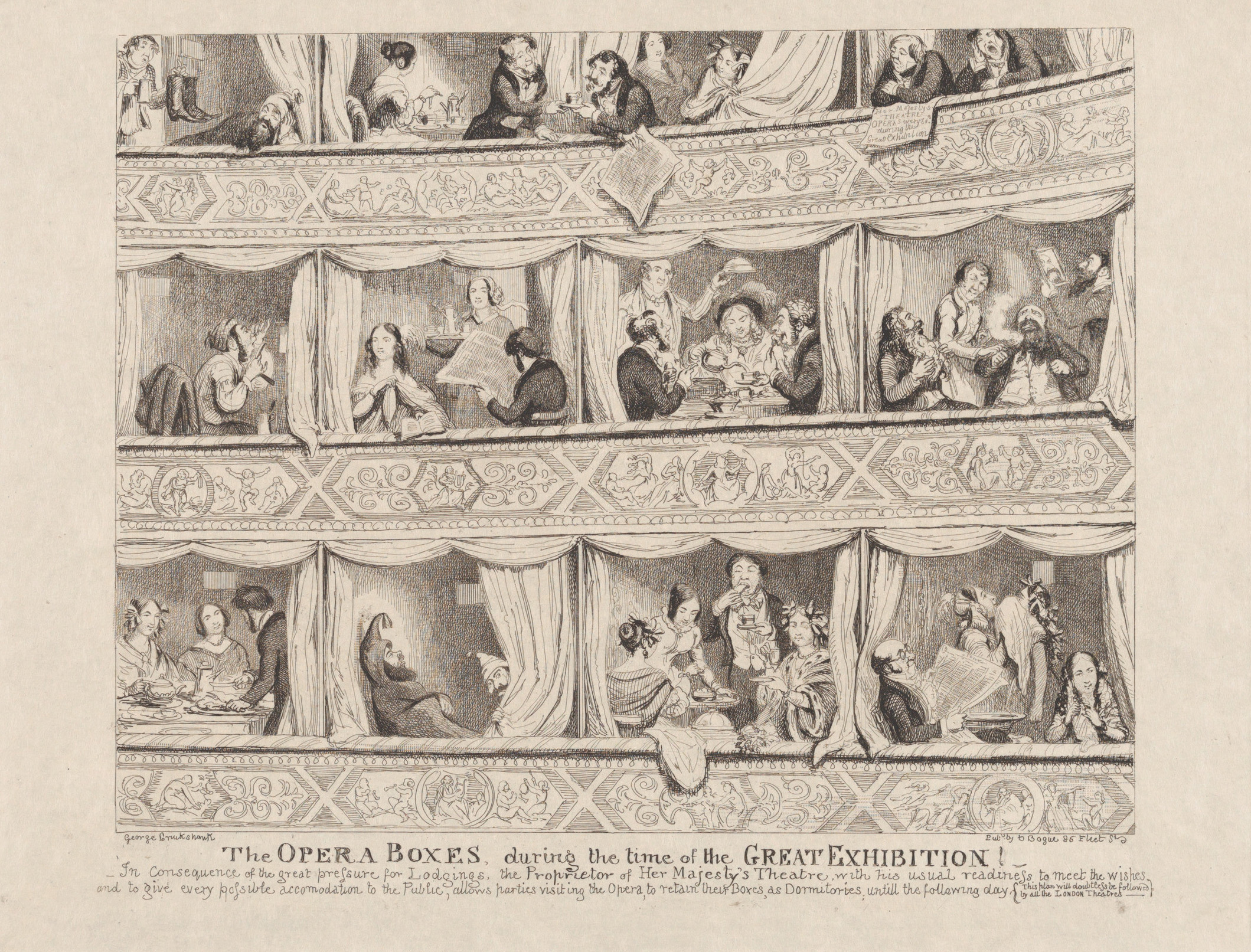
Viewing: Period Cartoons

Credit: George Cruikshank, 1851 (link).

Writing

  1. How did the Great Exhibition represent non-European cultures and peoples? Focus our attention on a particular detail from one of the images.
  2. What can you learn from the cartoons about public attitudes toward the Exhibition—or perhaps the larger world?
  3. How does this Exhibition compare to modern-day versions, such as Disney’s Epcot Center?

Musée des Beaux Arts

W.H.Auden, “Musée des Beaux Arts”

Auden wrote this short poem in 1938, after a visit to the Royal Museum of Fine Arts in Belgium, inspired by its collection of paintings by the “Old Masters” of the Netherlandish Renaissance. The three paintings referenced in the poem are shown above: The Census at Bethlehem, The Massacre of the Innocents, and The Fall of Icarus. All are by Pieter Breughel the Elder and all date to the 1560s.

W.H.Auden
“Musée des Beaux Arts”

About suffering they were never wrong,
The Old Masters: how well they understood
Its human position; how it takes place
While someone else is eating or opening a window or just walking dully along;
How, when the aged are reverently, passionately waiting
For the miraculous birth, there always must be
Children who did not specially want it to happen, skating
On a pond at the edge of the wood:
They never forgot
That even the dreadful martyrdom must run its course
Anyhow in a corner, some untidy spot
Where the dogs go on with their doggy life and the torturer’s horse
Scratches its innocent behind on a tree.

In Breughel’s Icarus, for instance: how everything turns away
Quite leisurely from the disaster; the ploughman may
Have heard the splash, the forsaken cry,
But for him it was not an important failure; the sun shone
As it had to on the white legs disappearing into the green
Water; and the expensive delicate ship that must have seen
Something amazing, a boy falling out of the sky,
Had somewhere to get to and sailed calmly on.

Citation:

  • Auden, W. H. “Musée des Beaux Arts.” The Norton Anthology of Poetry, Third Ed. Edited by Alexander W. Allison, et al. W.W. Norton, 1983.

George the Poet

George the Poet, “The Benin Bronzes”

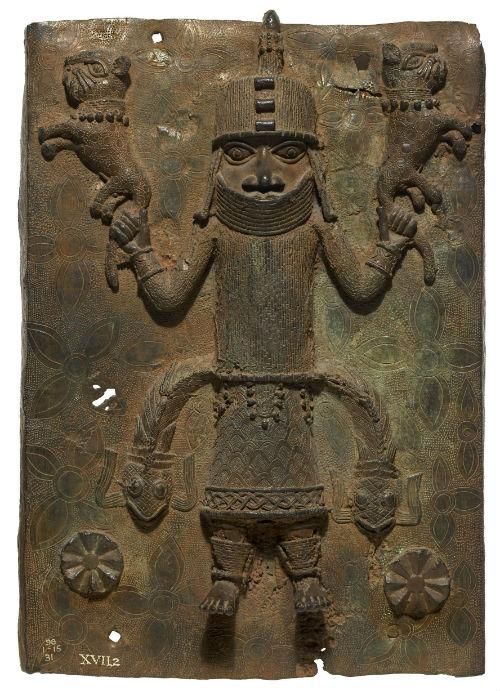
The Benin Bronzes were created for the Royal Court of Benin, an African kingdom that prospered through trade with the Portuguese and other Europeans from the 16th century onward. But in the late 19th century, at a time when the British had come to dominate the West African trade, tensions over the expanded European presence in Africa led to a bloody war and occupation. In the course of pillaging Benin city, these magnificent bronze artworks honoring the kings’ ancestral line were plundered. Many of them are now on display at the British Museum, though some are scattered in other museums around the world. The Nigerian National Commission for Museums and Monuments is in talks with the British Museum about repatriating these artifacts: details on this history and on the current status of negotiations here.

In 2015, as part of the Museum’s “Huge History Lesson” challenge, George the Poet produced the following piece.

Ozymandias

Shelley and Smith, “Ozymandias”

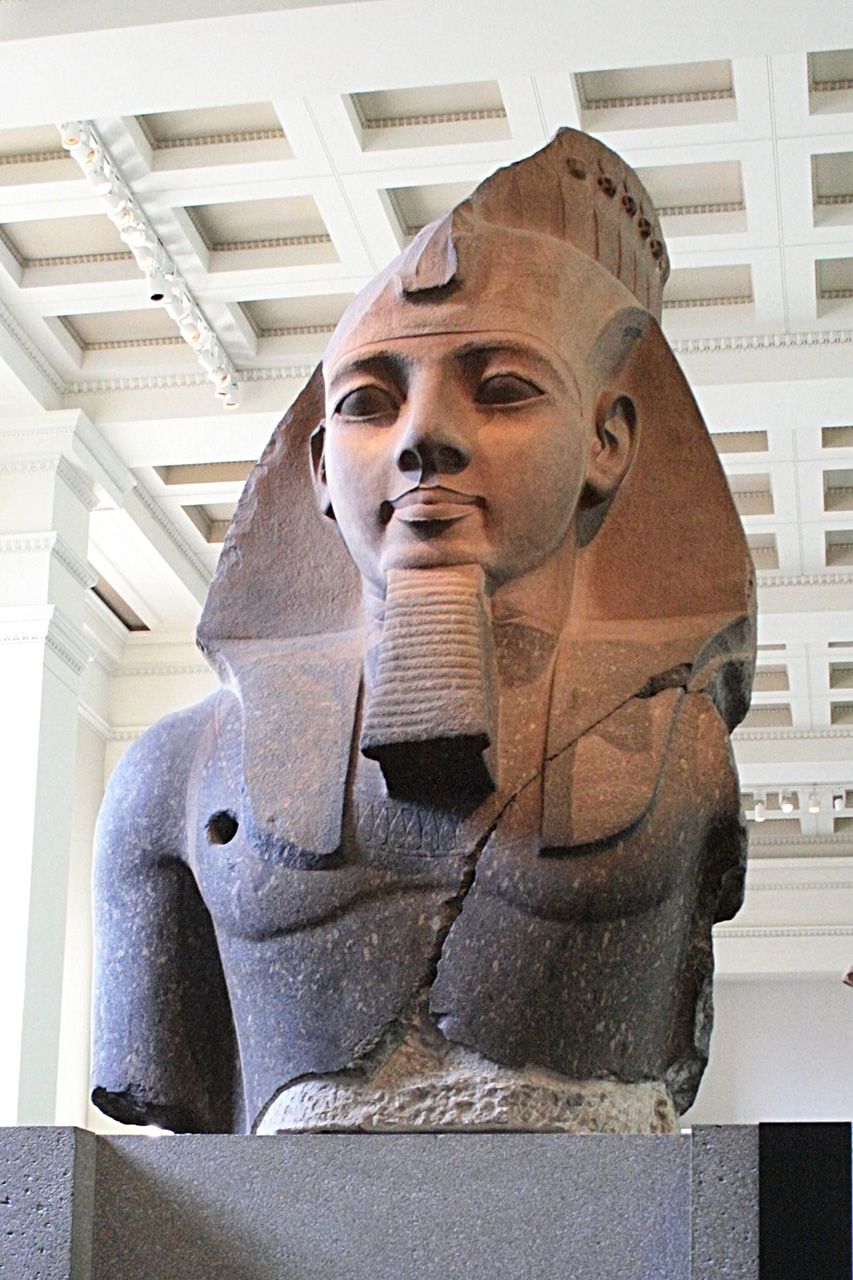
In December 1817, Horace Smith vacationed with Percy Bysshe Shelley and Mary Shelley (author of Frankenstein). During the holiday, news broke that a giant Egyptian bust of Ramesses II had been acquired for the British Museum by the Italian archaeologist Giovanni Belzoni. (Archaeology was then in its infancy: Belzoni, a former circus strong man, was less a scientist than a smash-and-grab antiques dealer; fifteen years earlier, Napoleon’s men had attempted to acquire the same sculpture for France, but it proved too bulky for extraction.) In a spirit of friendly rivalry Shelley and Smith agreed to write poems about Belzoni’s find, which at the time was just beginning the long voyage to London. Relying on written reports of the statue’s size, they drew also on the ancient Greek historian Diodorus Siculus, who described encountering a giant Egyptian statue with the inscription “King of Kings Ozymandias am I. If any want to know how great I am and where I lie, let him outdo me in my work.” (Note: Ozymandias is the Greek name for Ramesses.)

Percy Bysshe Shelley
Ozymandias

I met a traveller from an antique land
Who said: Two vast and trunkless legs of stone
Stand in the desart. Near them, on the sand,
Half sunk, a shattered visage lies, whose frown,
And wrinkled lip, and sneer of cold command,
Tell that its sculptor well those passions read
Which yet survive, stamped on these lifeless things,
The hand that mocked them and the heart that fed:
And on the pedestal these words appear:
“My name is Ozymandias, king of kings;
Look on my works, ye Mighty, and despair!”
Nothing beside remains. Round the decay
Of that colossal wreck, boundless and bare
The lone and level sands stretch far away.

Horace Smith
Ozymandias

In Egypt’s sandy silence, all alone,
Stands a gigantic Leg, which far off throws
The only shadow that the Desert knows:—
“I am great OZYMANDIAS,” saith the stone,
“The King of Kings; this mighty City shows
The wonders of my hand.”— The City’s gone,—
Naught but the Leg remaining to disclose
The site of this forgotten Babylon.
We wonder,—and some Hunter may express
Wonder like ours, when thro’ the wilderness
Where London stood, holding the Wolf in chace,
He meets some fragment huge, and stops to guess
What powerful but unrecorded race
Once dwelt in that annihilated place.

Citation:

  • Shelley, Percy Bysshe. “Ozymandias.” The Norton Anthology of Poetry, Third Ed. Edited by Alexander W. Allison, et al. W.W. Norton, 1983. p 619.
  • Smith, Horace. “Ozymandias.” Poem of the Week. potw.org/archive/potw192.html

Debating Museums

Museums and the Legacy of Imperialism

The Parthenon Marbles were transported to Britain over the course of a decade beginning in 1801 under the direction of Lord Elgin, Britain’s ambassador to the Ottoman Empire. The Parthenon had lain in ruins for over a century, many of the sculptures from its marble frieze fallen to the ground after the building was used to store gunpowder and then struck by a shell during a war. Elgin claimed to have received permission for the dig from local Ottoman officials, and his ownership was ratified by Parliament when it purchased them for the Crown, designating the British Museum as trustee on the condition that the collection be displayed as the “Elgin Marbles.”

The presence of the marbles in London has been a matter of international debate since 1983, when the Greek parliament formally requested their return. Pressure intensified in 2009, when Greece completed construction of an on-site museum, and again in the run-up to the 2012 Olympics in London. As detailed in a NYTimes article, “The debate has only deepened in recent years as the actions of old empires have come under new scrutiny, and restitution battles have come to challenge the foundations of Western museums” (link). Some of these battles involve ancient artifacts like the Rosetta Stone, which Egypt in 2003 requested to be returned. Others involve ritual objects taken from living cultures, as for example the Benin Bronzes.

Viewing: some famous acquisitions to the British Museum during the nineteenth century.

Reading: recent NYTimes coverage of museums and the legacy of 19th century imperialism.

Writing: Respond to ONE of the following prompts. Keep your response short, posting as a reply under the appropriate heading in the comments section:

  1. What do the four images included above suggest about public enthusiasm toward archaeology back in the nineteenth century? To put it another way, what emotions do these images evoke: wonder? national pride? something else? In your response, focus our attention on particular details in ONE or at most TWO of the images.
  2. Click over to the British Museum excursion (top right) and use the embedded links to examine some of the artifacts you’ll have a chance to see on your visit. Focusing on one artifact in particular, why is it important for objects like this one to be on public display? What positive cultural function do museums serve in today’s society?
  3. The articles linked above all challenge the claim of museums to being the ideal repository of cultural artifacts. Citing one article in particular, paraphrase the critique being levied against museums.