
Part 3: Commerce and Empire
Whereas Victoria ruled over a rapidly expanding empire, her cousin Albert was the junior member of an obscure German noble house. When they married, the terms set by Parliament denied him any English title (though Victoria later proclaimed him “Prince Consort”). Yet Albert proved adept in the use of soft power, campaigning for liberal causes like free trade, educational reform, the end of child labor, and the worldwide abolition of slavery. These passions came together in his plan for the Great Exhibition of 1851, which brought together goods and technologies from around the world in a vast “Crystal Palace.”
Viewing: Period Images of the Crystal Palace
-

- Exterior

-

- Opening Ceremony

-

- Interior
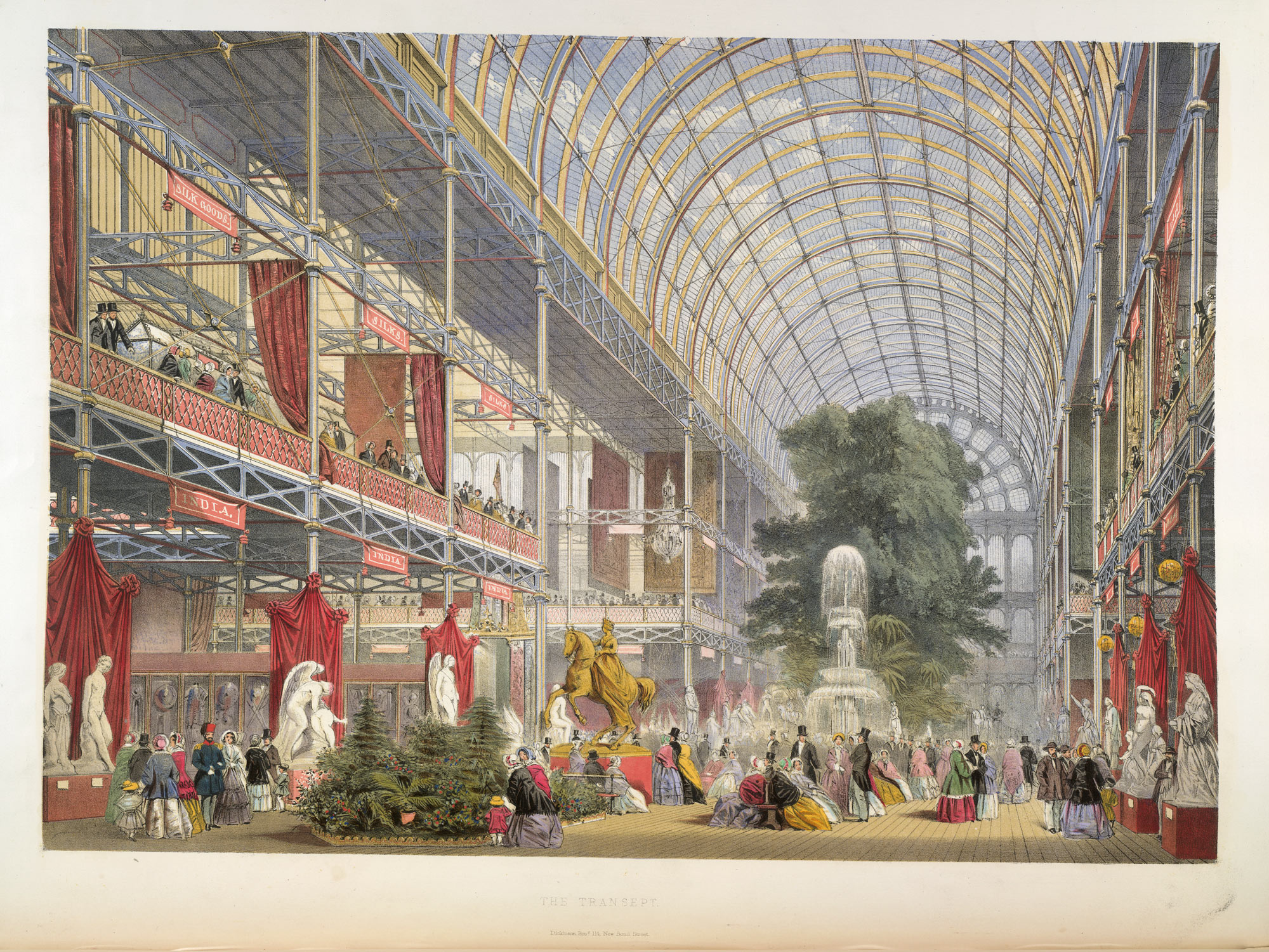
-

- Interior 2

-

- India

-

- Turkey

-

- Colonial Produce
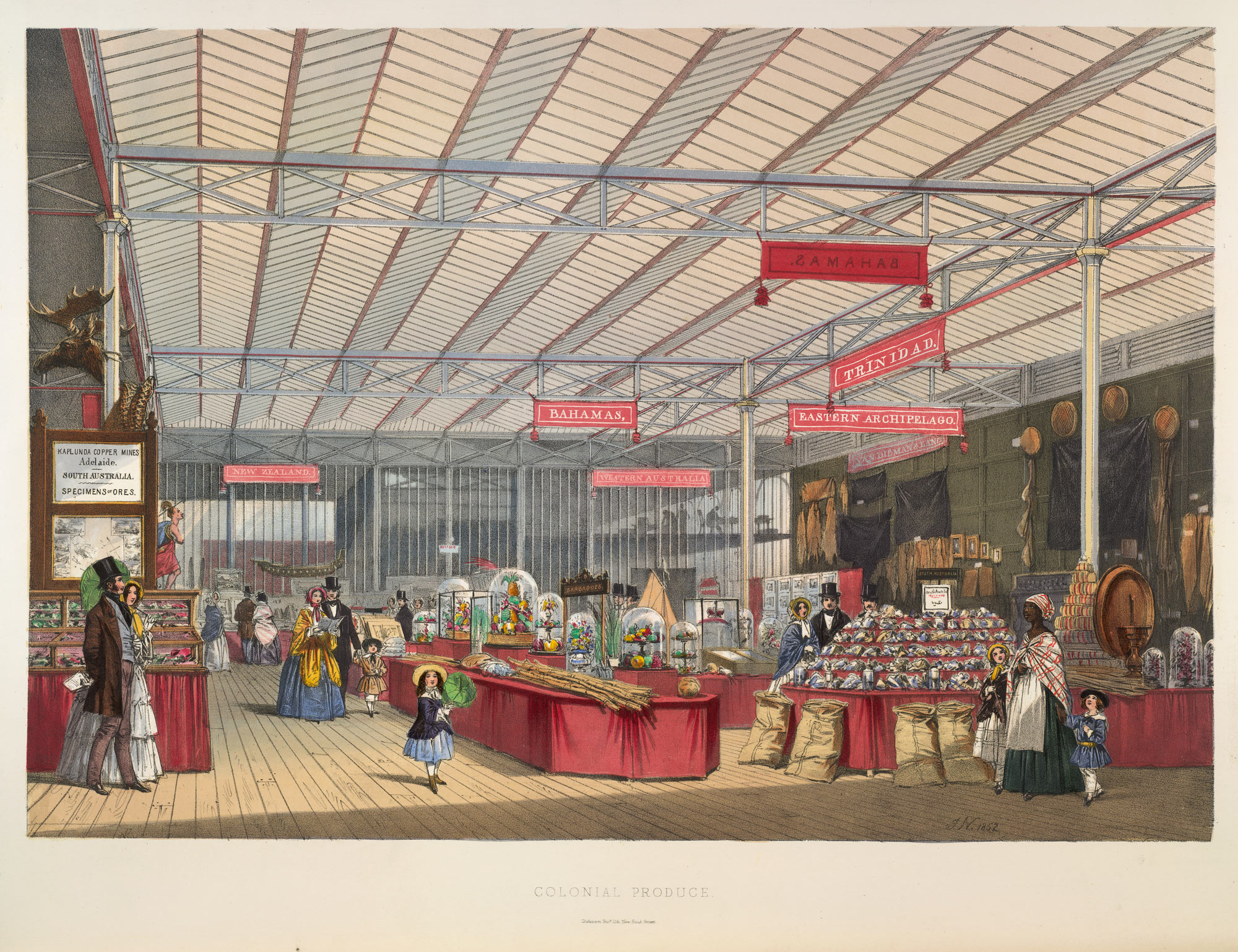
-
- Manufacturing

Credits:
Viewing: Period Cartoons
-

- All the World …

-

- Odds and Ends …
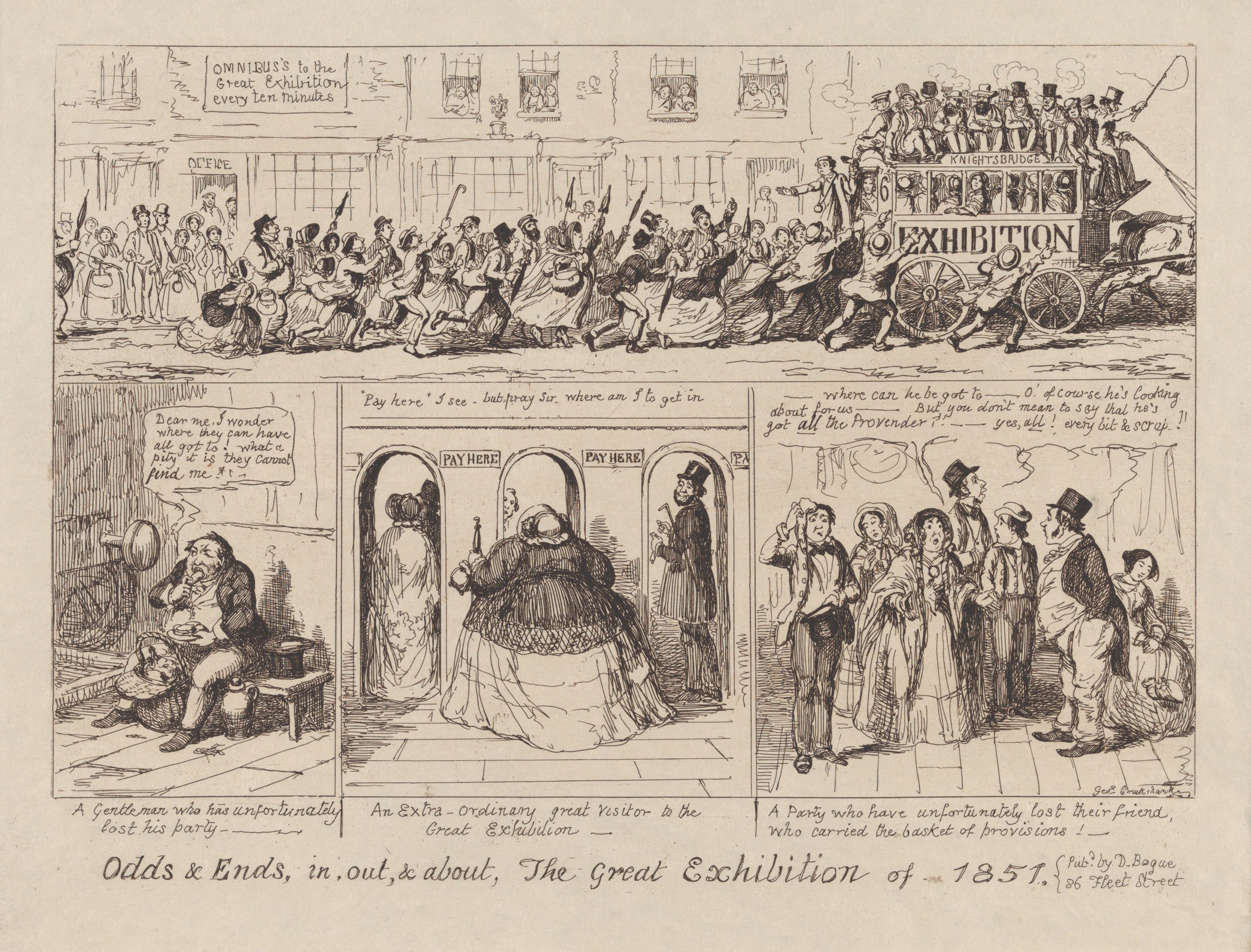
-
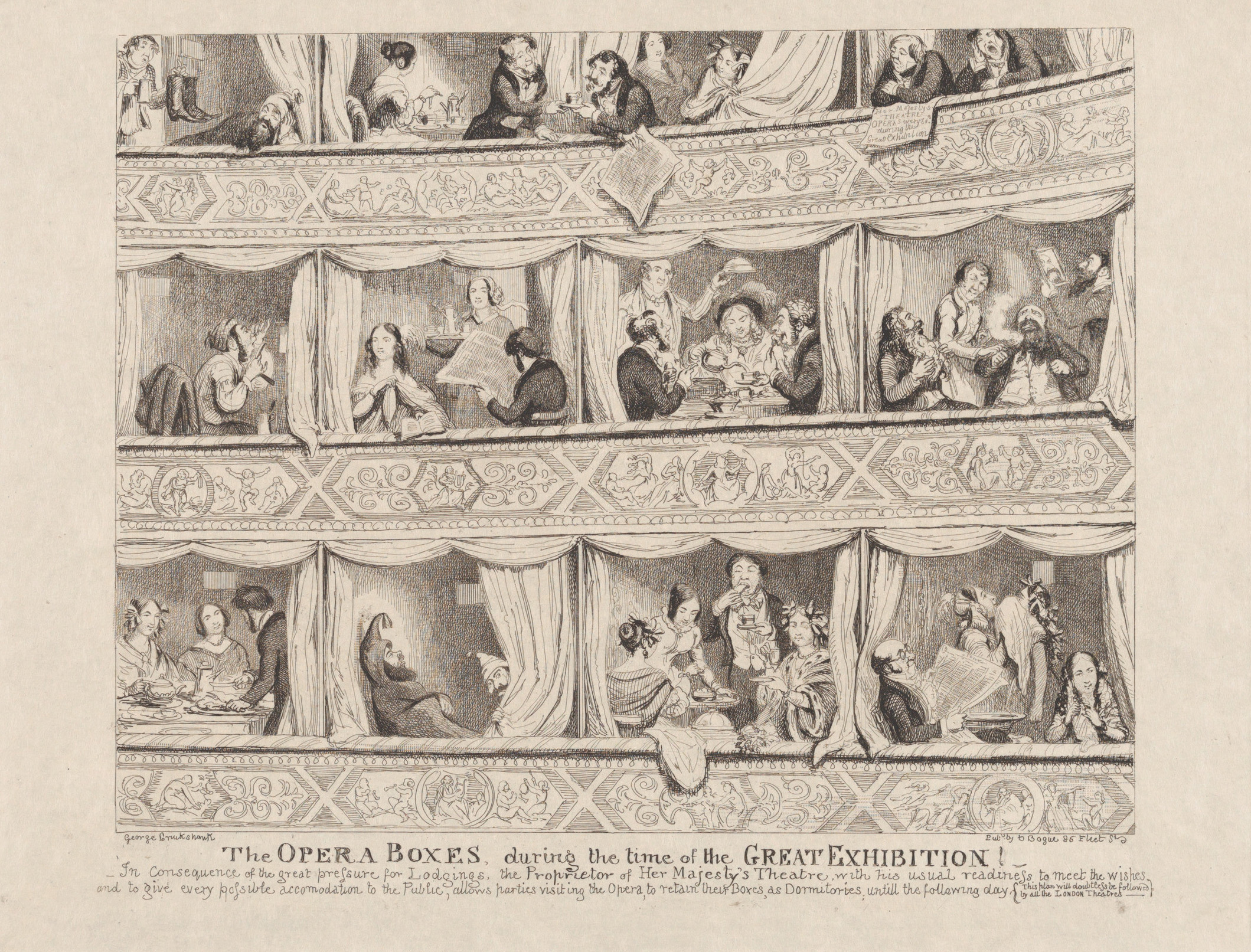
- The Opera Boxes …
-

- Dispersion …

Credit: George Cruikshank, 1851 (link).
Writing
- How did the Great Exhibition represent non-European cultures and peoples? Focus our attention on a particular detail from one of the images.
- What can you learn from the cartoons about public attitudes toward the Exhibition—or perhaps the larger world?
- How does this Exhibition compare to modern-day versions, such as Disney’s Epcot Center?