Postwar American Art

Art in America After the War

New York became the art capital of the world after World War II. In the run-up to the war, artists of the avant-garde fled Europe for the safety of America. But the shift also reflected America’s rise in the world, not to mention the confidence of its often experimental artists.

Abstract Expressionism

Reading: Strickland, pp 158-161, 166.

Reading: Alastair Sooke, “Was modern art a weapon of the CIA?” BBC.com, Oct 4, 2016.

Viewing: examples of Abstract Expressionism:

  • Willem de Kooning, Woman/Verso: Untitled (1948)
  • Jackson Pollock, One: Number 31 (1950) (check out this brief MOMA video)
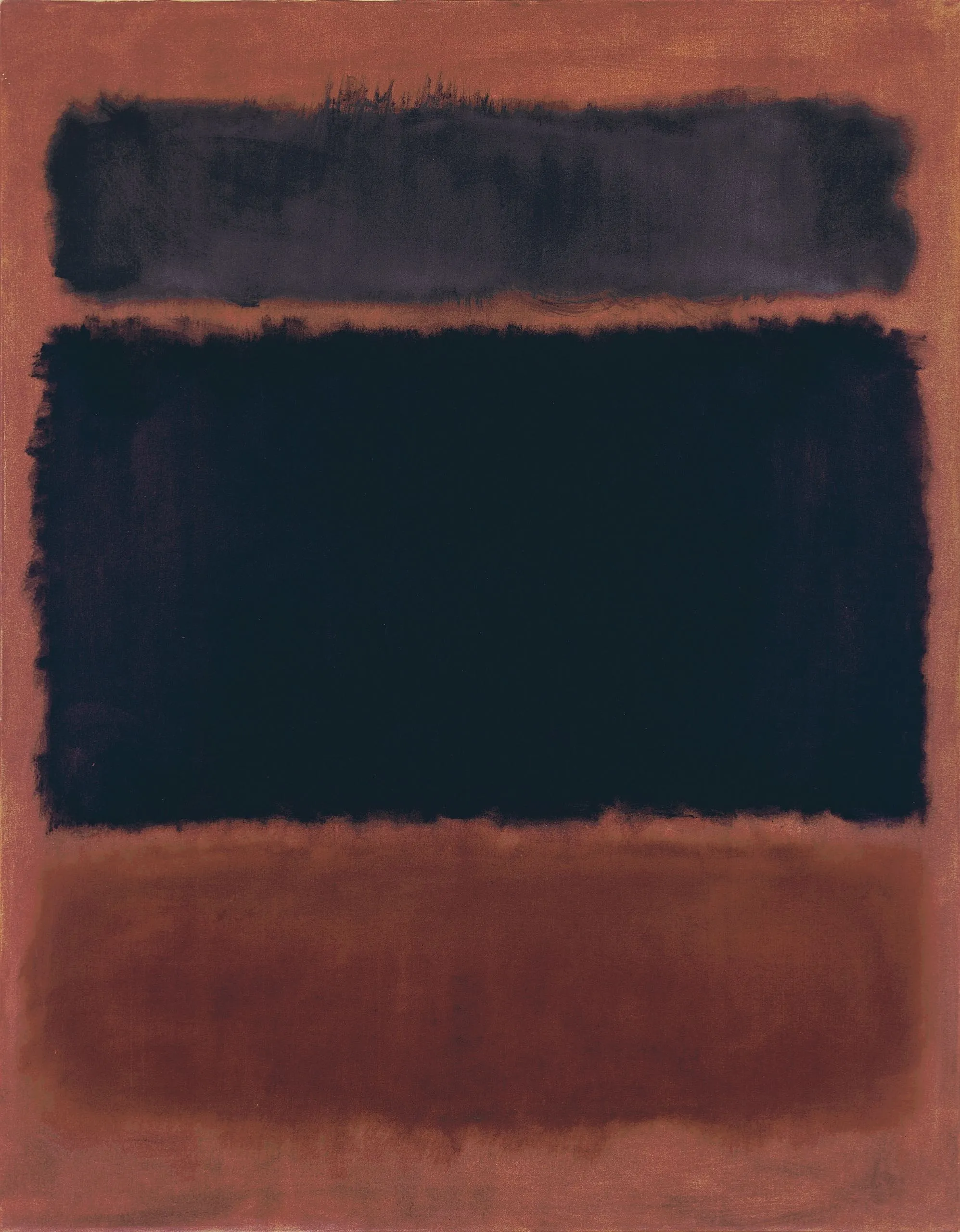
  • Mark Rothko, Black in Deep Red (1957)
  • Clyfford Still, PH-971 (1957)

In Class: we also discussed Willem de Kooning’s Excavation, which I’m adding here:

Excavation, painted on a 6-foot-by-8-foot canvas, was de Kooning’s largest painting through 1950.

Pop Art

Reading: Strickland, pp 172-176.

Reading: Ben Panko, “The Comic Artists Who Inspired Roy Lichtenstein Aren’t Too Thrilled About It,” Smithsonian Magazine, October 27, 2017.

Viewing: examples of Pop Art:

  • Jasper Johns, Target with Four Faces (1955)
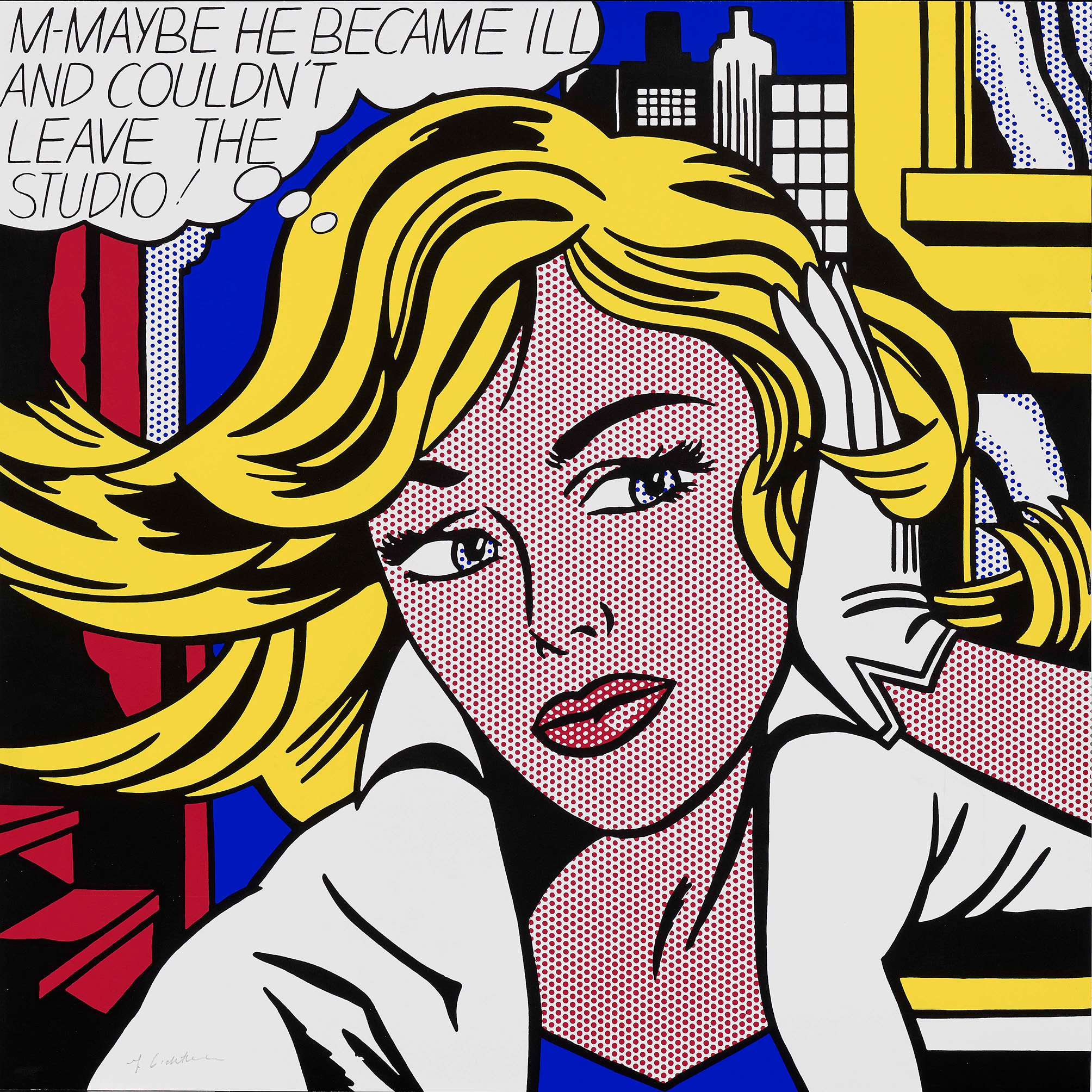
  • Roy Lichtenstein, M-Maybe (1965)
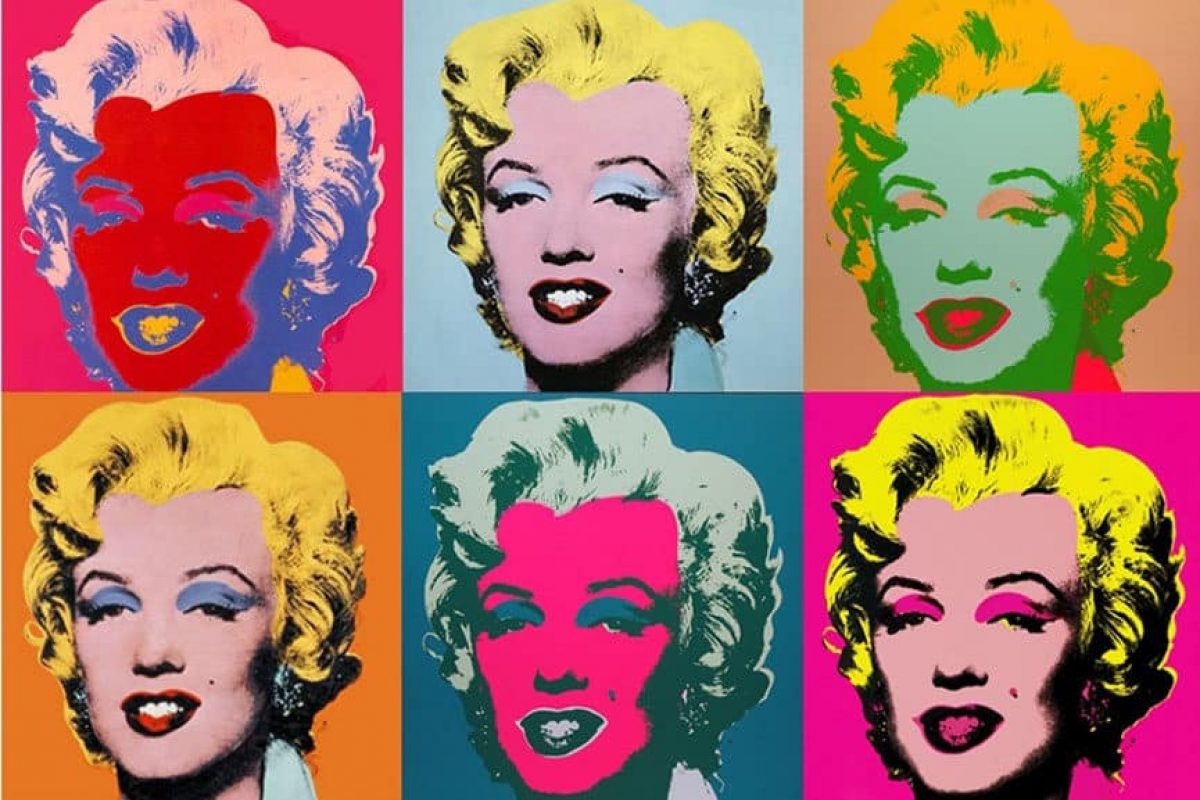
  • Andy Warhol, Marilyn (1967)
  • Claes Oldenburg, Clothespin (1976)

Writing: Respond to ONE of the following prompts. Keep your response short, posting as a reply under the appropriate heading in the comments section:

  1. Point out a key contrast OR continuity in the art featured above.
  2. Choose an artwork from today’s assignment that you find particularly engaging. Look at it for 3 minutes, then briefly describe your experience, pointing to particular details or visual qualities that helped produce that experience.

Black Panther

The First Black Superhero

The Black Panther made his debut on the cover of the July 1966 issue of Fantastic Four: an agile, black-garbed human figure springing triumphantly above the titular characters, who were busy exploring a strange and tangled jungle of circuitry. In a curious historical coincidence, Stan Lee and Jack Kirby invented the character around the same moment as activists working to get out the Black vote in Lowndes County, Alabama, adopted a black panther as their logo. A few months later, in October 1966, that logo inspired the formation of the Black Panther Party for Self-Defense in Oakland, California.

While Marvel’s Black Panther proved popular with readers, his fame was soon eclipsed by the Party, when Black Panthers entered the California State Capitol, fully armed, to protest a proposed change in gun regulations. They made it as far as the floor of the Assembly chamber before being disarmed and escorted from the building. Party members would later claim that the group did not intend to commandeer the legislative process that day, but merely took a wrong turn on their way to the visitors gallery. Blunder or not, the optics of an armed coup were irresistible to the news media: “Capitol Is Invaded,” ran the full-width banner headline on the Sacramento Bee’s front page. Keep this context in mind as you read the two-issue story that introduced Marvel’s Black Panther.

Reading: Stan Lee and Jack Kirby, “The Black Panther” and “The Way It Began,” Fantastic Four #52 & #53.

Writing: Respond to ONE of the following prompts. Keep your response short, posting as a reply under the appropriate heading in the comments section:

  1. Can this comic-book hero be seen as an exponent of “Black Power”? Focus our attention on a particular image or plot event as evidence.
  2. Does this comic book confirm colonialist stereotypes about Africa? Or does it problematize them? Focus our attention on a particular image or plot event as evidence.

Superheroes

Superheroes, Idealism, and the Case for/against War

Sometimes history moves faster than a speeding bullet.

Superman appeared on the cover of Action Comics #1 in April 1938. The character caught on with readers: a new kind of pulp hero, dressed in bright colors and blessed with superhuman powers, dedicated to making the world a better place. Within months, he had his own comic title; a year later, competitors were horning in on the action with other superheroes: Batman, Captain Marvel, Flash, and many others now forgotten.

Meanwhile Hitler began to rapidly expand Germany’s borders to the south and east, annexing Austria in March 1938 and the German-speaking parts of Czechoslovakia a few months later. German troops partitioned the remainder with Hungary in March 1939, and in September Hitler invaded Poland as part of a secret agreement with Russia’s Stalin, triggering the start of World War II.

While Great Britain and France were the first to declare war, Germany was the first to act, successfully occupying Norway, Denmark, Belgium, the Netherlands and two-thirds of France in the spring of 1940. This left Britain isolated and under aerial bombardment, as detailed at the Churchill Museum.

How would America’s new breed of costumed idealists respond to this aggression? Superman’s creators, Jerry Siegel and Joe Shuster, weighed in shortly before Germany’s series of spring 1940 offensives with a story imagining their hero bringing a swift end to the conflict. Interestingly, they published this story in Look magazine rather than an ordinary comic book—certainly a detail worthy of conversation.

Other comics creators weren’t so sure about the wisdom of getting involved in “Europe’s troubles.” In the late spring of the same year Don Shelby gave a principled argument for isolationism in a science-fiction story featuring Gary Concord: the Ultra-Man.

In short, the debate between Isolationists and Interventionists wound up being carried out not only on the editorial pages of America’s newspapers, but in the comic-books sold at those same newsstands. Perhaps the most forceful instance was the cover of the first issue of Jack Kirby and Joe Simon’s new hero, Captain America, who’s shown punching Hitler’s lights out.

Reading:

  • Jerry Siegel and Joe Shuster, “How Superman Would Win the War,” Look magazine, Feb 27, 1940. (Focus on the comic.)
  • Don Shelby (aka Jon L. Blummer), “Gary Concord, the Ultra-Man,” All-Star Comics #1, Summer 1940. (Focus on the first two interior pages of the comic-book story, and the last panel on the final page.)
  • Joe Simon and Jack Kirby, “Case No. 1. Meet Captain America,” Captain America #1, March 1941. (Focus on the cover as well as the first two pages of the comic-book story.)

Writing: Respond to ONE of the following prompts. Keep your response short, posting as a reply under the appropriate heading in the comments section:

  1. How do these comics characterize America’s purpose in the world? If possible, call attention to a continuity rather than to a disagreement.
  2. How do these comics imagine the role of the superhero in society/history? Call our attention to a continuity or to a disagreement.

Casablanca

Everybody Comes to Rick’s

Casablanca was released in November of 1942, almost a year after the Japanese attack on Pearl Harbor brought an abrupt end to the political debate over whether America should intervene in the war. Yet that debate plays a central role in the movie, thematized in Bogart’s bitter declaration that he sticks his neck out for nobody.

That thematic focus can be traced to the screenplay’s origins as an unproduced stage play written in 1940, Everybody Comes to Rick’s. Warner Brothers purchased rights to the play in January 1942, shortly after the US declaration of war. Interestingly, the pair of screenwriters who adapted the play were around the same time working on series of seven propaganda films for the US Department of War titled Why We Fight.

Casablanca also provides us with the opportunity to dip a toe into a musical tradition very different from Beethoven, jazz. The movie features Dooley Wilson in the role of Sam, Rick’s loyal confidante who plays the piano in his saloon. Jazz is a distinctively American style of music; without Wilson’s presence at the piano, it’s hard to see how the place could properly be called “Rick’s Café Américain.” But jazz is also distinctively African-American, and Wilson’s relationship with Rick introduces American racial dynamics into a movie that is otherwise focused on what, if anything, America owes to the wider world.

Listening: Both of the following songs are classics, and date from the era of the movie. While both songs are upbeat, they also can be seen as offering sly commentary on race in America.

  • Duke Ellington, “Take the A Train,” clip from 1943 movie Reveille: YouTube.
  • Louis Armstrong, “Shine,” 1942 performance: YouTube.

Viewing: Michael Curtiz, Casablanca, available via BOB. (If this link doesn’t pull up the playlist, come back here and click on it a second time after you log in.)

Writing: Respond to ONE of the following prompts. Keep your response short, posting as a reply under the appropriate heading in the comments section:

  1. Call our attention to a moment in the movie that can be read as advocating for American intervention in WWII.
  2. Focusing on Rick’s relationship with Sam, what does Casablanca have to say about race? Call our attention to a particular moment and what it implies. (Feel free to reference the music of Louis Armstrong and/or Duke Ellington as well.)
  3. Focusing on the movie’s love triangle, what does Casablanca say about the role(s) of love and passion in society? Is love a force for order or for chaos?

Kafka

Bugging Out

Born in Prague in 1883, Franz Kafka is one of the most influential writers of the twentieth century. Yet almost all his fiction was published posthumously, after his early death from tuberculosis in 1924. As an educated, German-speaking lawyer, Kafka was a member of Prague’s middle class, but he was also very much an outsider, a Jew living in the Austro-Hungarian Empire (after 1918, Czechoslovakia). Emperor Franz Joseph I had extended full citizenship to Jews fifteen years before Kafka’s birth, but antisemitism remained rife—and found terrible expression after Hitler occupied Prague fifteen years after Kafka’s death.

Kafka’s short novel The Metamorphosis presents middle-class existence as precarious—and throws into question whether family can stand as a bulwark against the vagaries of fortune.

Reading: Kafka, The Metamorphosis trans Susan Bernofsky.

Optional Reading: our translator, Susan Bernofsky, talks about the challenges of rendering Kafka’s story in English in an article published in the New Yorker: link. (This may be present in your copy of the book, as an “Afterword.”)

Writing: Respond to ONE of the following prompts. Keep your response short, posting as a reply under the appropriate heading in the comments section:

  1. Given that “anomie” is defined as the loss of social norms, point to a particular moment in Kafka’s story and explain how it challenges or violates the reader’s normative expectations.
  2. Gregor Samsa is often characterized as an “antihero.” Without looking up that term, point to something specific that Samsa does (or fails to do) that strikes you as unheroic.
  3. There are lots of weird moments in this story: point to one and comment briefly.

Chaplin

Little Tramp in a Big Factory

Chaplin created his “Little Tramp” character in 1914-15 as a bumbling vagrant whose aspirations to romance and gentlemanly dignity routinely fall short. Yet he always rebounds from setbacks, ready to try again.

For class today, I’m asking you to watch the final appearance of the Little Tramp character. The 1936 movie Modern Times dates several years after the end of the silent film era (1894-1929). While it draws on the idiom of silent movies, it makes abundant use of sound effects. And at key moments characters speak aloud.

Viewing: Chaplin, Modern Times, available via: Kanopy. (If this doesn’t work, try BOB).

Writing: Respond to ONE of the following prompts. Keep your response short, posting as a reply under the appropriate heading in the comments section:

  1. Focusing on the initial sequence in the factory (00:00-19:10), point to a key detail and comment on its significance—whether political or artistic.
  2. Focusing on the first part of the movie’s love story (42:00-1:00:00), point to a key detail and comment on its significance—whether political or artistic.
  3. Focusing on the movie’s final sequence (1:09:00-1:27:10), point to a key detail and comment on its significance—whether political or artistic.

Cubist Collage

Collage and the Modern Age

Both scholars listed below agree on the centrality of collage to modernist art; they disagree only in how broadly they define Modernism. Greenberg focuses wholly on developments within the field of painting, while Hopkins speaks of culture in the broadest sense: literature, film, etc.

Scholarly Reading: Two Perspectives on Collage

  • Clement Greenberg, “The Pasted-Paper Revolution” (1958) (Blackboard)
  • Budd Hopkins, “Modernism and the Collage Aesthetic” (1997) (Blackboard)

Viewing: Analytic and Synthetic Cubism

  • Pablo Picasso, Les Demoiselles d’Avignon (1907)
  • Georges Braque, Violin and Palette (1909)
  • Pablo Picasso, Still Life with Chair Caning (1911)
  • Georges Braque, Homage to J. S. Bach (1911-12)
  • Pablo Picasso, Guitar, Sheet Music and Wine Glass (1912)
  • Juan Gris, The Table (1914)

Writing: Respond to ONE of the following prompts. Keep your response short, posting as a reply under the appropriate heading in the comments section:

  1. Point to ONE quality that these Cubist works share in common with the Futurist art we examined last week. Alternatively, point to something that makes them distinct.
  2. Drawing on Greenberg or Hopkins—or just pointing to the art itself, should Cubist collage be classed as mimetic or expressive art? Or some third thing?

The Waste Land

Eliot’s Crisis of Meaning

As Budd Hopkins suggests in an article linked in the preceding section, Eliot’s “Waste Land” has the formal structure of a collage. We encounter an extraordinary variety of language, fragments from classical literature, scraps of popular songs, bits from overheard conversations. These are piled together, apparently at random, in a way that suggests the breakdown of cultural coherence. As the final lines comment, “These fragments I have shored against my ruins.” This lack of structure forces the reader into a role ordinarily assumed by the author: that of making meaning.

Reading: T.S. Eliot, The Waste Land (link). Note: you may find it valuable to listen to Eliot’s poem read by professional actors Jeremy Irons and Eileen Atkins: YouTube. They bring to life the very different “voices” that form the patchwork of Eliot’s poem.

Writing: Respond to ONE of the following prompts. Keep your response short, posting as a reply under the appropriate heading in the comments section:

  1. An American living in Europe (mostly London), Eliot was likely struck by the rigid class hierarchies of the old world. Where does class enter into The Waste Land?
  2. Early in the poem Eliot references the loss of life in World War 1. Quote a key moment and comment as to how the poem contextualizes the war.
  3. Having plundered Western European myth and literature, in the final section Eliot turns to Hindu scripture: Da, Datta, Dayadhvam, Damyata. How is this similar to or different from the Orientalism we witnessed at the Royal Pavilion in Brighton, dating a century before Eliot’s poem?

Photography and Motion

Photography and Motion

English photographer Eadweard Muybridge began his pioneering work into the study of motion in 1878. Using multiple cameras with high-speed film, Muybridge established for the first time the stride of a galloping horse, as well as a host of other motions too fast for the eye to follow. He changed the way we see the world. And, by breaking motion down into a series of static frames, his work beckoned the way to re-animation of static sequences as movies.

Around the same time, French photographer Étienne-Jules Marey perfected a method for superimposing multiple moments on a single photograph, as for example the image of a pelican landing.

Both photographers’ influence can be seen in one of the most famous works of Modernist Art, Marcel Duchamp’s Nude Descending a Staircase, as well as Futurist works like Giacomo Balla’s 1912 Dynamism of a Dog on a Leash.

  • Muybridge, Horse’s Gallop (1878)
  • Marey, Pelican landing (1882)
  • Duchamp, Nude Descending a Staircase (1912)
  • Balla, Dynamism of a Dog on a Leash (1912)

Futurism

Loving the Machine

In the years leading up to World War I, a group of Italian artists came together under the banner of Futurism. Whereas Art Nouveau sought compromise with modernity, reshaping metal and glass in soft organic curves, the futurists welcomed the hard edges and high speeds of machinery.

When conflict broke out in 1914, it was greeted with enthusiasm across Europe, but for most that excitement gave way to horror as reports filtered back from the front lines of the meat grinder of trench warfare. Paradoxically, the era’s powerful technologies—machine guns, artillery shells—produced stalemate rather than speedy victory. But while this experience left many determined to make the “Great War” the “War to End All Wars,” the Futurists remained enamored of both machinery and armed conflict, believing that violence could reenergize Italy. Unsurprisingly, in the years after the war’s end in 1918, they allied themselves with the National Fascist Party of Benito Mussolini.

Reading: “The Futurist Manifesto,” published in 1909 by Filippo Marinetti on the front page of the Parisian daily Le Figaro (Blackboard).

Viewing: examples of Futurist art:

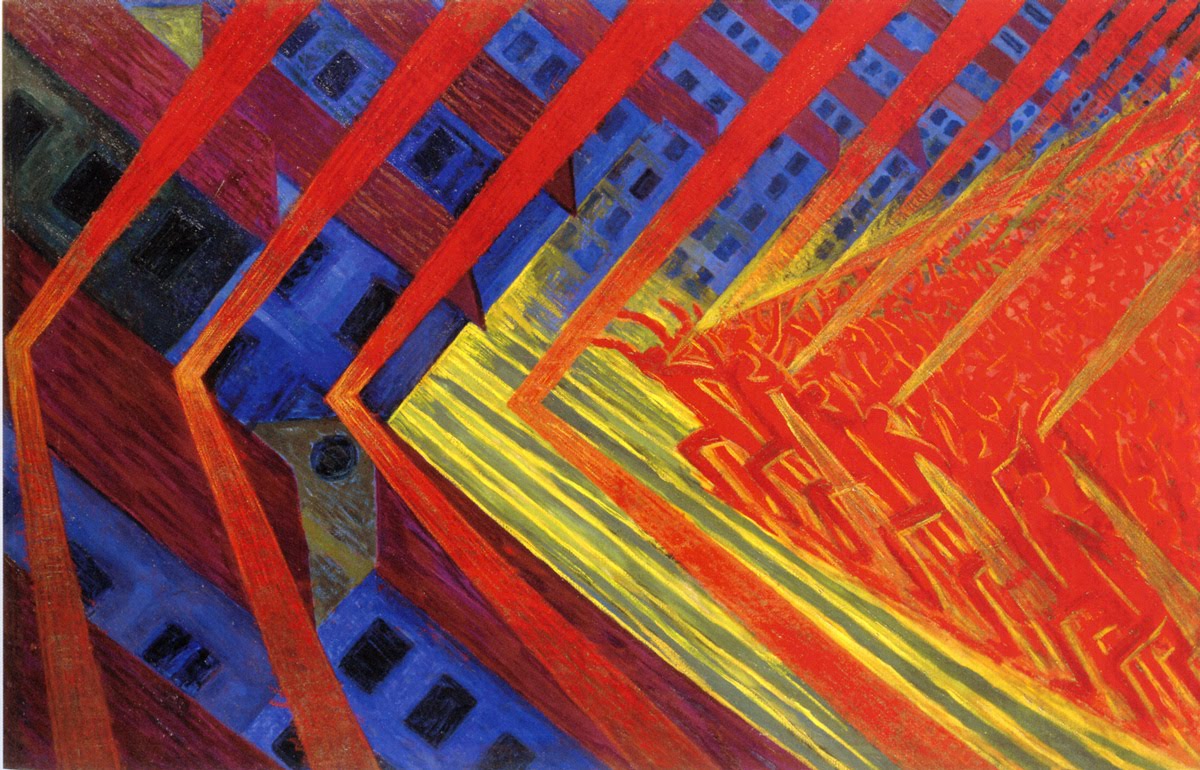
  • Luigi Russolo, The Revolt (1911)
  • Luigi Russolo, Dynamism of an Car (1913)
  • Umberto Boccioni, Unique Forms of Continuity in Space (1913)
  • Gino Severini, Memories of a Journey (1911)
  • Gino Severini, Armored Train in Action (1915)
  • Filippo Marinetti, In the Evening, Lying on Her Bed, She Reread the Letter from Her Artilleryman at the Front (1919)

Writing: Respond to ONE of the following prompts. Keep your response short, posting as a reply under the appropriate heading in the comments section:

  1. Point out a key contrast OR continuity in the Futurist art featured above.
  2. Point out a key contrast OR continuity between Marinetti’s 1909 manifesto and one of the Futurist artworks.