Conrad, part 2

Conrad, the Return Journey

Reading: Heart of Darkness, Ch. 3 (Norton pp 941-959).

Writing: Respond to ONE of the following prompts. Keep your response short, posting as a reply under the appropriate heading in the comments section:

  1. This last third of the story is filled with memorable moments. Quote a brief but striking phrase, then comment on the implications.
  2. Why does the story end in Europe, rather than in Africa? Is the ending climactic, or is it an anticlimax?

Conrad, part 1

Conrad, Traveling Upriver

When Joseph Conrad published Heart of Darkness in 1899, he helped break the story of atrocities perpetrated in the Congo at the behest of Europeans. Fourteen years earlier, in 1885, the Belgian King Leopold II persuaded the other European powers to cede the region to him as a personal possession, on the assurance that his principal aim was humanitarian: suppressing the slave trade and civilizing the natives. Whereas other European colonies were the possessions of nations, the Congo Free State was held privately by Leopold, at least until international outcry led to its annexation by Belgium in 1908. During that quarter-century interim, Leopold’s agents extracted minerals, rubber and ivory from the Congo River basin through force: imposing production quotas on local tribes and killing and mutilating those who failed to meet them.

Conrad witnessed some of this firsthand in 1890, when he worked for a Belgian trading company. His 1899 novella did not break the story, however; word had already begun to leak out, thanks to stories told by natives to British, American and Swedish missionaries working in the region. These missionaries eventually played a key role in the 1904 Casement Report, the result of an investigation conducted by a British diplomat. By 1910, the Belgian Congo had became a cause célèbre, in part due to a book-length exposé by Arthur Conan Doyle.

Conrad’s novella did not make nearly so big a splash in 1899 as Doyle’s 1909 book. For one thing, Conrad was just getting his start as a writer, whereas Doyle was the famous creator of Sherlock Holmes. But we might also point to Conrad’s penchant for ambiguity and understatement, qualities which make him a challenging writer, but which in the long run helped establish his novella as a great work of literature.

Reading: Heart of Darkness, Chs. 1 and 2 (Norton pp 899-940). To orient you a bit, the narrative is structured as a tale told by a veteran sailor, Marlow, to an audience of friends out for a pleasure cruise aboard a small, two-masted sailboat. When the story opens, they’re on the Thames east of London, down where the river meets the sea.

Writing: Respond to ONE of the following prompts. Keep your response short, posting as a reply under the appropriate heading in the comments section:

  1. Rather than beginning in Africa, the story opens on “the sea-reach of the Thames,” then goes on to introduce Marlow spinning the tale of his experiences in Africa. Pointing to a specific quote or detail from the opening pages, say something about the thematic function of this frame structure.
  2. Conrad characterizes Africa quite memorably. Quote a brief but striking phrase, then comment on the implications.
  3. Conrad characterizes the “Company” memorably as well. Quote a brief but striking phrase, then comment on the implications.
  4. Conrad is equally evocative near the start of the story, in his descriptions of the Thames estuary and of the Belgian capital. Quote a brief but striking phrase, then comment on the implications.

Orientalism

Orientalism and Empire

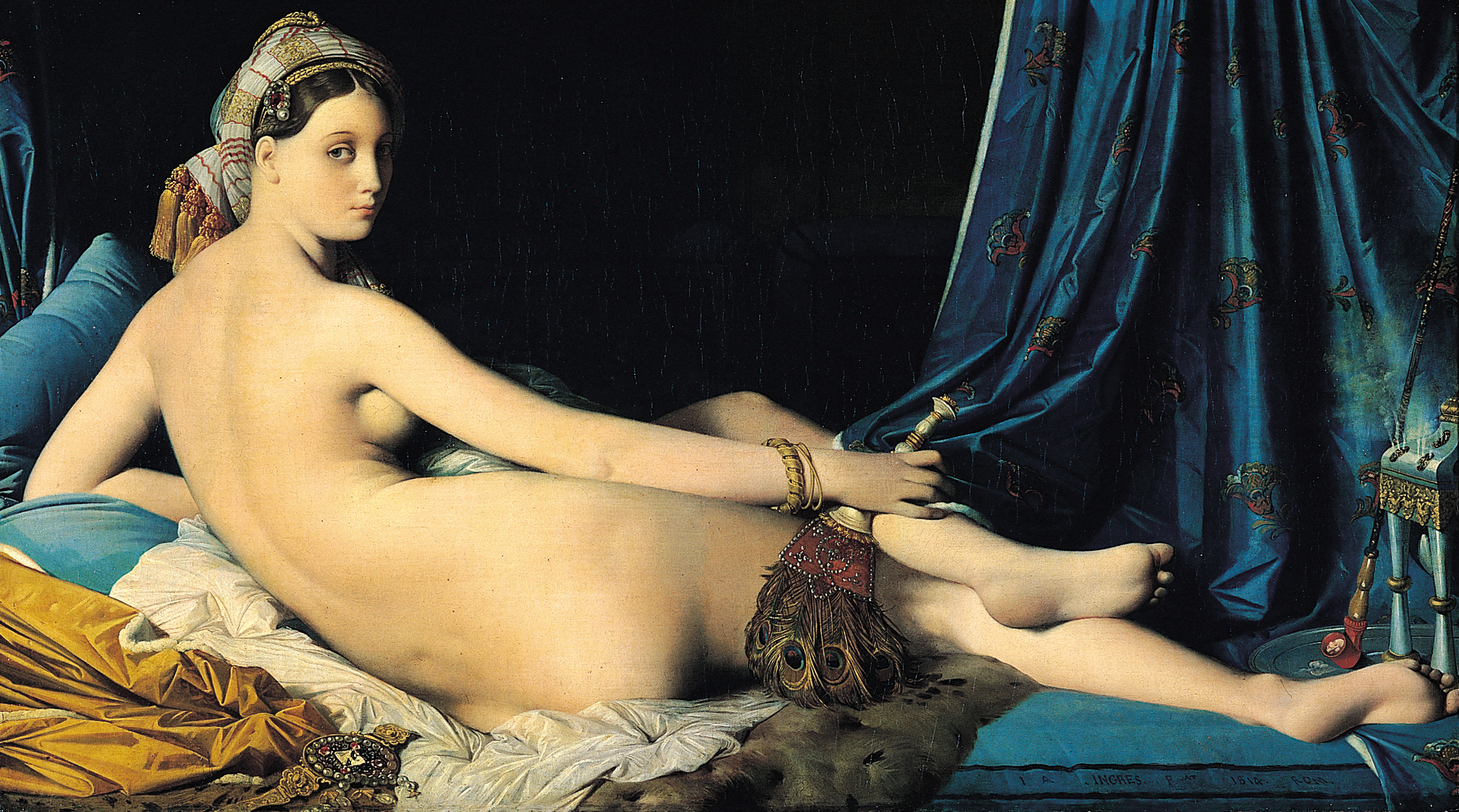
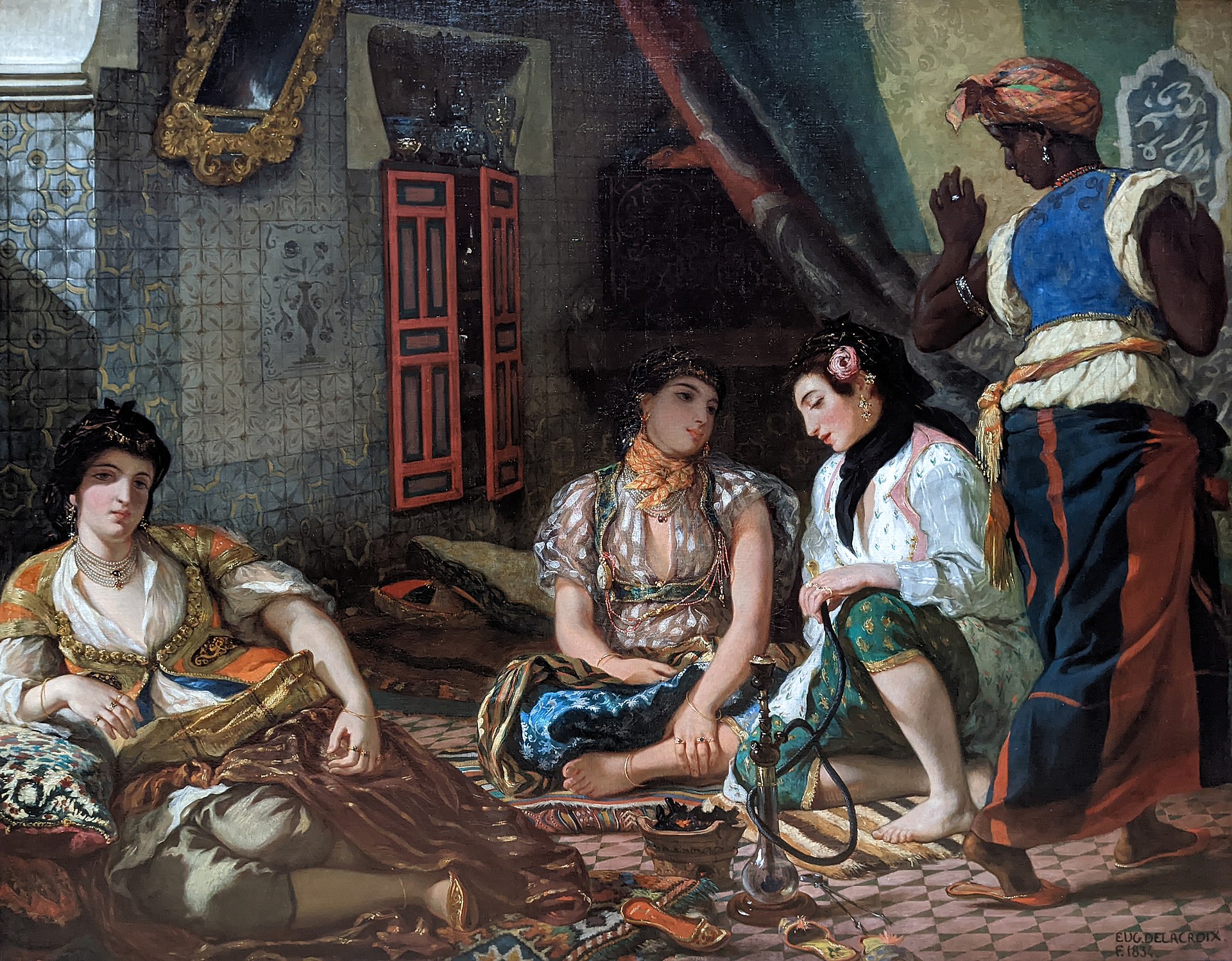
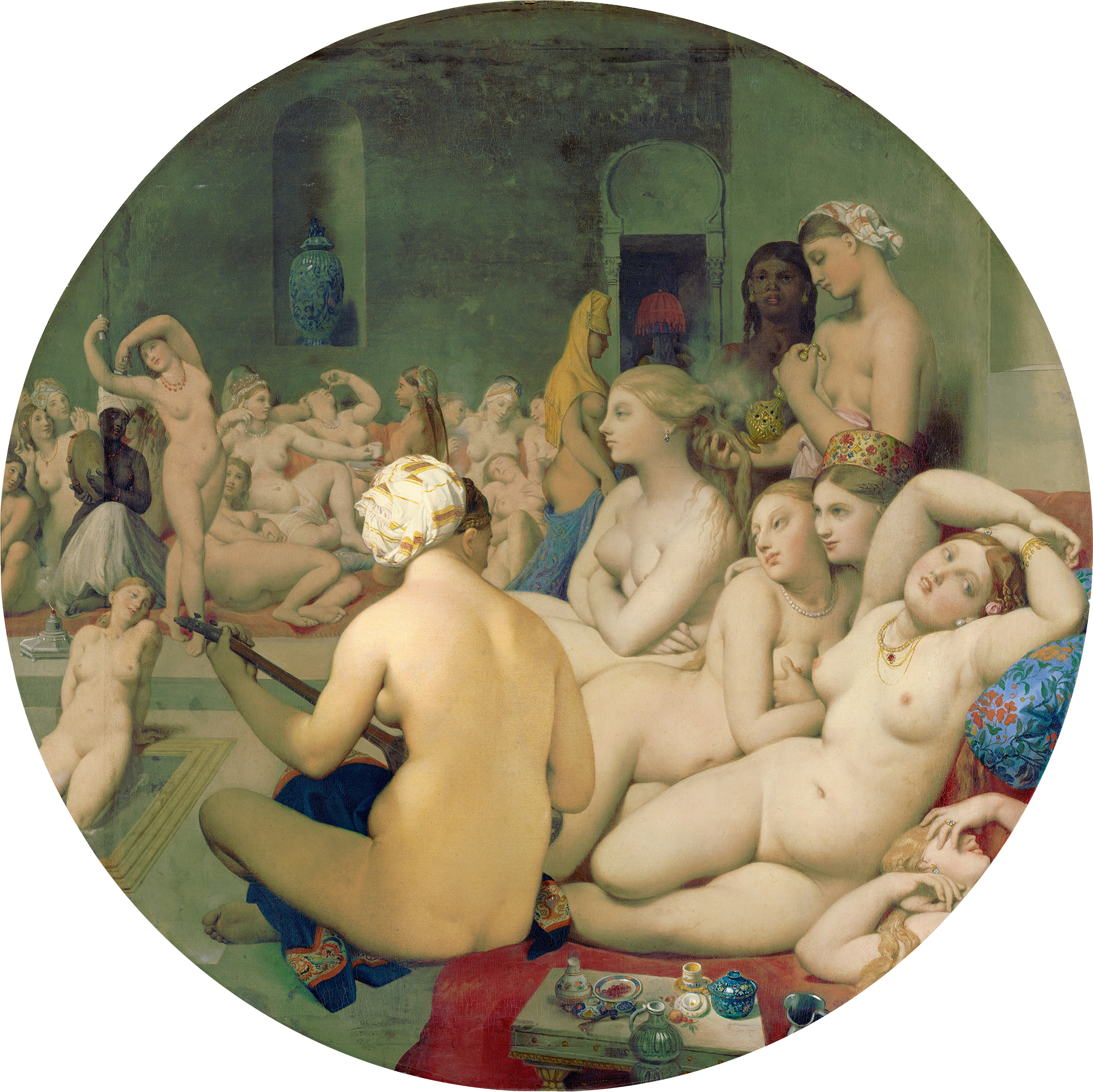
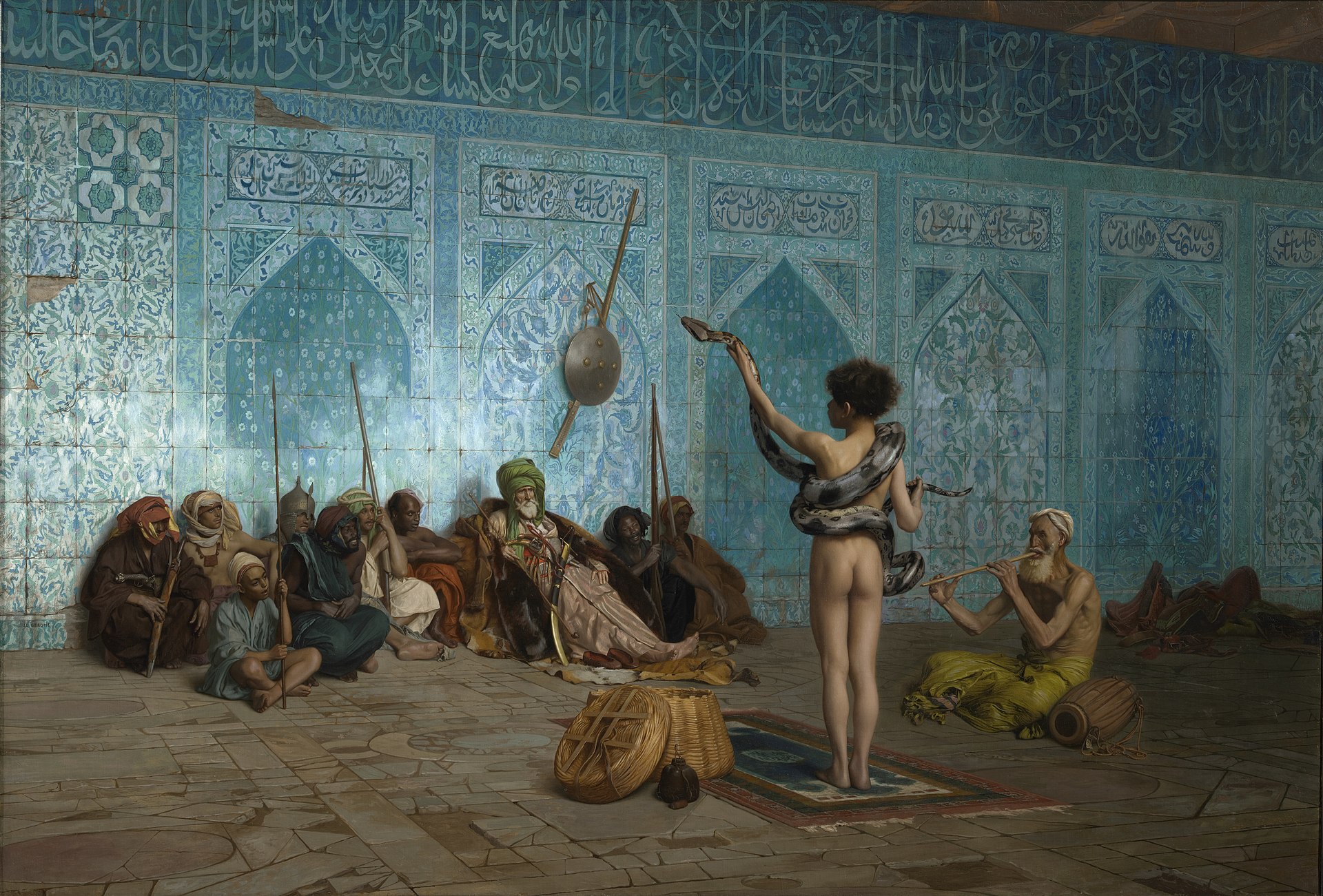
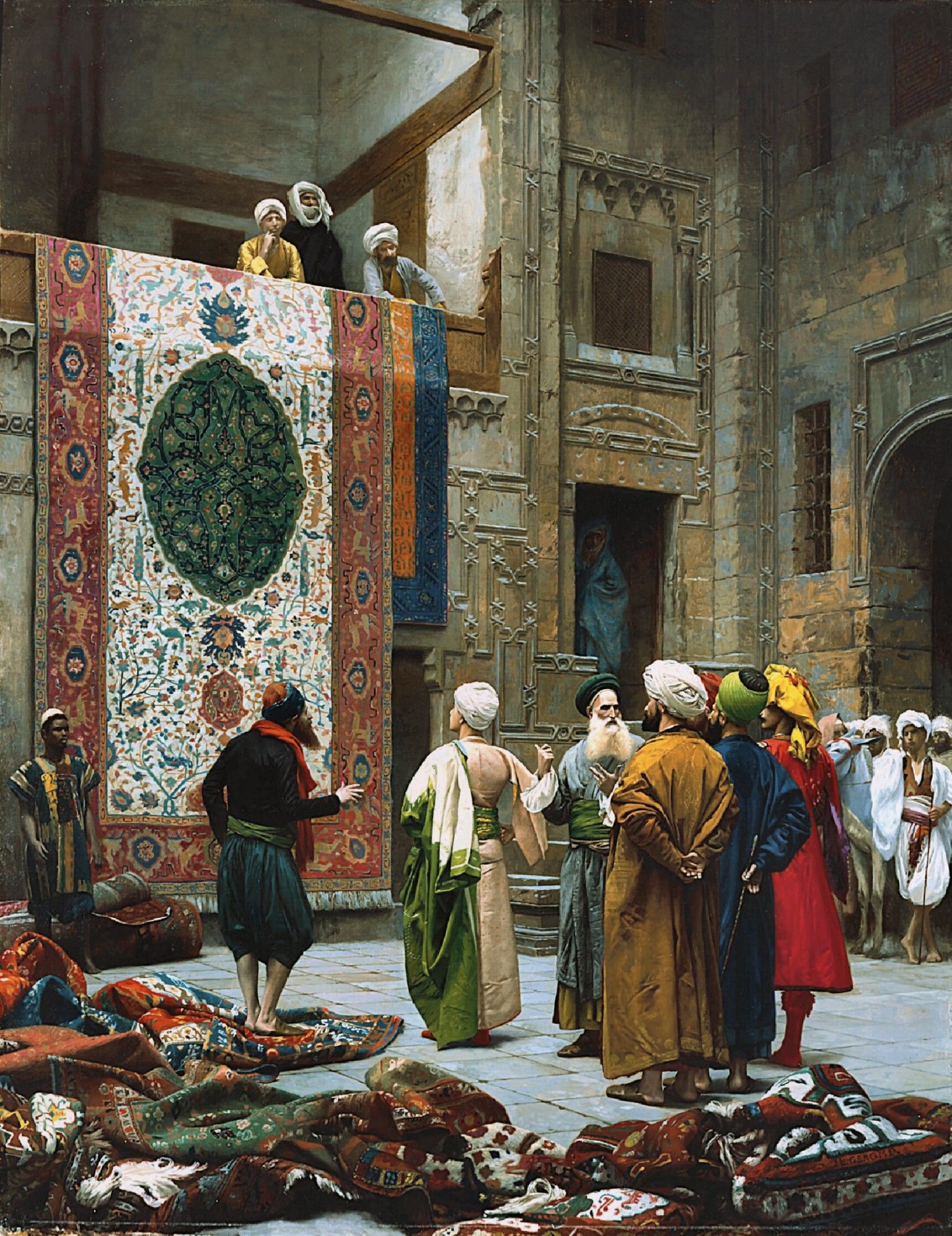
When we touched on Orientalism last semester, it was in connection with Montesquieu and Montagu—writers from the 1720s who showed a fascination with foreign societies, and who used the perspective provided by cultural difference to critique European mores. In my lecture introducing those authors, I noted that Orientalism of this sort became more widespread but also changed in character over the next few centuries, as European nations forged worldwide colonial networks. Many agents who worked on the front lines of Empire became expert in local crafts and customs, but they did so from positions of power within an established hierarchy. When they returned home, these collectors brought their tastes and interests with them, leading to widespread fascination with exotic locales.

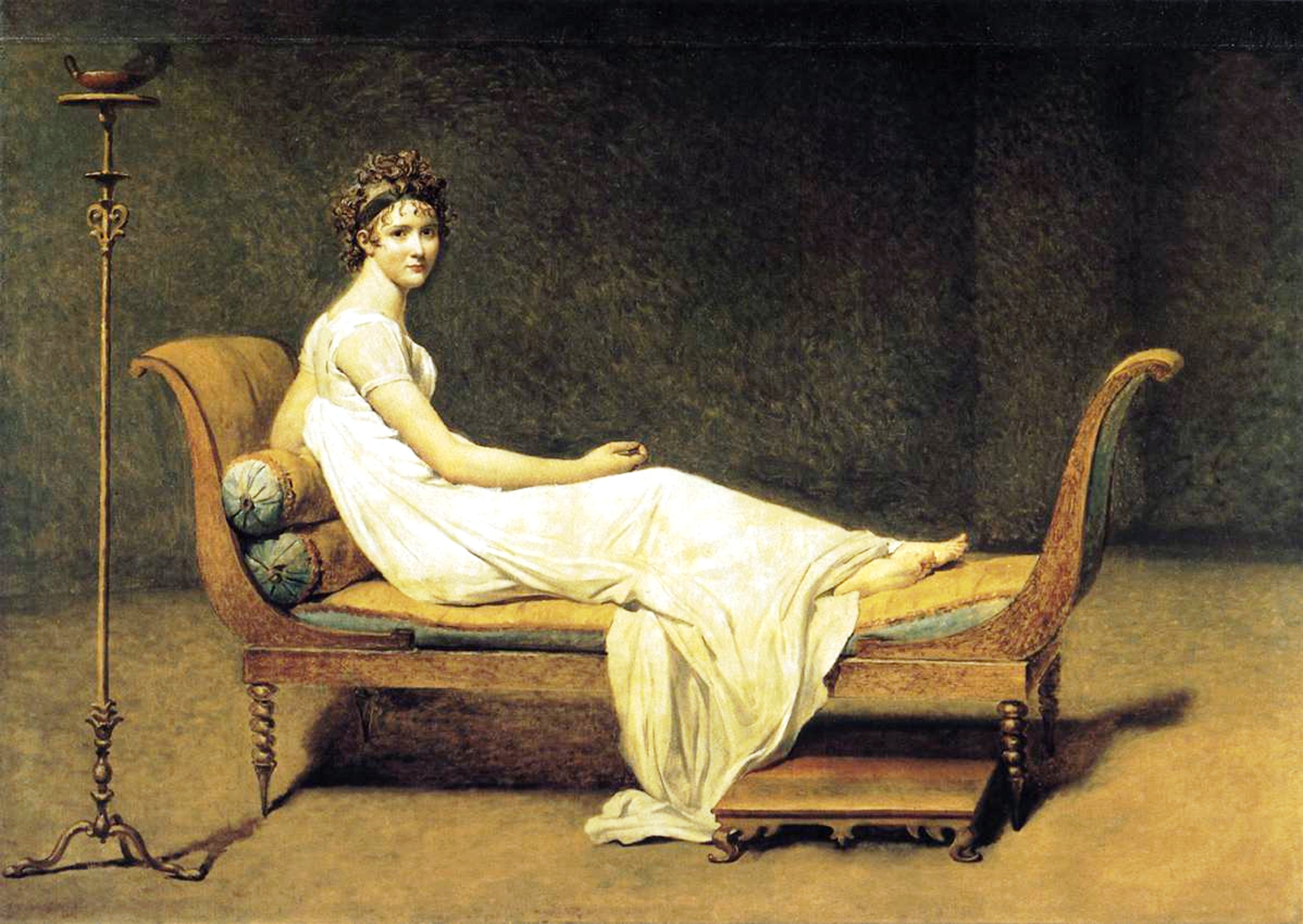
In France, painters catered to this interest as seen in the collection of images below. You Take a few moments to look over these paintings, then submit a short written response for HW.

  • Jacques-Louis David, Madame Récamier (1800): this is a Neoclassical piece provided by way of contrast to the later works in this collection. Note the Roman costume and setting.
  • Jean Auguste Dominique Ingres, Grande Odalisque (1814). (Strickland provides an brief but interesting account of this image and its impact on tradition on pp 70-71.)
  • Eugène Delacroix, The Women of Algiers (1834).
  • Jean Auguste Dominique Ingres, The Turkish Bath (1852-62).
  • Jean-Léon Gérôme, The Snake Charmer (1879).
  • Jean-Léon Gérôme, The Carpet Merchant (1887).

Writing: Respond to ONE of the following prompts. Keep your response short, posting as a reply under the appropriate heading in the comments section:

  1. Point to a pattern you see in these images, then speculate as to its significance.
  2. Ingres lived in Europe all his life, working in Italy and France, while Delacroix and Gérôme both toured Africa and the Near East. Does this show in their work? Point to specifics, if possible.

Scientific Objectivity

Victorian Objectivity

Lest you come away thinking that the Victorians were wholly ruled by sentiment, it’s worth noting the counter-trend represented by clinical detachment, often under the mantle of science. This was a great era for empirical observation: Darwin’s 1851 On the Origin of Species mobilized bird beak measurements to shake the foundations of religious faith. And while sentimentality dominated in the arts, some poets and painters adopted the cold clinical pose of the scientist:

  • Robert Browning, “My Last Duchess” (1842): a dramatic monologue written from the point of view of Alfonso II d’Este, a Duke of the Italian Renaissance suspected of having killed his wife (details here).
  • Thomas Eakins, The Andrew Clinic, an unflinching painting of a surgery performed in front of an audience of medical students. Strickland has a sidebar presenting this remarkable painting on p86; I also recommend the close reading of the painting found here.

Victorian Mourning

Victorian Mourning

Public shows of grief came to predominate in both England and America in the 19th century. In America, the trend was encouraged by bloodshed during the Civil War (the Union paid to embalm fallen soldiers and ship them home for burial) and cemented by the assassination of President Lincoln, whose body travelled in state by railcar from Washington home to Illinois, greeted at every stop along the way by vast crowds of mourners. In Britain, the trend was cemented by the public example of Queen Victoria, whose beloved husband Albert died in 1861 at age 42. She wore black the rest of her reign, some 40 years; the MET in New York has one of her dresses in its collection: link.

Whereas today we spend a fortune on housing, the Victorians spent a fortune on death, as we saw during our visit to Highgate Cemetery. In addition to the expense of a funeral plot and stone monument, Victorians paid for mourning dress—a purpose-made outfit worn for a set period and then ceremoniously burned. If you decide to write on this topic for the interdisciplinary essay, novelist Tracy Chevalier provides an excellent summary of mourning etiquette here, information she learned in doing background research for a work of historical fiction. In addition, scholar Sarah Tarlow provides a brief history of garden cemeteries, available in the “Readings” folder of the course Blackboard site.

The Victorians’ preoccupation with death and mourning is particularly visible in the work of its most prominent poet, Alfred Tennyson. After his best friend, Arthur Hallam, died in 1833, aged 22, Tennyson spent the next 17 years producing a book-length poem wrestling with that loss, titled In Memoriam, A.H.H. obit. MDCCCXXXIII.

Reading: Three pieces by Tennyson mourning the loss of Arthur Hallam.

Writing: Respond to ONE of the following prompts. Keep your response short, posting as a reply under the appropriate heading in the comments section:

  1. Call our attention to a particularly moving line or detail from one of Tennyson’s poems of mourning.
  2. Tennyson originally conceived of In Memoriam with a different title, “The Way of the Soul.” Just based on the three poems here, do you discern a path or journey taking place in his mourning process?
  3. Wearing mourning was a public performance. But Tennyson published In Memoriam, A.H.H. obit. MDCCCXXXIII anonymously, shortly before assuming the title of Poet Laureate. Do these poems strike you as public or private expressions of grief?

Victorian Sensuality

Love and Death

While the Victorians have a well-deserved reputation for sexual prudery, their poetry and art are often suffused with sensuality—yet a sensuality mixed with thoughts of death and the grave.

Reading: Three Poems: note that Keats dates two decades before Victoria’s reign (1837-1901). His widely popular poem can be seen as setting a trend followed by later writers and artists.

Viewing: four Pre-Raphaelite paintings:

  • William Holman Hunt, The Lady of Shalott (1888-1905)
  • John William Waterhouse, The Lady of Shalott (1888)
  • John Everett Millais, Ophelia (1851)
  • Dante Gabriel Rossetti, Lady Lilith (1866-68)

Note: if you’re unfamiliar with the legend of Lilith or with the role of Ophelia in Hamlet, take a moment to google those names.

Writing: Respond to ONE of the following prompts. Keep your response short, posting as a reply under the appropriate heading in the comments section:

  1. Call our attention to a particularly moving line or visual detail from one these paintings or poems.
  2. At the end of Part II, the Lady of Shalott declares “I am half sick of shadows.” Unfold the significance of this key line.
  3. It’s hard not to come away from Rossetti’s “Goblin Market” identifying the goblins’ fruit with sexuality. What details in the poem help to create this association? On the other hand, what details in the poem complicate or undermine the association?

Empire and Commerce

Part 3: Commerce and Empire

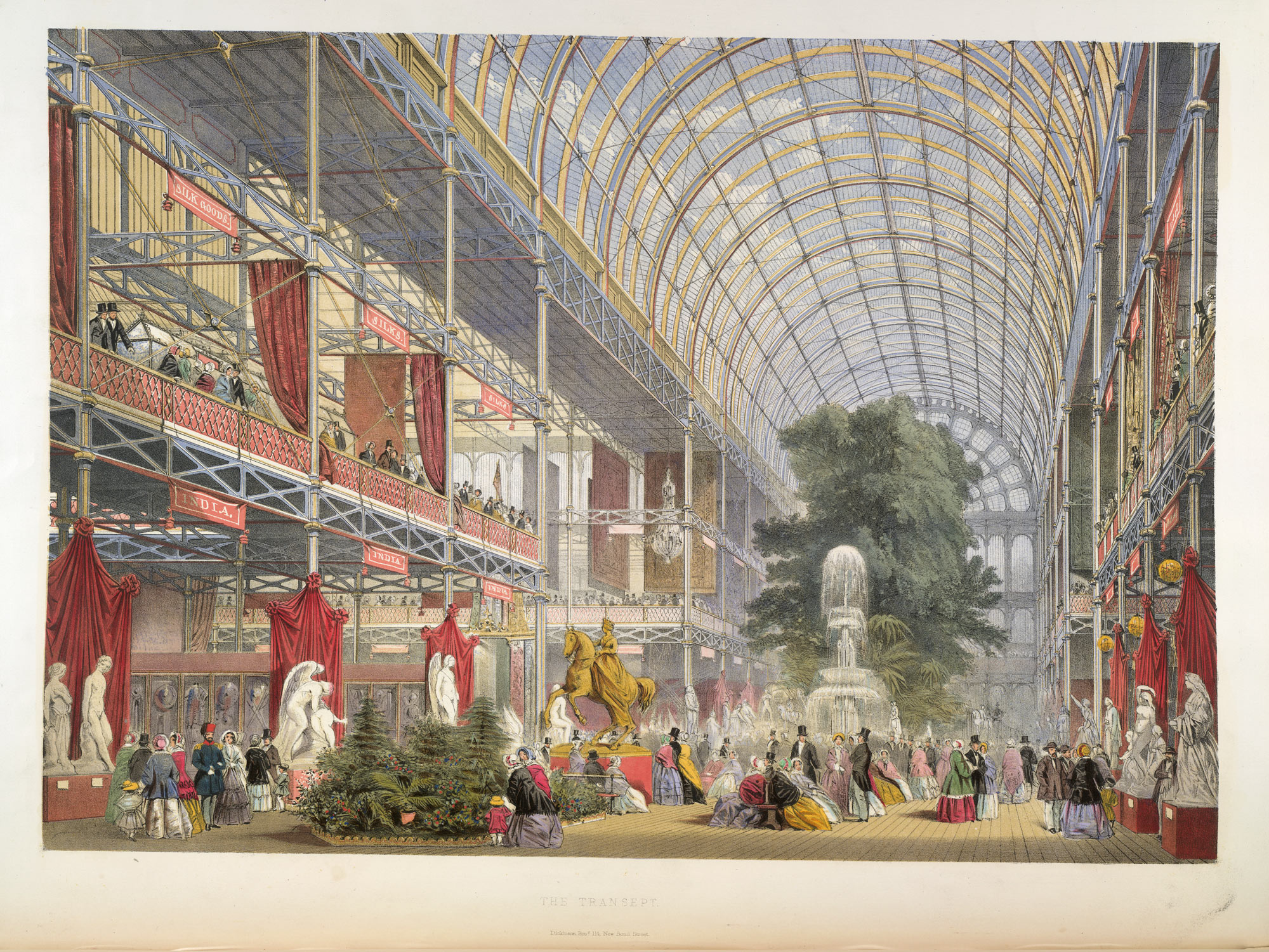
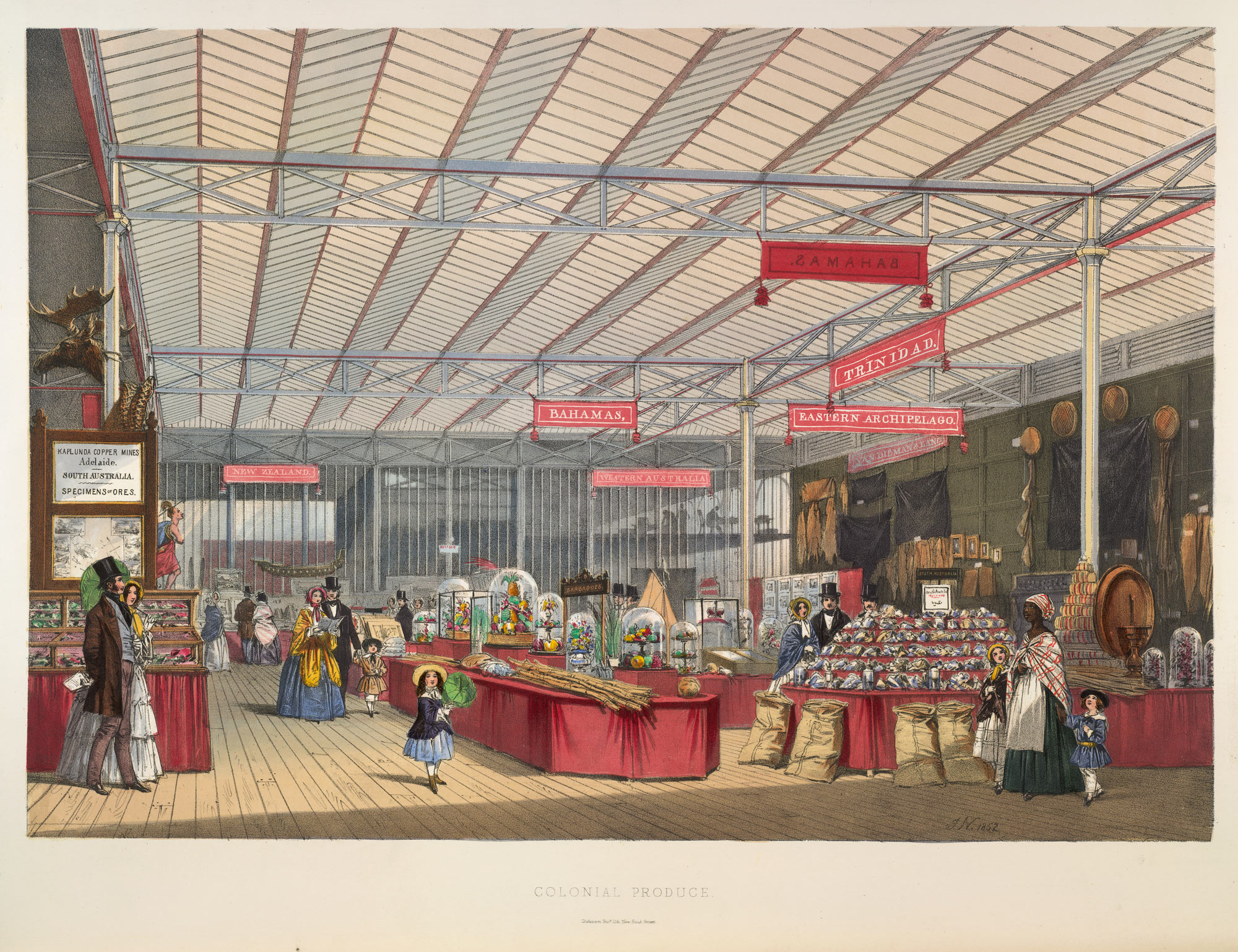
Whereas Victoria ruled over a rapidly expanding empire, her cousin Albert was the junior member of an obscure German noble house. When they married, the terms set by Parliament denied him any English title (though Victoria later proclaimed him “Prince Consort”). Yet Albert proved adept in the use of soft power, campaigning for liberal causes like free trade, educational reform, the end of child labor, and the worldwide abolition of slavery. These passions came together in his plan for the Great Exhibition of 1851, which brought together goods and technologies from around the world in a vast “Crystal Palace.”

Viewing: Period Images of the Crystal Palace

Credits:

  • Opening Ceremony: Eugene-Louis Lami, watercolor 1851 (link).
  • Interior 2: J McNeven, print 1851 (link)
  • Remaining images: Hague, Nash and Roberts, illustrated book (link)

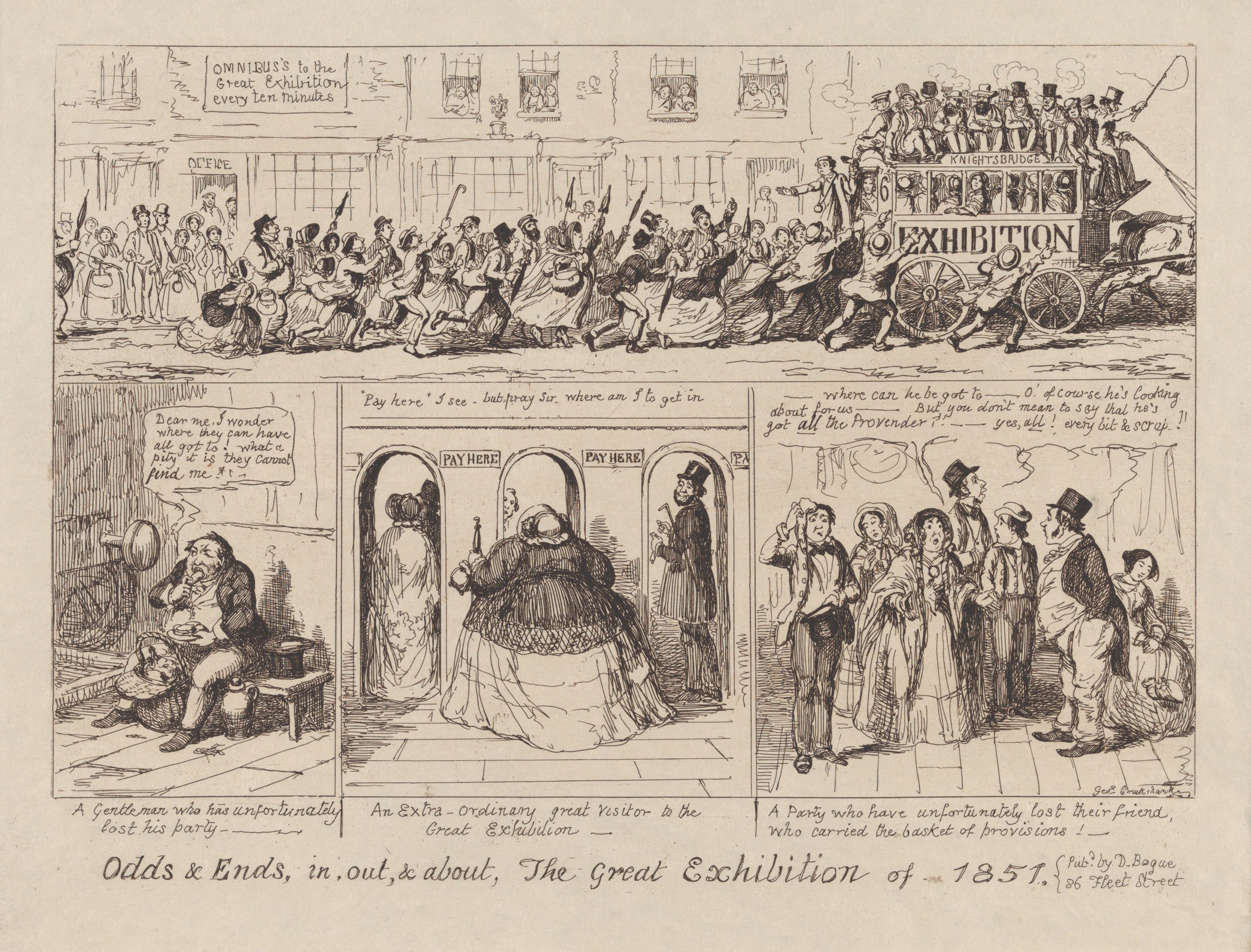
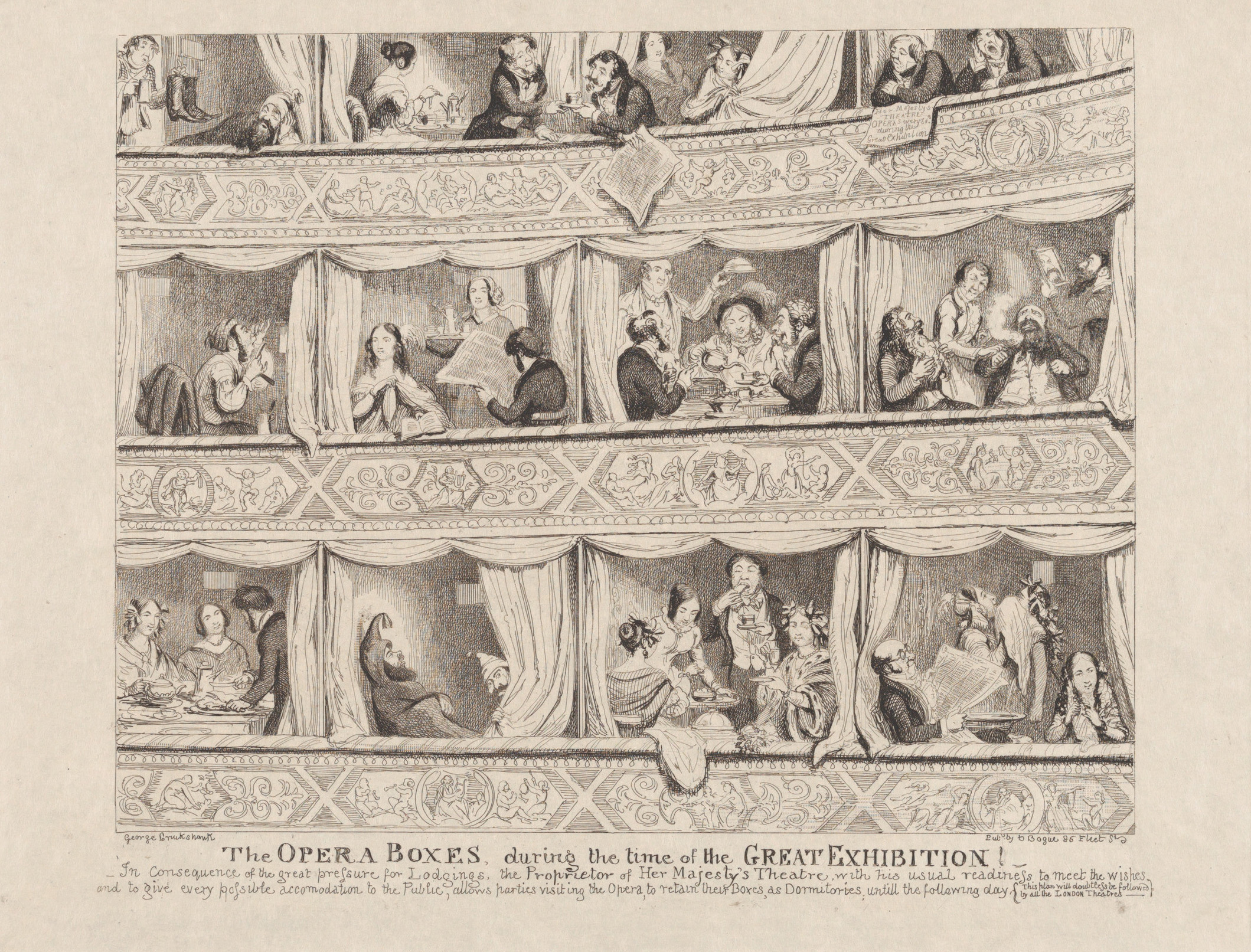
Viewing: Period Cartoons

Credit: George Cruikshank, 1851 (link).

Writing

  1. How did the Great Exhibition represent non-European cultures and peoples? Focus our attention on a particular detail from one of the images.
  2. What can you learn from the cartoons about public attitudes toward the Exhibition—or perhaps the larger world?
  3. How does this Exhibition compare to modern-day versions, such as Disney’s Epcot Center?

Mourning and Sensuality

Part 1: Mourning

Public shows of grief came to predominate in 19th century Britain, as epitomized by the 40-year long period during which Queen Victoria mourned the death of her beloved husband Albert, beginning in 1861 and ending with her death in 1901. Her example helped elevate the practice, as did the work of the era’s most prominent poet, Alfred Tennyson. After his best friend, Arthur Hallam, died in 1833, aged 22, Tennyson spent the next 17 years producing a book-length poem wrestling with that loss, titled In Memoriam, A.H.H. obit. MDCCCXXXIII.

Reading: Three pieces by Tennyson mourning the loss of Arthur Hallam.

Part 2: Sensuality

While the Victorians have a well-deserved reputation for sexual prudery, their poetry and art are often suffused with sensuality.

Reading: Two Poems

Viewing: four Pre-Raphaelite paintings:

  • William Holman Hunt, The Lady of Shalott (1888-1905)
  • John William Waterhouse, The Lady of Shalott (1888)
  • John Everett Millais, Ophelia (1851)
  • Dante Gabriel Rossetti, Lady Lilith (1866-68)

Note: if you’re unfamiliar with the legend of Lilith or with the role of Ophelia in Hamlet, take a moment to google those names.

Writing: Respond to ONE of the following prompts. Keep your response short, posting as a reply under the appropriate heading in the comments section:

  1. Call our attention to a particularly moving line or detail from one of Tennyson’s poems of mourning.
  2. At the end of Part II, the Lady of Shalott declares “I am half sick of shadows.” Unfold the significance of this key line.
  3. It’s hard not to come away from Rossetti’s “Goblin Market” identifying the goblins’ fruit with sexuality. What details in the poem help to create this association? On the other hand, what details in the poem complicate or undermine the association?

Musée des Beaux Arts

W.H.Auden, “Musée des Beaux Arts”

Auden wrote this short poem in 1938, after a visit to the Royal Museum of Fine Arts in Belgium, inspired by its collection of paintings by the “Old Masters” of the Netherlandish Renaissance. The three paintings referenced in the poem are shown above: The Census at Bethlehem, The Massacre of the Innocents, and The Fall of Icarus. All are by Pieter Breughel the Elder and all date to the 1560s.

W.H.Auden
“Musée des Beaux Arts”

About suffering they were never wrong,
The Old Masters: how well they understood
Its human position; how it takes place
While someone else is eating or opening a window or just walking dully along;
How, when the aged are reverently, passionately waiting
For the miraculous birth, there always must be
Children who did not specially want it to happen, skating
On a pond at the edge of the wood:
They never forgot
That even the dreadful martyrdom must run its course
Anyhow in a corner, some untidy spot
Where the dogs go on with their doggy life and the torturer’s horse
Scratches its innocent behind on a tree.

In Breughel’s Icarus, for instance: how everything turns away
Quite leisurely from the disaster; the ploughman may
Have heard the splash, the forsaken cry,
But for him it was not an important failure; the sun shone
As it had to on the white legs disappearing into the green
Water; and the expensive delicate ship that must have seen
Something amazing, a boy falling out of the sky,
Had somewhere to get to and sailed calmly on.

Citation:

  • Auden, W. H. “Musée des Beaux Arts.” The Norton Anthology of Poetry, Third Ed. Edited by Alexander W. Allison, et al. W.W. Norton, 1983.

“Modern Greece”

Felicia Hemans was the daughter of a well-connected importer of Italian wines based in Liverpool and Wales. A gifted linguist and poet, she was acquainted with Wordsworth and Shelley. Though highly popular and widely read, her reputation declined in the decades after her death—a common plight of women writers in the 18th and 19th century. That trend has been reversed over the past thirty years, however, and her work now appears in many anthologies.

In 1817 Hemans anonymously published Modern Greece. Written in the metrical style of Byron’s Childe Harold from two years earlier, the poem was initially attributed to Byron, despite Hemans’ decidedly different attitude toward Lord Elgin’s seizure of the Parthenon Marbles, as shown in the following passage.

From Modern Greece
86      Oh! live there those who view with scornful eyes
     All that attests the brightness of thy prime?
     Yes; they who dwell beneath thy lovely skies,
     And breathe th’ inspiring ether of thy clime!
     Their path is o’er the mightiest of the dead,
     Their homes are midst the works of noblest arts;
     Yet all around their gaze, beneath their tread,
     Not one proud thrill of loftier thought imparts.
     Such are the conquerors of Minerva’s land,
Where Genius first reveal’d the triumphs of his hand!
thy prime: the poem is addressed to the land of Greece, great in its “prime,” but lying now in ruins

conquerors of Minerva’s land: the Turks, who conquered Athens in 1456.

87      For them in vain the glowing light may smile
     O’er the pale marble, colouring’s warmth to shed,
     And in chaste beauty many a sculptured pile
     Still o’er the dust of heroes lift its head.
     No patriot feeling binds them to the soil,
     Whose tombs and shrines their fathers have not rear’d,
     Their glance is cold indifference, and their toil
     But to destroy what ages have revered,
     As if exulting sternly to erase
Whate’er might prove that land had nurs’d a nobler race.
For them: the Turks
88      And who may grieve that, rescued from their hands,
     Spoilers of excellence and foes to art,
     Thy relics, Athens! borne to other lands,
     Claim homage still to thee from every heart?
     Though now no more th’ exploring stranger’s sight,
     Fix’d in deep reverence on Minerva’s fane,
     Shall hail, beneath their native heaven of light,
     All that remain’d of forms adored in vain;
     A few short years—and, vanish’d from the scene,
To blend with classic dust their proudest lot had been.
89      Fair Parthenon! yet still must fancy weep
     For thee, thou work of nobler spirits flown.
     Bright, as of old, the sunbeams o’er thee sleep
     In all their beauty still—and thine is gone!
     Empires have sunk since thou wert first revered,
     And varying rites have sanctified thy shrine.
     The dust is round thee of the race that rear’d
     Thy walls; and thou—their fate must soon be thine!
     But when shall earth again exult to see
Visions divine like theirs renew’d in aught like thee?

Citation: Hemans, Felicia. Modern Greece, 1817. Text from Project Gutenberg, 2021. Edited by Charles Henebry, 2023. hum104.commacafe.org/modern-greece