Class 4.1

Surrealism and Alienation

Class Prep: Surrealism

Surrealism

Surrealism seeks to draw upon the imaginative power of the unconscious mind to challenge received ways of thought and so bring about a revolutionary consciousness. I use the present tense in this sentence because while Surrealism first blossomed in 1920s Paris, the movement still has practitioners working in the present day. It first emerged as an outgrowth from Dada. Artists working under the banner of Dada had sought to tear down meaning, but as Surrealists they came to embrace a communitarian ethos—and they engaged in a long running dalliance with the French Communist Party. In the “Manifesto of Surrealism” (1924), Andre Breton theorized imagination, in opposition to the straitjacket of pragmatic utilitarianism, as opening a path to freedom, the first step in reinventing the world order:

Beloved imagination, what I most like in you is your unsparing quality. The mere word “freedom” is the only one that still excites me. I deem it capable of indefinitely sustaining the old human fanaticism. It doubtless satisfies my only legitimate aspiration. Among all the many misfortunes to which we are heir, it is only fair to admit that we are allowed the greatest degree of freedom of thought. It is up to us not to misuse it. To reduce the imagination to a state of slavery—even though it would mean the elimination of what is commonly called happiness—is to betray all sense of absolute justice within oneself. Imagination alone offers me some intimation of what can be, and this is enough to remove to some slight degree the terrible injunction; enough, too, to allow me to devote myself to it without fear of making a mistake (as though it were possible to make a bigger mistake).

Reading: Strickland, pp 148-51.

Viewing: Surrealist art

  • René Magritte, The Double Secret (1927)
  • René Magritte, The Treachery of Images (1929)
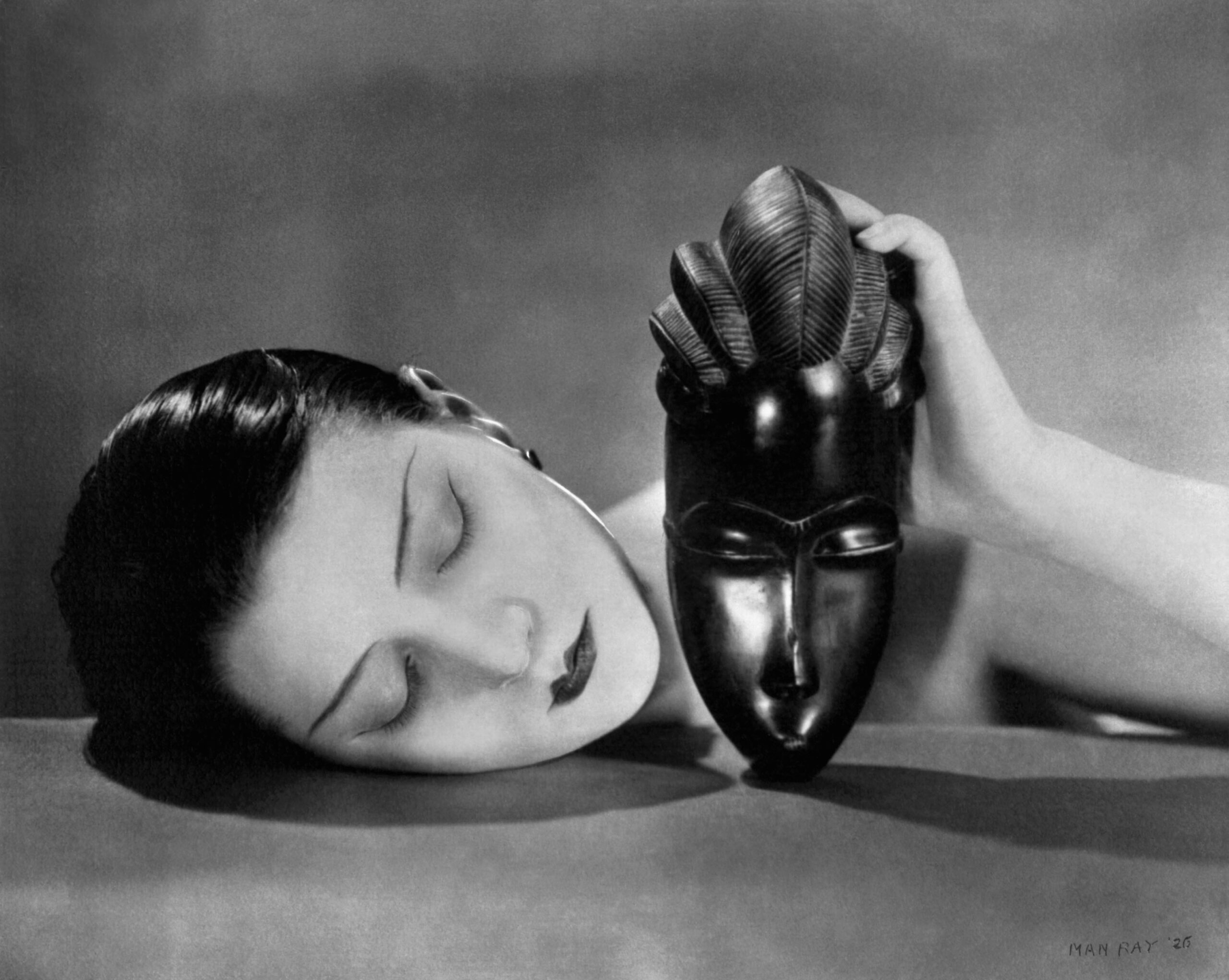
  • Man Ray, Black and White (1926)
  • Man Ray, Sleeping Woman (1929)
  • Salvador Dali, The Persistence of Memory (1931)
  • Méret Oppenheim, Object (1936)
  • Elsa Schiaparelli and Salvador Dali, Lip Dress and Shoe Hat (1937)
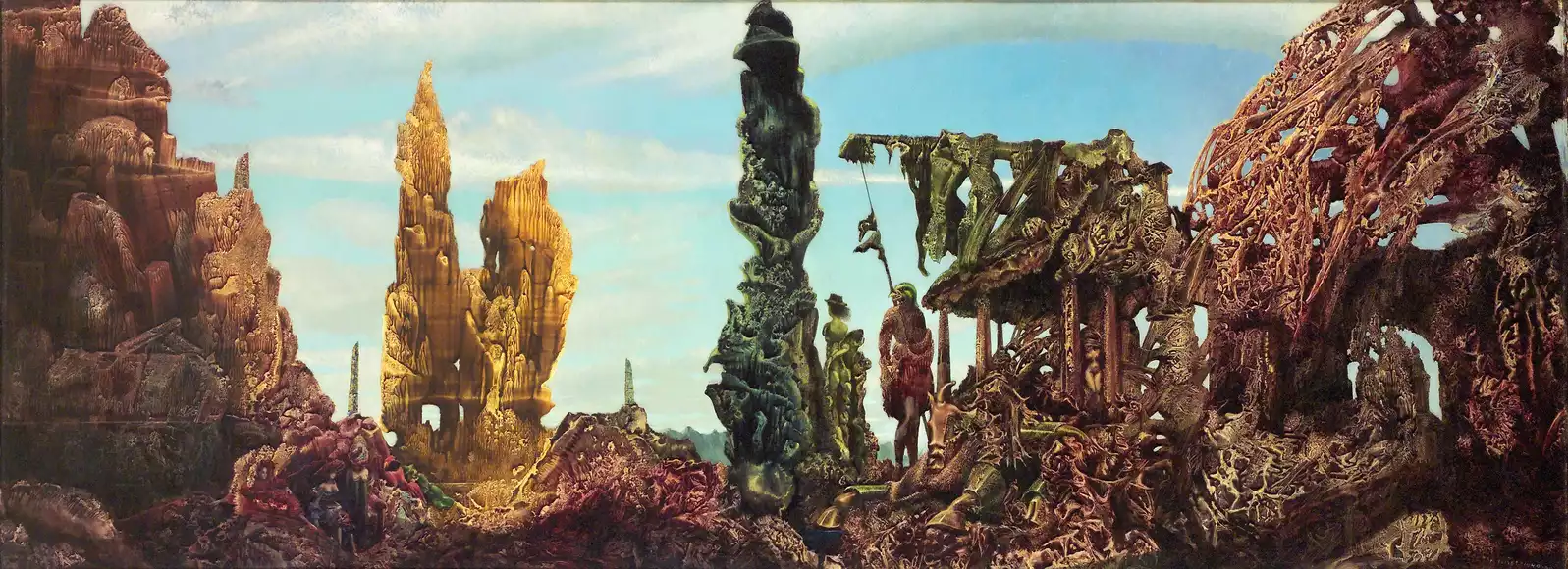
  • Max Ernst, Europe After the Rain (1942)

Writing: Respond to ONE of the following prompts. Keep your response short, posting as a reply under the appropriate heading in the comments section:

  1. Point to a stylistic or thematic pattern you see in some or all of these artworks.
  2. Point to a striking detail in one particular artwork.
  3. How does Surrealism compare to Expressionism? Point to a similarity or contrast between specific works.
Class Prep: Kafka's Metamorphosis

Bugging Out

Born in Prague in 1883, Franz Kafka is one of the most influential writers of the twentieth century. Yet almost all his fiction was published posthumously, after his early death from tuberculosis in 1924. As an educated, German-speaking lawyer, Kafka was a member of Prague’s middle class, but he was also very much an outsider, a Jew living in the Austro-Hungarian Empire (after 1918, Czechoslovakia). Emperor Franz Joseph I had extended full citizenship to Jews fifteen years before Kafka’s birth, but antisemitism remained rife—and found terrible expression after Hitler occupied Prague fifteen years after Kafka’s death.

Kafka’s short novel The Metamorphosis presents middle-class existence as precarious—and throws into question whether family can stand as a bulwark against the vagaries of fortune.

Reading: Kafka, The Metamorphosis trans Susan Bernofsky.

Optional Reading: our translator, Susan Bernofsky, talks about the challenges of rendering Kafka’s story in English in an article published in the New Yorker: link. (This may be present in your copy of the book, as an “Afterword.”)

Writing: Respond to ONE of the following prompts. Keep your response short, posting as a reply under the appropriate heading in the comments section:

  1. Given that “anomie” is defined as the loss of social norms, point to a particular moment in Kafka’s story and explain how it challenges or violates the reader’s normative expectations.
  2. Gregor Samsa is often characterized as an “antihero.” Without looking up that term, point to something specific that Samsa does (or fails to do) that strikes you as unheroic.
  3. There are lots of weird moments in this story: point to one and comment briefly.

Class 3.2

Expressionism and Alienation

In Social Science you’ve learned about Emile Durkheim’s theory of anomie: a breakdown of social norms precipitated by the shift from small rural communities to large-scale urban life. In the first half of the twentieth century, many writers and visual artists gave voice to a sense of alienation, none more famously than Edward Munch in The Scream (1910).

Both Eliot’s Waste Land and Chaplin’s Modern Times channel the theme of alienation. For class today we examine artists who raised this anxiety to a fever pitch: the Expressionists.

Class Prep: Expressionism

Expressionism

Expressionism in art is often traced to the influence of Edvard Munch, whose Scream captures the artist’s tortured soul. In the years before the War, Expressionism spread from painting to poetry, drama and film and after the war it came to define the Avant-Garde in Weimar Germany.

Reading: Strickland, pp 123, 142-44.

Viewing: Expressionist art

  • Edvard Munch, The Scream (earliest version 1893; this version 1910)
  • Egon Schiele, Self-Portrait (1910)
  • Otto Dix, Storm Troopers Advance under a Gas Attack (1924)
  • Otto Dix, Portrait of the Journalist Sylvia von Harden (1926)
  • Max Beckmann, Self-Portrait with Champagne Glass (1919)
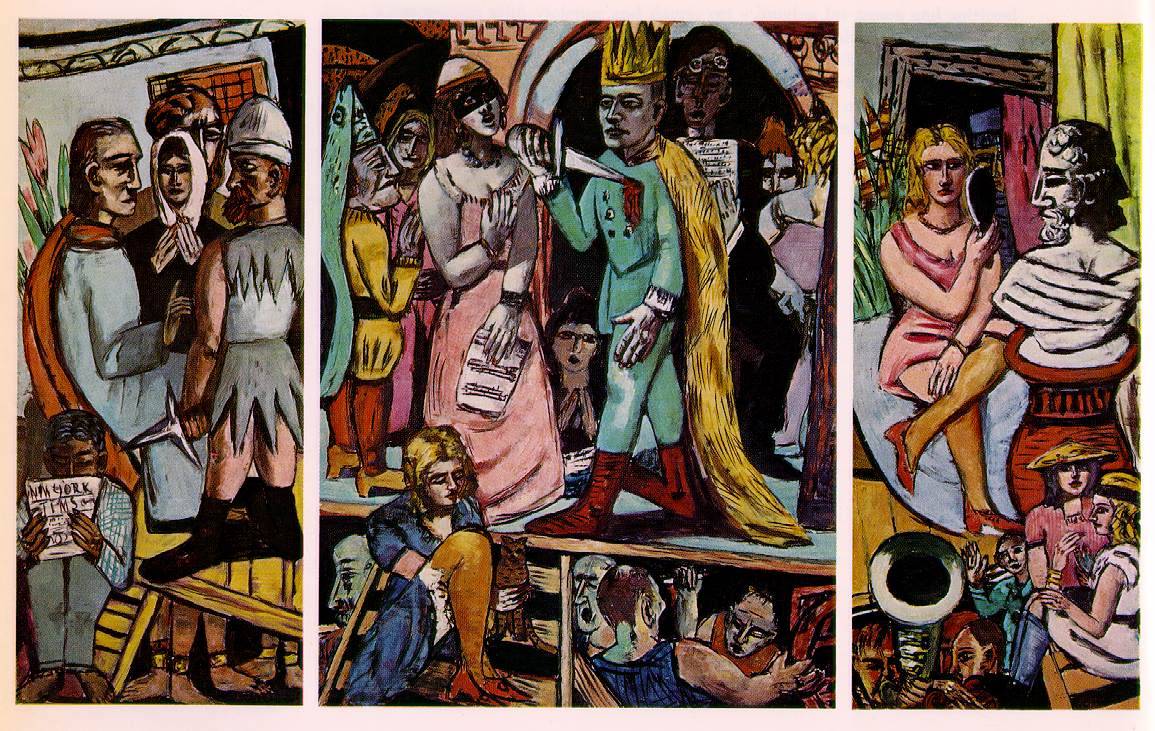
  • Max Beckmann, The Actors (1942)

Writing: Respond to ONE of the following prompts. Keep your response short, posting as a reply under the appropriate heading in the comments section:

  1. Point to a stylistic or thematic pattern you see in some or all of these artworks.
  2. Point to a striking detail in one particular artwork.
  3. Given that “anomie” is defined as the loss of social norms, point to a particular artwork and explain how it challenges or violates the viewer’s normative expectations.
Class Prep: The Cabinet of Dr. Caligari

Crooked Houses, Crooked Minds

Committed pacifists Hans Janowitz and Carl Mayer wrote the screenplay for The Cabinet of Dr. Caligari in the wake of World War I. The movie reflects the antiwar ethos and Expressionist aesthetic that came to the fore in 1920s Weimar Germany.

Viewing:
Robert Wiene, The Cabinet of Dr. Caligari available via: Kanopy. Make sure to turn on both the volume (there is music!) and the English subtitles (to accompany the German intertitle cards).

Writing: Respond to ONE of the following prompts. Keep your response short, posting as a reply under the appropriate heading in the comments section:

  1. Point out and comment on a stylistic or thematic pattern in the movie’s visuals.
  2. Point out and comment on a moment where the movie challenges authority or the social order.

Class 3.1

Collage and the Crisis of Meaning

The turn of the century in 1900 spurred futuristic dreams, but few anticipated the century brought into being fourteen years later by World War I. A generation of of young men lost their lives, apparently to no purpose. The ruling class lost its legitimacy, resulting in significant changes in Britain—and a revolutionary changes in Russia, Austria, Turkey, and Germany. The system of international trade collapsed, replaced by protectionism and isolationism. More fundamentally, the war’s brutality challenged a deep-set faith that technological and social progress would march ever forward in lockstep. In the wake of the conflict, Democracy seemed outdated, a relic of the Enlightenment; the new world called for a new mass politics, whether in the mode of Communism or Fascism.

Class Prep: Cubist Collage

Collage and the Modern Age

Both scholars listed below agree on the centrality of collage to modernist art; they disagree only in how broadly they define Modernism. Greenberg focuses wholly on developments within the field of painting, while Hopkins speaks of culture in the broadest sense: literature, film, etc.

Scholarly Reading: Two Perspectives on Collage

  • Clement Greenberg, “The Pasted-Paper Revolution” (1958) (Blackboard)
  • Budd Hopkins, “Modernism and the Collage Aesthetic” (1997) (Blackboard)

Viewing: Analytic and Synthetic Cubism

  • Pablo Picasso, Les Demoiselles d’Avignon (1907)
  • Georges Braque, Violin and Palette (1909)
  • Pablo Picasso, Still Life with Chair Caning (1911)
  • Georges Braque, Homage to J. S. Bach (1911-12)
  • Pablo Picasso, Guitar, Sheet Music and Wine Glass (1912)
  • Juan Gris, The Table (1914)

Writing: Respond to ONE of the following prompts. Keep your response short, posting as a reply under the appropriate heading in the comments section:

  1. Point to ONE quality that these Cubist works share in common with the Futurist art we examined last week. Alternatively, point to something that makes them distinct.
  2. Drawing on Greenberg or Hopkins—or just pointing to the art itself, should Cubist collage be classed as mimetic or expressive art? Or some third thing?
Class Prep: The Waste-Land

Eliot’s Crisis of Meaning

As Budd Hopkins suggests in an article linked in the preceding section, Eliot’s “Waste Land” has the formal structure of a collage. We encounter an extraordinary variety of language, fragments from classical literature, scraps of popular songs, bits from overheard conversations. These are piled together, apparently at random, in a way that suggests the breakdown of cultural coherence. As the final lines comment, “These fragments I have shored against my ruins.” This lack of structure forces the reader into a role ordinarily assumed by the author: that of making meaning.

Reading: T.S. Eliot, The Waste Land (link). Note: you may find it valuable to listen to Eliot’s poem read by professional actors Jeremy Irons and Eileen Atkins: YouTube. They bring to life the very different “voices” that form the patchwork of Eliot’s poem.

Writing: Respond to ONE of the following prompts. Keep your response short, posting as a reply under the appropriate heading in the comments section:

  1. An American living in Europe (mostly London), Eliot was likely struck by the rigid class hierarchies of the old world. Where does class enter into The Waste Land?
  2. Early in the poem Eliot references the loss of life in World War 1. Quote a key moment and comment as to how the poem contextualizes the war.
  3. Having plundered Western European myth and literature, in the final section Eliot turns to Hindu scripture: Da, Datta, Dayadhvam, Damyata. How is this similar to or different from the Orientalism we witnessed at the Royal Pavilion in Brighton, dating a century before Eliot’s poem?

Class 2.2

Man and the Machine Age

As the nineteenth century came to a close, the world teetered on the brink of a global shift of consciousness, one so significant that it usurped the word “modern” to mean “the culture of the 1920s” rather than “the culture of the present day.” We begin our multi-session exploration of the Modern Age by looking at the role that machines played in this transformation.

Class Prep: Futurism

Loving the Machine

In the years leading up to World War I, a group of Italian artists came together under the banner of Futurism. Whereas Art Nouveau sought compromise with modernity, reshaping metal and glass in soft organic curves, the futurists welcomed the hard edges and high speeds of machinery.

When conflict broke out in 1914, it was greeted with enthusiasm across Europe, but for most that excitement gave way to horror as reports filtered back from the front lines of the meat grinder of trench warfare. Paradoxically, the era’s powerful technologies—machine guns, artillery shells—produced stalemate rather than speedy victory. But while this experience left many determined to make the “Great War” the “War to End All Wars,” the Futurists remained enamored of both machinery and armed conflict, believing that violence could reenergize Italy. Unsurprisingly, in the years after the war’s end in 1918, they allied themselves with the National Fascist Party of Benito Mussolini.

Reading: “The Futurist Manifesto,” published in 1909 by Filippo Marinetti on the front page of the Parisian daily Le Figaro (Blackboard).

Viewing: examples of Futurist art:

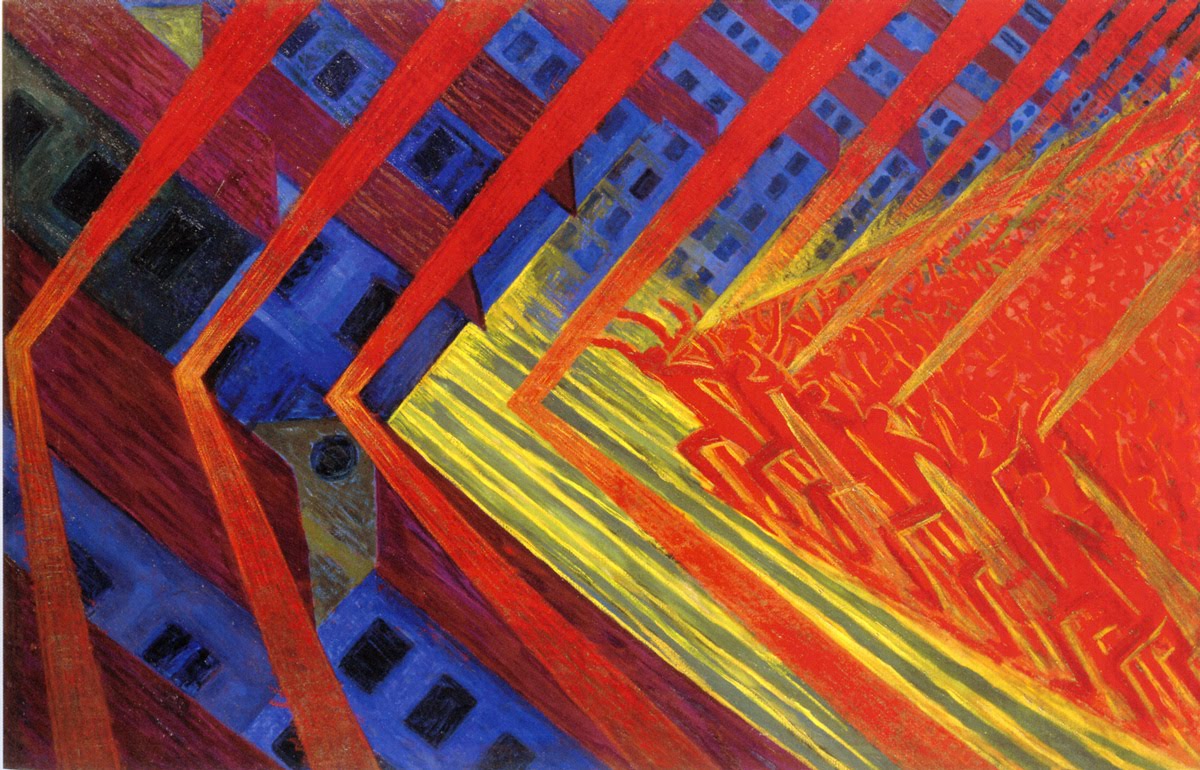
  • Luigi Russolo, The Revolt (1911)
  • Luigi Russolo, Dynamism of an Car (1913)
  • Umberto Boccioni, Unique Forms of Continuity in Space (1913)
  • Gino Severini, Memories of a Journey (1911)
  • Gino Severini, Armored Train in Action (1915)
  • Filippo Marinetti, In the Evening, Lying on Her Bed, She Reread the Letter from Her Artilleryman at the Front (1919)

Writing: Respond to ONE of the following prompts. Keep your response short, posting as a reply under the appropriate heading in the comments section:

  1. Point out a key contrast OR continuity in the Futurist art featured above.
  2. Point out a key contrast OR continuity between Marinetti’s 1909 manifesto and one of the Futurist artworks.
Class Prep: Chaplin's Modern Times

Little Tramp in a Big Factory

Chaplin created his “Little Tramp” character in 1914-15 as a bumbling vagrant whose aspirations to romance and gentlemanly dignity routinely fall short. Yet he always rebounds from setbacks, ready to try again.

For class today, I’m asking you to watch the final appearance of the Little Tramp character. The 1936 movie Modern Times dates several years after the end of the silent film era (1894-1929). While it draws on the idiom of silent movies, it makes abundant use of sound effects. And at key moments characters speak aloud.

Viewing: Chaplin, Modern Times, available via: Kanopy. (If this doesn’t work, try BOB).

Writing: Respond to ONE of the following prompts. Keep your response short, posting as a reply under the appropriate heading in the comments section:

  1. Focusing on the initial sequence in the factory (00:00-19:10), point to a key detail and comment on its significance—whether political or artistic.
  2. Focusing on the first part of the movie’s love story (42:00-1:00:00), point to a key detail and comment on its significance—whether political or artistic.
  3. Focusing on the movie’s final sequence (1:09:00-1:27:10), point to a key detail and comment on its significance—whether political or artistic.
In Class: Duchamp's Nude Descending a Staircase

Photography and Motion

English photographer Eadweard Muybridge began his pioneering work into the study of motion in 1878. Using multiple cameras with high-speed film, Muybridge established for the first time the stride of a galloping horse, as well as a host of other motions too fast for the eye to follow. He changed the way we see the world. And, by breaking motion down into a series of static frames, his work beckoned the way to re-animation of static sequences as movies.

Around the same time, French photographer Étienne-Jules Marey perfected a method for superimposing multiple moments on a single photograph, as for example the image of a pelican landing.

Both photographers’ influence can be seen in one of the most famous works of Modernist Art, Marcel Duchamp’s Nude Descending a Staircase, as well as Futurist works like Giacomo Balla’s 1912 Dynamism of a Dog on a Leash.

  • Muybridge, Horse’s Gallop (1878)
  • Marey, Pelican landing (1882)
  • Duchamp, Nude Descending a Staircase (1912)
  • Balla, Dynamism of a Dog on a Leash (1912)

Class 2.1

Contrasting Visions of Nature

Darwin’s theory of natural selection was understood by his contemporaries as a struggle for survival akin to the rigors of free market capitalism: just as society was changing and progressing through innovations in business and technology that pitted one interest group against another, so too did species rise from simpler to more complex forms in a bloody competition to survive and reproduce. Whereas today we conceptualize nature as an interconnected web, Victorian Darwinists pictured it as a free-for-all, “Nature red in tooth and claw,” thus dramatizing the difference between their outlook and the preexisting understanding of a natural order created by God and expressing His wisdom.

For Class: The Island of Dr. Moreau

Civilized Savagery

The Island of Dr. Moreau explores the boundary between civilization and savagery, imagining brutal medical procedures capable of transforming beasts into men. Like the best science fiction, the novel functions as social commentary in addition to being a thought experiment about science’s philosophical consequences.

Reading:
H.G. Wells, The Island of Dr. Moreau

Writing: Respond to ONE of the following prompts. Keep your response short, posting as a reply under the appropriate heading in the comments section:

  1. Point to a moment when the novel comments on the ideology and practices of the British Empire.
  2. Comment on the significance of a key event or detail from the opening chapter for the novel’s larger themes.
  3. Comment on the role of pain in transforming beasts into men, as described by Moreau in Chapter XIV.
For Class: Impressionism

The Painter and the Camera

In The Annotated Mona Lisa, Carol Strickland positions her chapter on the French Impressionists immediately after a section in early photography. While she doesn’t discuss the influence of photography on the Impressionists in particular, several recent museum exhibits have done just that, arguing for “the crucial role of early photography in inspiring [not only] Impressionist iconography, but also, and more emphatically, Impressionist style and particularly its strategies of asymmetry, cropping and the blurring of motion” (source).

Reading:

  • Strickland, pp 92-96, 99-103, 106, 108.
  • Elena Martinique, “How Did Photography Influence The Impressionists?” (link).

Viewing 1, some representative Impressionists:

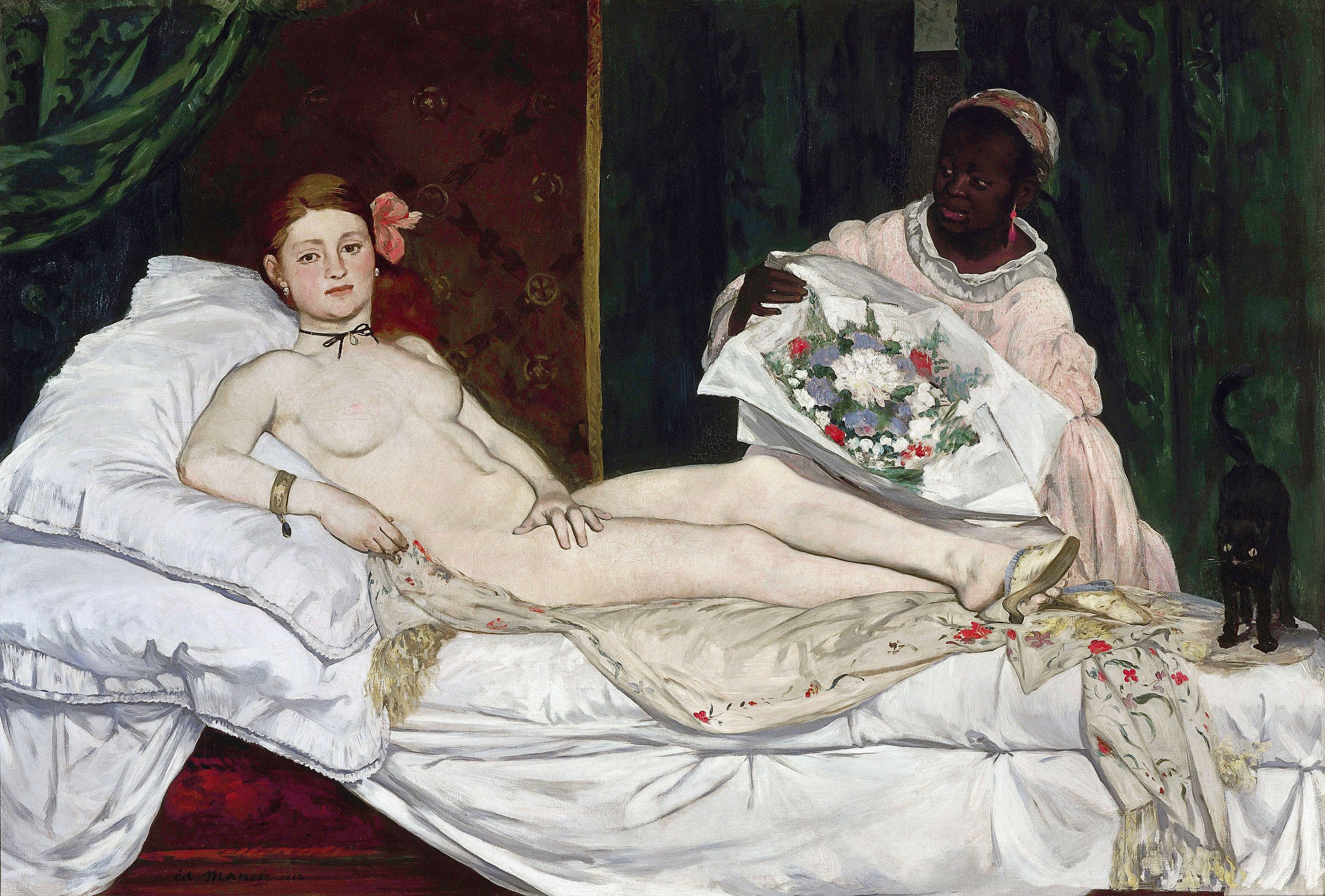
  • Édouard Manet, Olympia (1863)
  • Édouard Manet, Un bar aux Folies Bergère (1882)
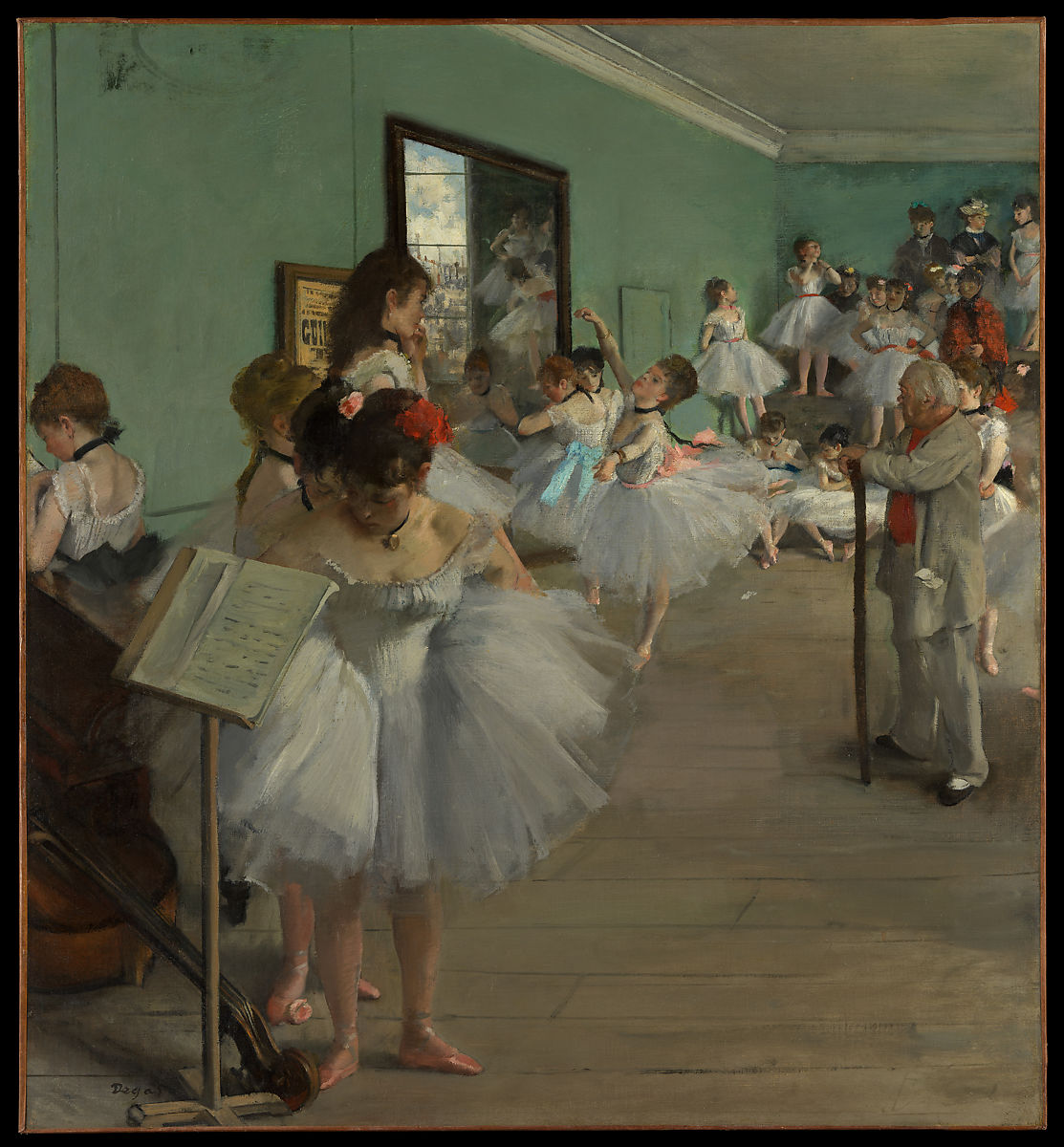
  • Edgar Degas, The Dance Class (1874)
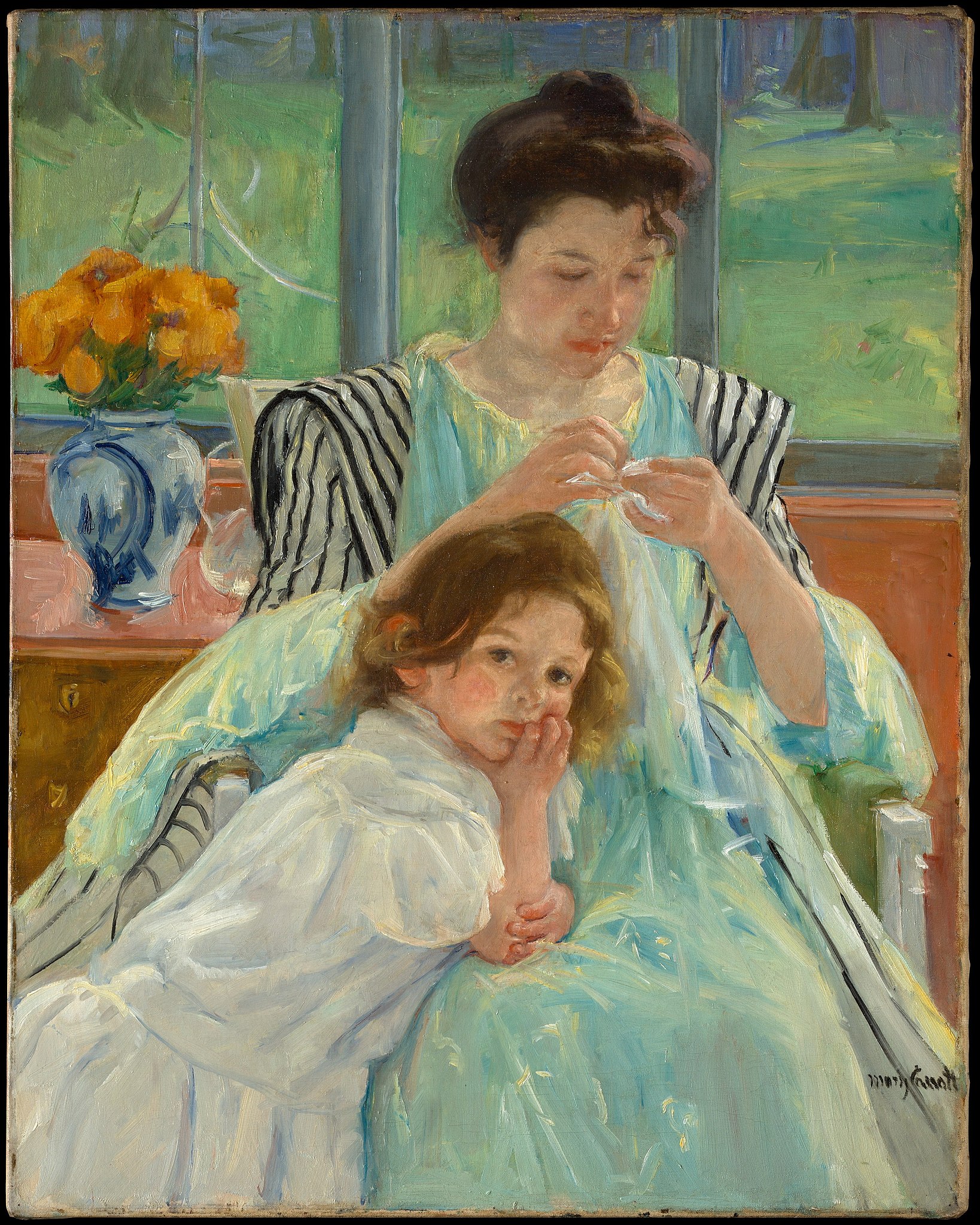
  • Mary Cassatt, Young Mother Sewing (1893)

Viewing 2, a close study of Claude Monet’s Houses of Parliament (1899-1904):

Monet created this exquisite series during a series of visits to London. Fascinated with the city’s fog and other atmospherics, he positioned himself across the river, in front of St. Thomas’ Hospital. The paintings were begun on site, then completed at his home in Giverny with the aid of photographs. A 2006 study published in the Proceedings of the Royal Society showed that the paintings are sufficiently accurate as to provide a useful empirical record of London’s fogs—a phenomenon caused by urban pollution and consigned to history following the passage of environmental legislation in 1956 (source).

Writing: Respond to ONE of the following prompts. Keep your response short, posting as a reply under the appropriate heading in the comments section:

  1. Point to a stylistic or thematic pattern you see in some or all of these paintings.
  2. Point to a striking detail in one particular painting.
  3. Point to a painting that strikes you as betraying the influence of photography’s “way of seeing.”

Class 1.2

Contrary Victorian Impulses

Special Class Location Class will meet starting at the usual time in front of the Albert Memorial in Hyde park.

Romanticism prioritized emotion over reason. But during the reign of Queen Victoria (1837-1901), that sensibility was matched by a contrary impulse, traceable to the Enlightenment, to set the world in order: enforcing social decorum, spreading the light of Christianity, and binding far-flung territories in trade networks.

Class Prep: Victorian Sensuality

Love and Death

While the Victorians have a well-deserved reputation for sexual prudery, their poetry and art are often suffused with sensuality—yet a sensuality mixed with thoughts of death and the grave.

Reading: Three Poems: note that Keats dates two decades before Victoria’s reign (1837-1901). His widely popular poem can be seen as setting a trend followed by later writers and artists.

Viewing: four Pre-Raphaelite paintings:

  • William Holman Hunt, The Lady of Shalott (1888-1905)
  • John William Waterhouse, The Lady of Shalott (1888)
  • John Everett Millais, Ophelia (1851)
  • Dante Gabriel Rossetti, Lady Lilith (1866-68)

Note: if you’re unfamiliar with the legend of Lilith or with the role of Ophelia in Hamlet, take a moment to google those names.

Writing: Respond to ONE of the following prompts. Keep your response short, posting as a reply under the appropriate heading in the comments section:

  1. Call our attention to a particularly moving line or visual detail from one these paintings or poems.
  2. At the end of Part II, the Lady of Shalott declares “I am half sick of shadows.” Unfold the significance of this key line.
  3. It’s hard not to come away from Rossetti’s “Goblin Market” identifying the goblins’ fruit with sexuality. What details in the poem help to create this association? On the other hand, what details in the poem complicate or undermine the association?
Class Prep: The Great Exhibition

Part 3: Commerce and Empire

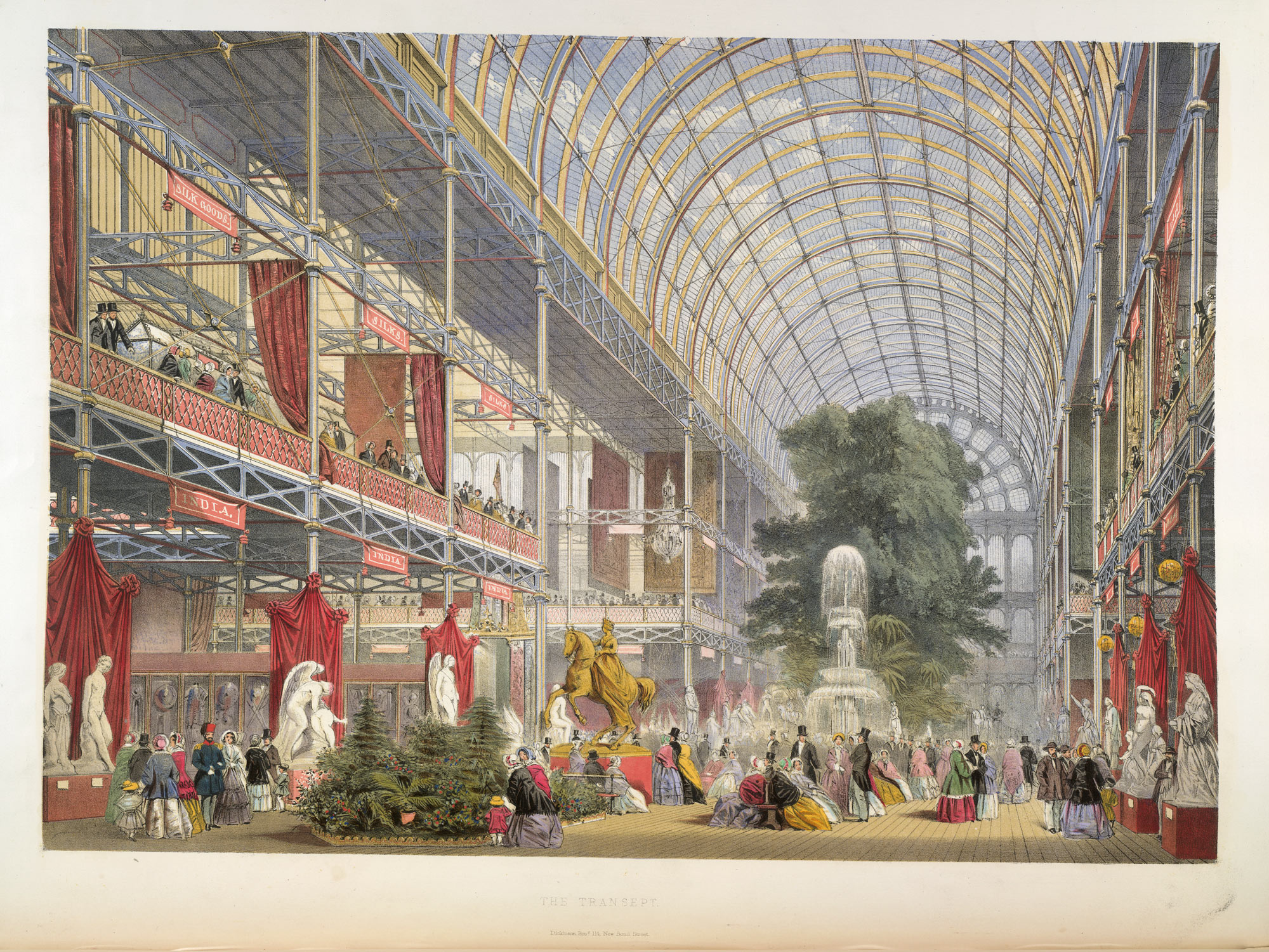
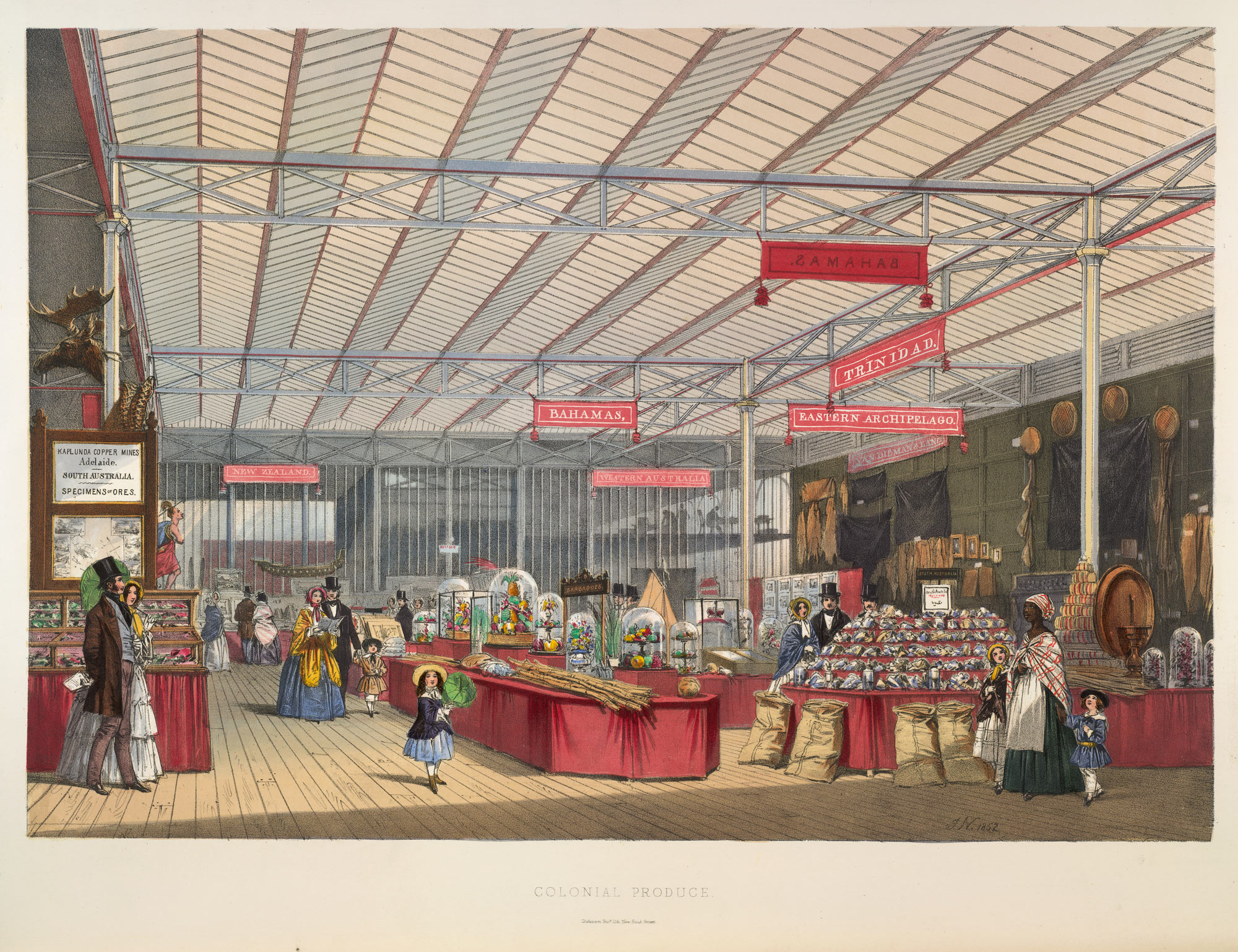
Whereas Victoria ruled over a rapidly expanding empire, her cousin Albert was the junior member of an obscure German noble house. When they married, the terms set by Parliament denied him any English title (though Victoria later proclaimed him “Prince Consort”). Yet Albert proved adept in the use of soft power, campaigning for liberal causes like free trade, educational reform, the end of child labor, and the worldwide abolition of slavery. These passions came together in his plan for the Great Exhibition of 1851, which brought together goods and technologies from around the world in a vast “Crystal Palace.”

Viewing: Period Images of the Crystal Palace

Credits:

  • Opening Ceremony: Eugene-Louis Lami, watercolor 1851 (link).
  • Interior 2: J McNeven, print 1851 (link)
  • Remaining images: Hague, Nash and Roberts, illustrated book (link)

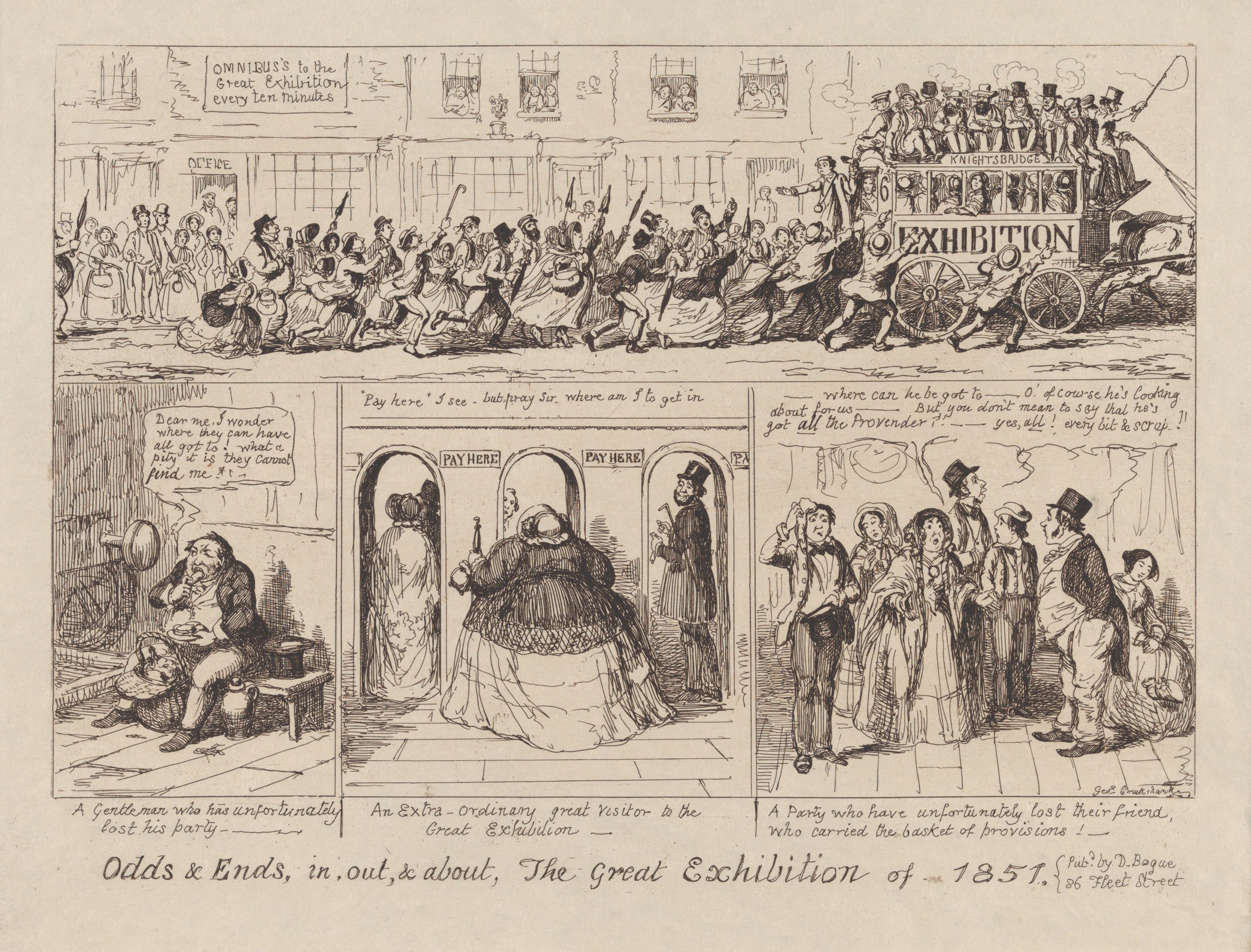
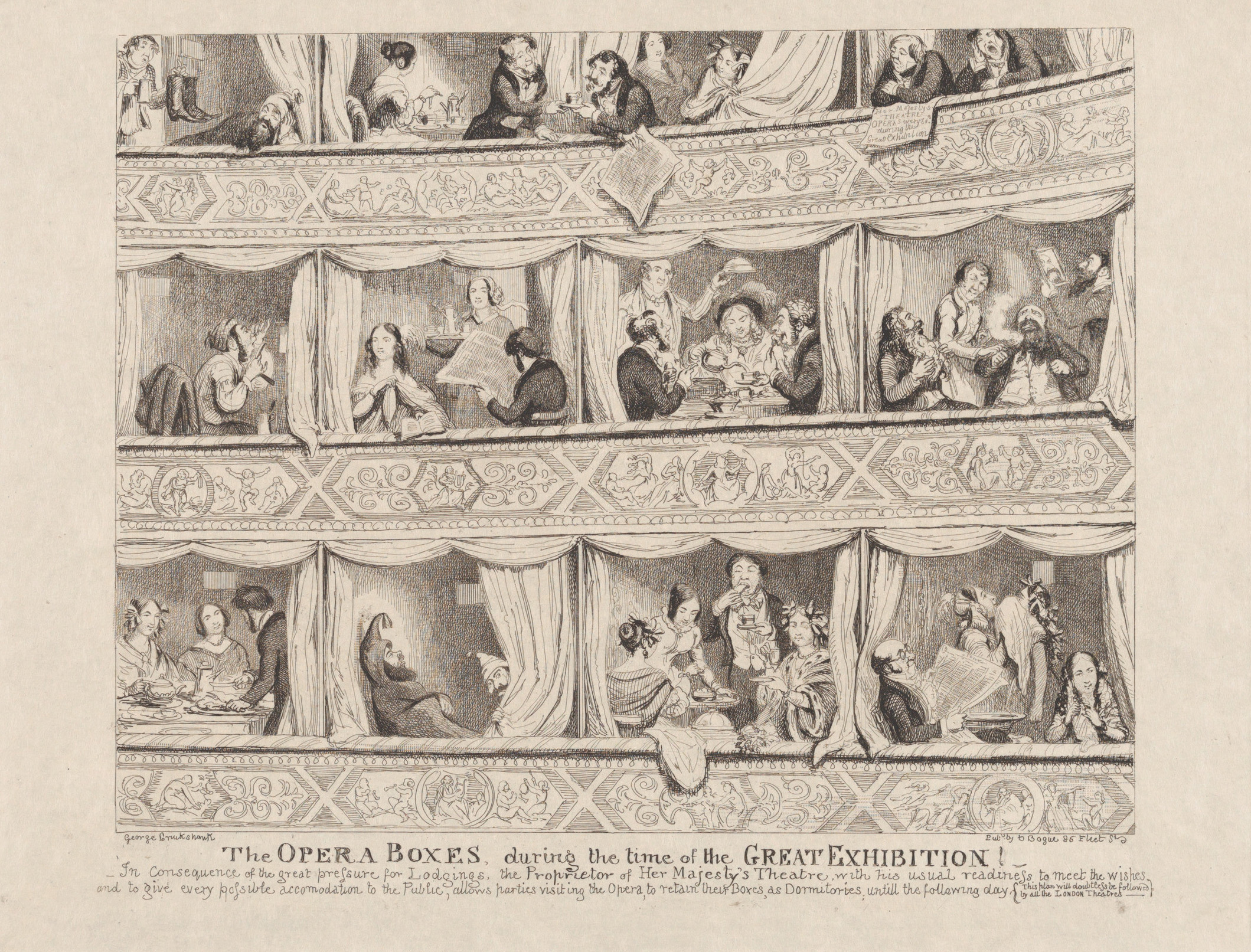
Viewing: Period Cartoons

Credit: George Cruikshank, 1851 (link).

Writing

  1. How did the Great Exhibition represent non-European cultures and peoples? Focus our attention on a particular detail from one of the images.
  2. What can you learn from the cartoons about public attitudes toward the Exhibition—or perhaps the larger world?
  3. How does this Exhibition compare to modern-day versions, such as Disney’s Epcot Center?

Class 1.1

Thinking about Museums

Our classes meet for 2 hours; I plan to cover several distinct topics in each class—usually two topics in total. For convenience, these topics are hidden when this page is first loaded; click on the + to unfold them. Prior to class, make sure to open, read, and respond to ALL items labelled as “Class Prep”; items labelled as “In Class” are presented here only so you can find them later in the semester. Note that each Class Prep section has its own HW assignment; you should complete BOTH Class Prep sections.

For the “Museum Reflection,” due in two weeks, you will visit the British Museum. So I want to focus in our first class on the cultural function of that institution. Established in 1753 as a cabinet of natural curiosities (fossils, preserved specimens, and the like), the museum became a repository for art and cultural artifacts beginning in the early 1800s, as British victory in the Napoleonic wars brought to London a trove of objects from ancient Egypt and Greece. The collection grew enormously over the next two hundred years. Today the vast collection of the British Museum stands as testament to Britain’s imperial might from 1800-1950.

The two “Class Prep” sections, below, offer contrasting answers to the question, “What is the cultural function of a museum?” The first gives a roundly positive answer; the second a far more negative account. Your task in the Museum Reflection assignment will be to reflect on these contrasting perspectives, and perhaps give an answer all your own. Today’s HW starts you on the process of that reflection—be sure to do both sections marked “Class Prep.”

Class Prep: Museum Encounters

Poets and Museum Artworks

The popular movie series, Night at the Museum, imagines displays coming to life after the doors close and the lights go off. This silly premise works, I suspect, because it draws upon something we already believe to be true: that museums are more than just storehouses of dusty relics, that they are staging-grounds where the visitor encounters the “Other”—whether in the form of a long-dead creature, a rare beetle, or a foreign culture.

Reading: as witnesses to this phenomenon, I call to the stand four poets. Each writes in response to a museum artifact, employing ekphrasis to set the artwork before the reader’s eye and (sometimes) apostrophe and prosopopoeia to engage it in conversation:

  • Percy Bysshe Shelley “Ozymandias,” 1817 (link)
  • John Keats, “Ode on a Grecian Urn,” 1818 (link)
  • W.H. Auden, “Musée des Beaux Arts,” 1938 (link)
  • George the Poet, “The Benin bronze,” 2015 (link)

Writing: Respond to ONE of the following prompts. Keep your response short, posting as a reply under the appropriate heading in the comments section:

  1. Highlight a moment in one of these poems where the object responds to inquiry in an unexpected way, surprising the poet—or teaching the audience something new.
  2. All four poems dramatize the poet’s encounter with the past. Focusing on one or two of them, reflect on what they teach us about history and/or the passage of time.
Class Prep: Debating Museums

Museums and the Legacy of Imperialism

The Parthenon Marbles were transported to Britain over the course of a decade beginning in 1801 under the direction of Lord Elgin, Britain’s ambassador to the Ottoman Empire. The Parthenon had lain in ruins for over a century, many of the sculptures from its marble frieze fallen to the ground after the building was used to store gunpowder and then struck by a shell during a war. Elgin claimed to have received permission for the dig from local Ottoman officials, and his ownership was ratified by Parliament when it purchased them for the Crown, designating the British Museum as trustee on the condition that the collection be displayed as the “Elgin Marbles.”

The presence of the marbles in London has been a matter of international debate since 1983, when the Greek parliament formally requested their return. Pressure intensified in 2009, when Greece completed construction of an on-site museum, and again in the run-up to the 2012 Olympics in London. As detailed in a NYTimes article, “The debate has only deepened in recent years as the actions of old empires have come under new scrutiny, and restitution battles have come to challenge the foundations of Western museums” (link). Some of these battles involve ancient artifacts like the Rosetta Stone, which Egypt in 2003 requested to be returned. Others involve ritual objects taken from living cultures, as for example the Benin Bronzes.

Viewing: some famous acquisitions to the British Museum during the nineteenth century.

Reading: recent NYTimes coverage of museums and the legacy of 19th century imperialism.

Writing: Respond to ONE of the following prompts. Keep your response short, posting as a reply under the appropriate heading in the comments section:

  1. What do the four images included above suggest about public enthusiasm toward archaeology back in the nineteenth century? To put it another way, what emotions do these images evoke: wonder? national pride? something else? In your response, focus our attention on particular details in ONE or at most TWO of the images.
  2. Click over to the British Museum excursion (top right) and use the embedded links to examine some of the artifacts you’ll have a chance to see on your visit. Focusing on one artifact in particular, why is it important for objects like this one to be on public display? What positive cultural function do museums serve in today’s society?
  3. The articles linked above all challenge the claim of museums to being the ideal repository of cultural artifacts. Citing one article in particular, paraphrase the critique being levied against museums.
In Class: Contemporary Debate Regarding the Elgin Marbles

Surprisingly, shipping the Parthenon Marbles to London was controversial at the time. This was due, in no small part, to the instant popularity of Childe Harold’s Pilgrimage, in which the Romantic poet Byron reflected on his travels in around the Mediterranean, especially Greece. In the second canto of that 1815 poem, Byron described the ruins of the Parthenon and condemned Elgin as a barbarian pillager. Other Romantic poets disagreed. In 1817 Felicia Hemans responded to Byron’s work with a poem in a similar style and meter, but arguing that the marbles were better off in British hands. And in the same year John Keats wrote an appreciation of the “Elgin Marbles” after making a visit to see them at the British Museum.

Optional Reading:

  • George Gordon Byron, selections from Childe Harold’s Pilgrimage, 1815 (link)
  • Felicia Hemans, selections from Modern Greece, 1817 (link)
  • John Keats, “On Seeing the Elgin Marbles,” 1817 (link)