Jul 9
Contrasting Visions of Nature
Darwin’s theory of natural selection was understood by his contemporaries as a struggle for survival akin to the rigors of free market capitalism: just as society was changing and progressing through innovations in business and technology that pitted one interest group against another, so too did species rise from simpler to more complex forms in a bloody competition to survive and reproduce. Whereas today we conceptualize nature as an interconnected web, Victorian Darwinists pictured it as a free-for-all, “Nature red in tooth and claw,” thus dramatizing the difference between their outlook and the preexisting understanding of a natural order created by God and expressing His wisdom.
The Painter and the Camera
In The Annotated Mona Lisa, Carol Strickland positions her chapter on the French Impressionists immediately after a section in early photography. While she doesn’t discuss the influence of photography on the Impressionists in particular, several recent museum exhibits have done just that, arguing for “the crucial role of early photography in inspiring [not only] Impressionist iconography, but also, and more emphatically, Impressionist style and particularly its strategies of asymmetry, cropping and the blurring of motion” (source).
Reading:
- Strickland, pp 92-96, 99-103, 106, 108.
- Elena Martinique, “How Did Photography Influence The Impressionists?” (link).
Viewing 1, some representative Impressionists:
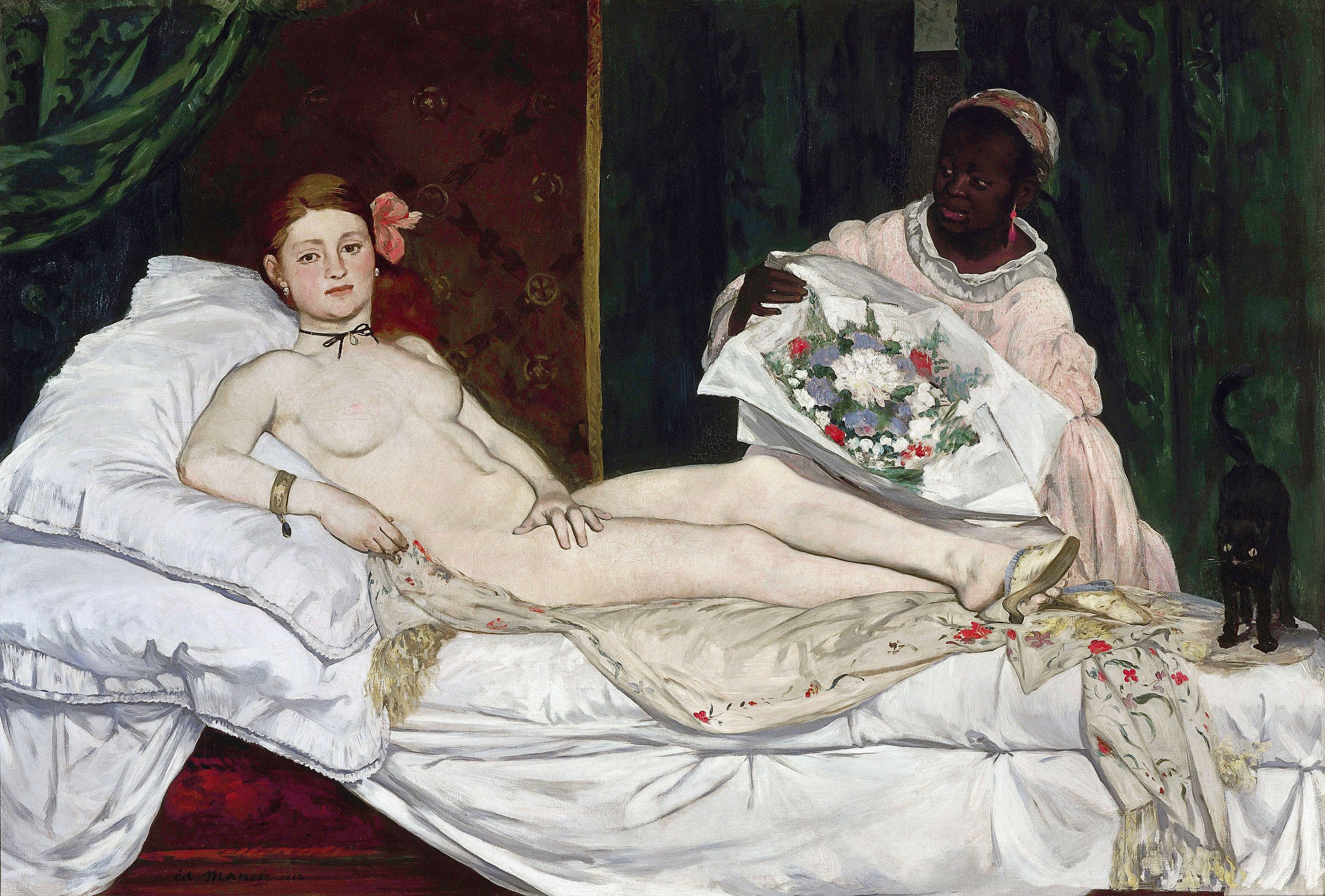

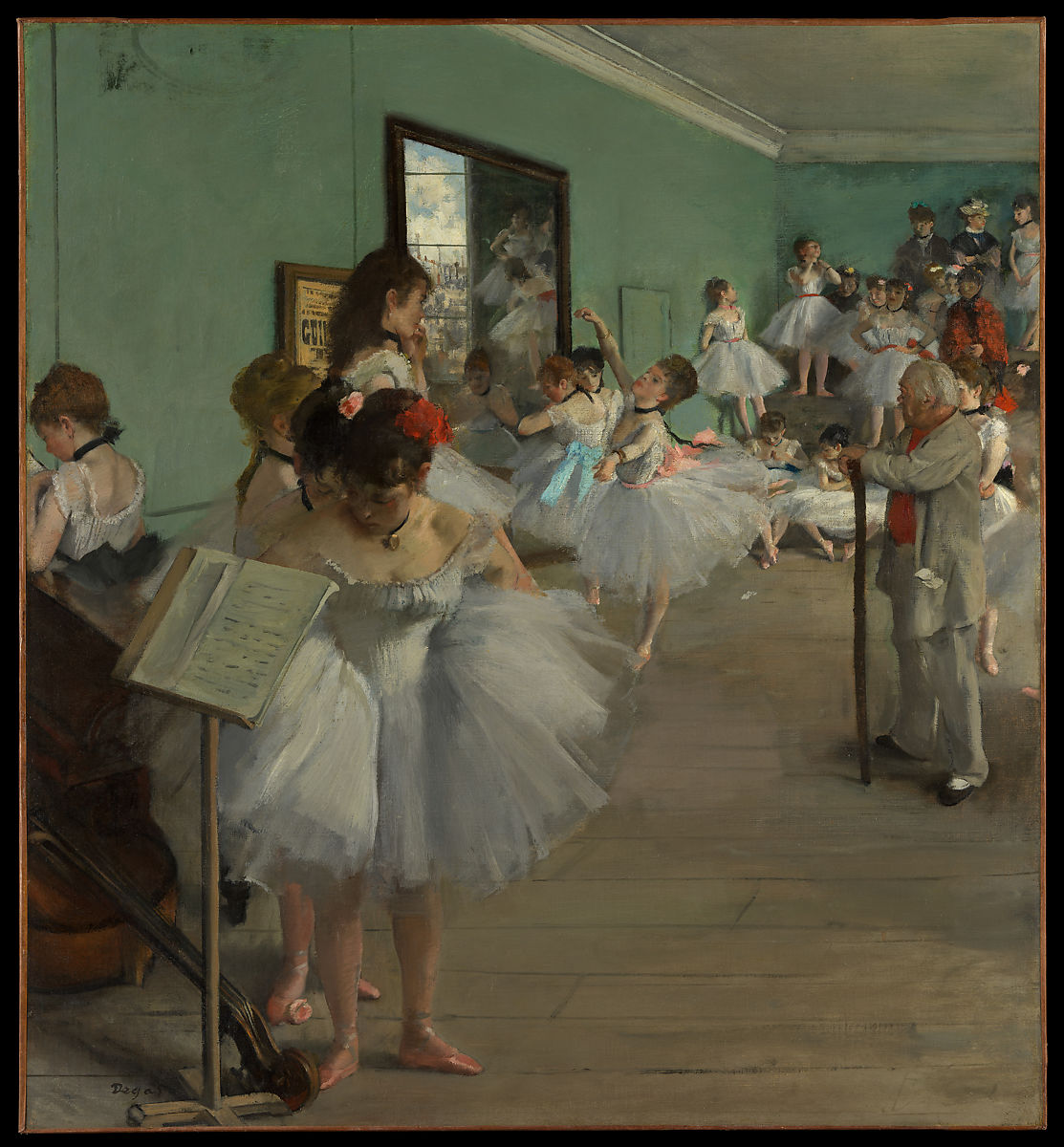
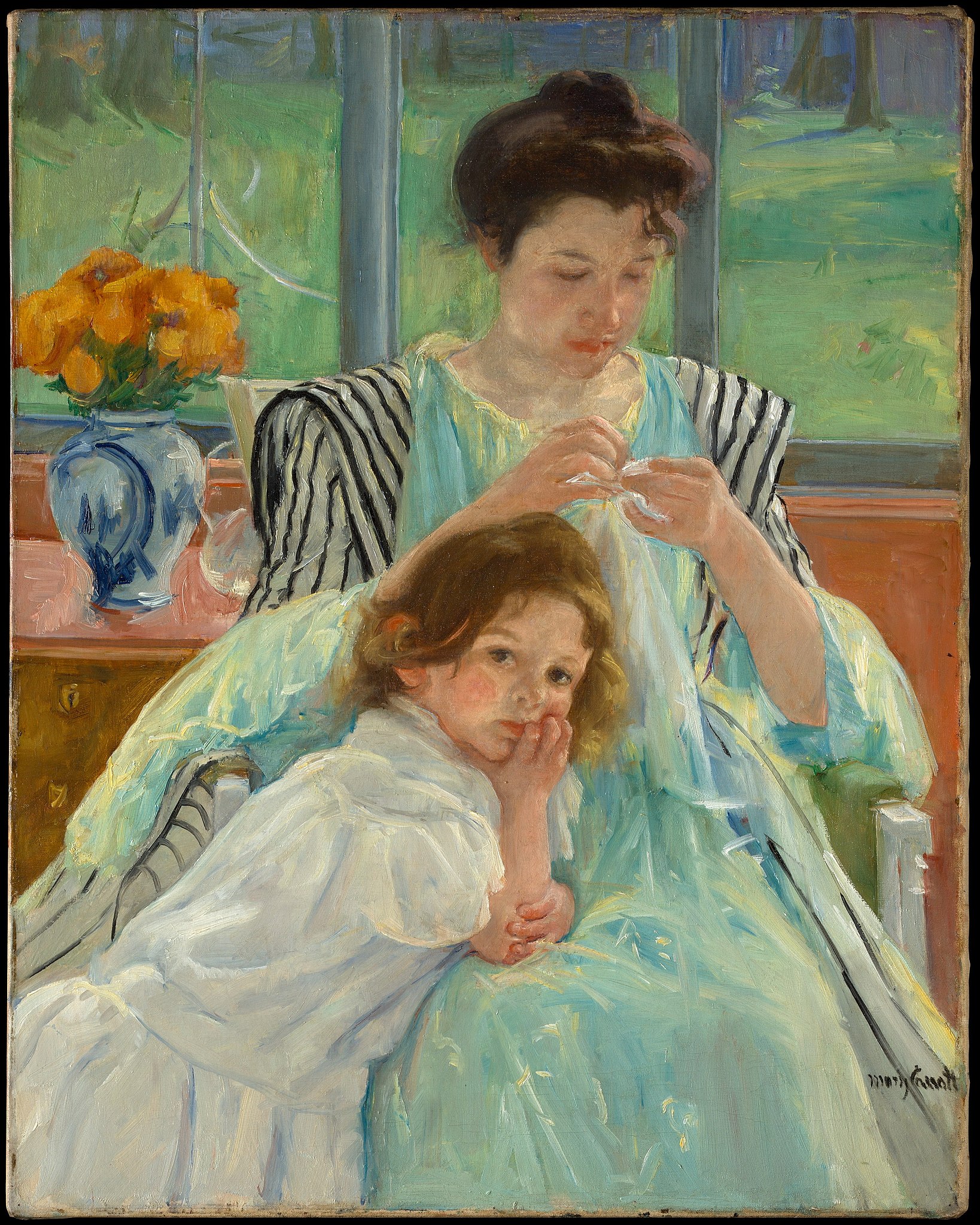
- Édouard Manet, Olympia (1863)
- Édouard Manet, Un bar aux Folies Bergère (1882)
- Edgar Degas, The Dance Class (1874)
- Mary Cassatt, Young Mother Sewing (1893)
Viewing 2, a close study of Claude Monet’s Houses of Parliament (1899-1904):


Monet created this exquisite series during a series of visits to London. Fascinated with the city’s fog and other atmospherics, he positioned himself across the river, in front of St. Thomas’ Hospital. The paintings were begun on site, then completed at his home in Giverny with the aid of photographs. A 2006 study published in the Proceedings of the Royal Society showed that the paintings are sufficiently accurate as to provide a useful empirical record of London’s fogs—a phenomenon caused by urban pollution and consigned to history following the passage of environmental legislation in 1956 (source).
Writing: Respond to ONE of the following prompts. Keep your response short, posting as a reply under the appropriate heading in the comments section:
- Point to a stylistic or thematic pattern you see in some or all of these paintings.
- Point to a striking detail in one particular painting.
- Point to a painting that strikes you as betraying the influence of photography’s “way of seeing.”
The Novel’s Commentary on Imperialism
⤹Click the reply button just below.
Thematic Significance of Ch. I
⤹Click the reply button just below.
Pain’s Role in Uplifting Beasts into Men
⤹Click the reply button just below.
Thematic Patterns in Impressionism
⤹Click the reply button just below.
Striking Details
⤹Click the reply button just below.
The Influence of Photography
⤹Click the reply button just below.