
Jul 3
Contrary Victorian Impulses
Special Class Location Class will meet starting at the usual time in front of the Albert Memorial in Hyde park.
Romanticism prioritized emotion over reason. But during the reign of Queen Victoria (1837-1901), that sensibility was matched by a contrary impulse, traceable to the Enlightenment, to set the world in order: enforcing social decorum, spreading the light of Christianity, and binding far-flung territories in trade networks.
Love and Death
While the Victorians have a well-deserved reputation for sexual prudery, their poetry and art are often suffused with sensuality—yet a sensuality mixed with thoughts of death and the grave.
Reading: Three Poems: note that Keats dates two decades before Victoria’s reign (1837-1901). His widely popular poem can be seen as setting a trend followed by later writers and artists.
- John Keats, “ La Belle Dame sans Merci: A Ballad” (1819)
- Alfred, Lord Tennyson, “The Lady of Shalott” (1842)
- Christina Rossetti, “Goblin Market” (1862)
Viewing: four Pre-Raphaelite paintings:


- William Holman Hunt, The Lady of Shalott (1888-1905)
- John William Waterhouse, The Lady of Shalott (1888)
- John Everett Millais, Ophelia (1851)
- Dante Gabriel Rossetti, Lady Lilith (1866-68)
Note: if you’re unfamiliar with the legend of Lilith or with the role of Ophelia in Hamlet, take a moment to google those names.
Writing: Respond to ONE of the following prompts. Keep your response short, posting as a reply under the appropriate heading in the comments section:
- Call our attention to a particularly moving line or visual detail from one these paintings or poems.
- At the end of Part II, the Lady of Shalott declares “I am half sick of shadows.” Unfold the significance of this key line.
- It’s hard not to come away from Rossetti’s “Goblin Market” identifying the goblins’ fruit with sexuality. What details in the poem help to create this association? On the other hand, what details in the poem complicate or undermine the association?
Part 3: Commerce and Empire
Whereas Victoria ruled over a rapidly expanding empire, her cousin Albert was the junior member of an obscure German noble house. When they married, the terms set by Parliament denied him any English title (though Victoria later proclaimed him “Prince Consort”). Yet Albert proved adept in the use of soft power, campaigning for liberal causes like free trade, educational reform, the end of child labor, and the worldwide abolition of slavery. These passions came together in his plan for the Great Exhibition of 1851, which brought together goods and technologies from around the world in a vast “Crystal Palace.”
Viewing: Period Images of the Crystal Palace
-

- Exterior

-

- Opening Ceremony

-

- Interior
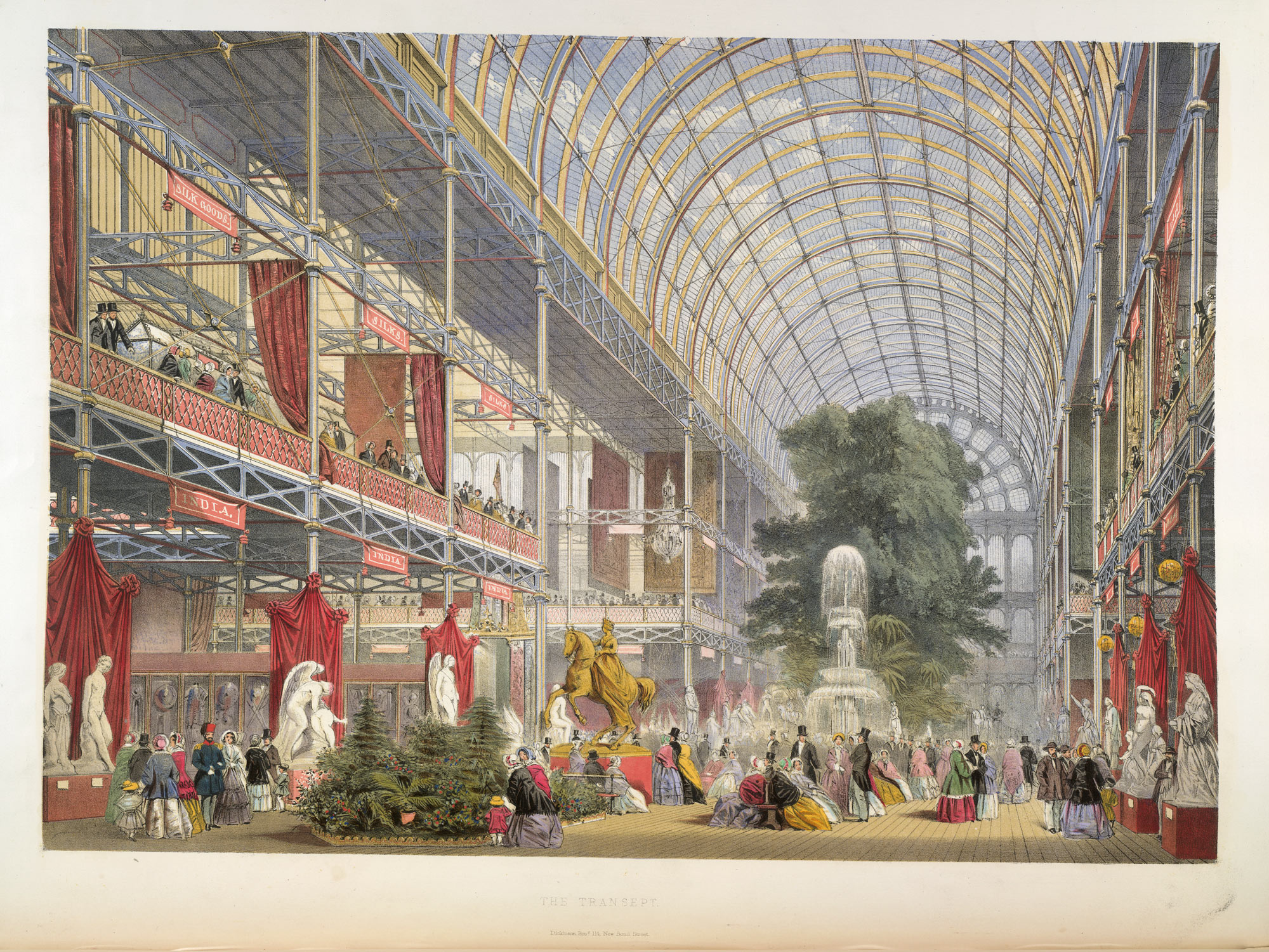
-

- Interior 2

-

- India

-

- Turkey

-

- Colonial Produce
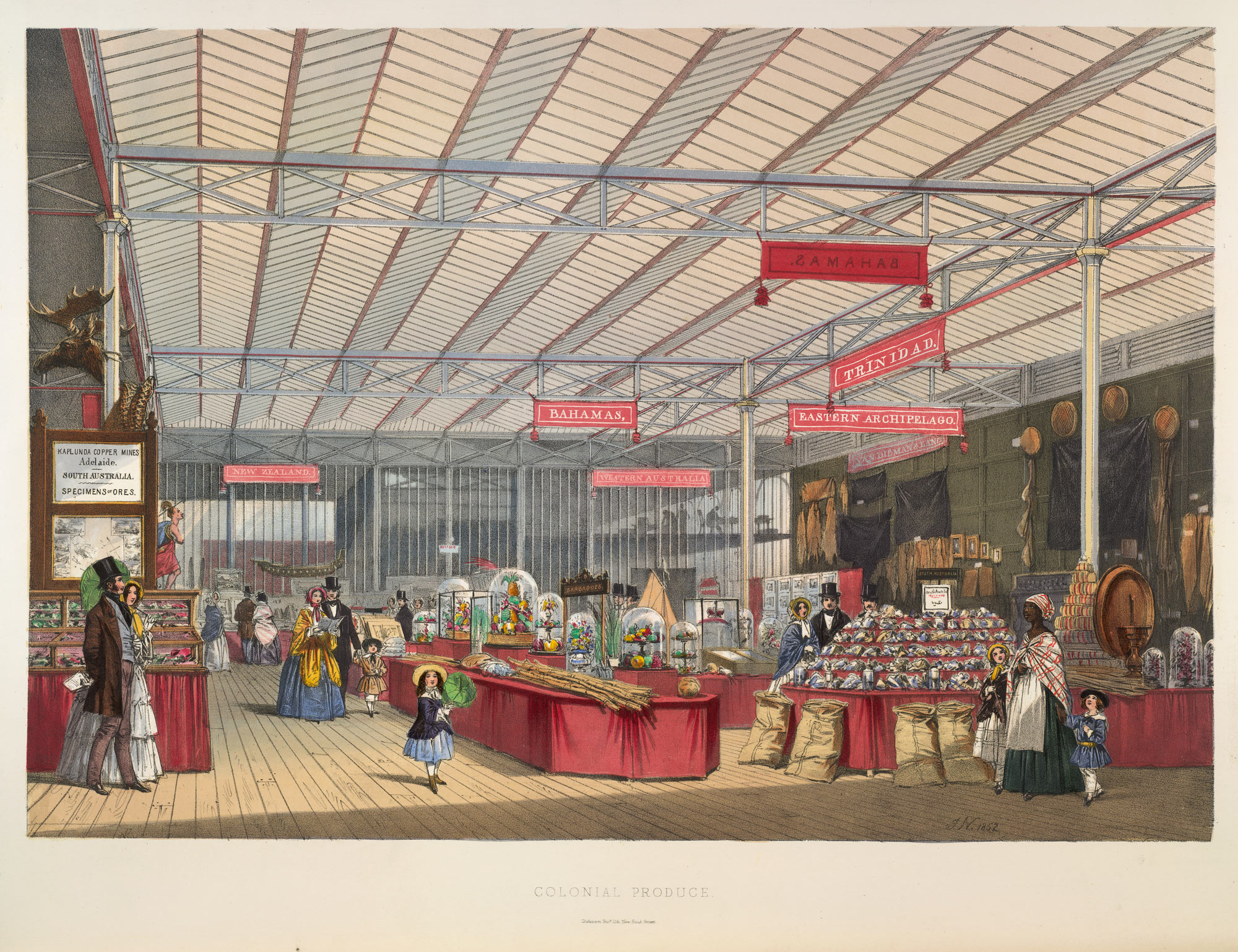
-
- Manufacturing

Viewing: Period Cartoons
-

- All the World …

-

- Odds and Ends …
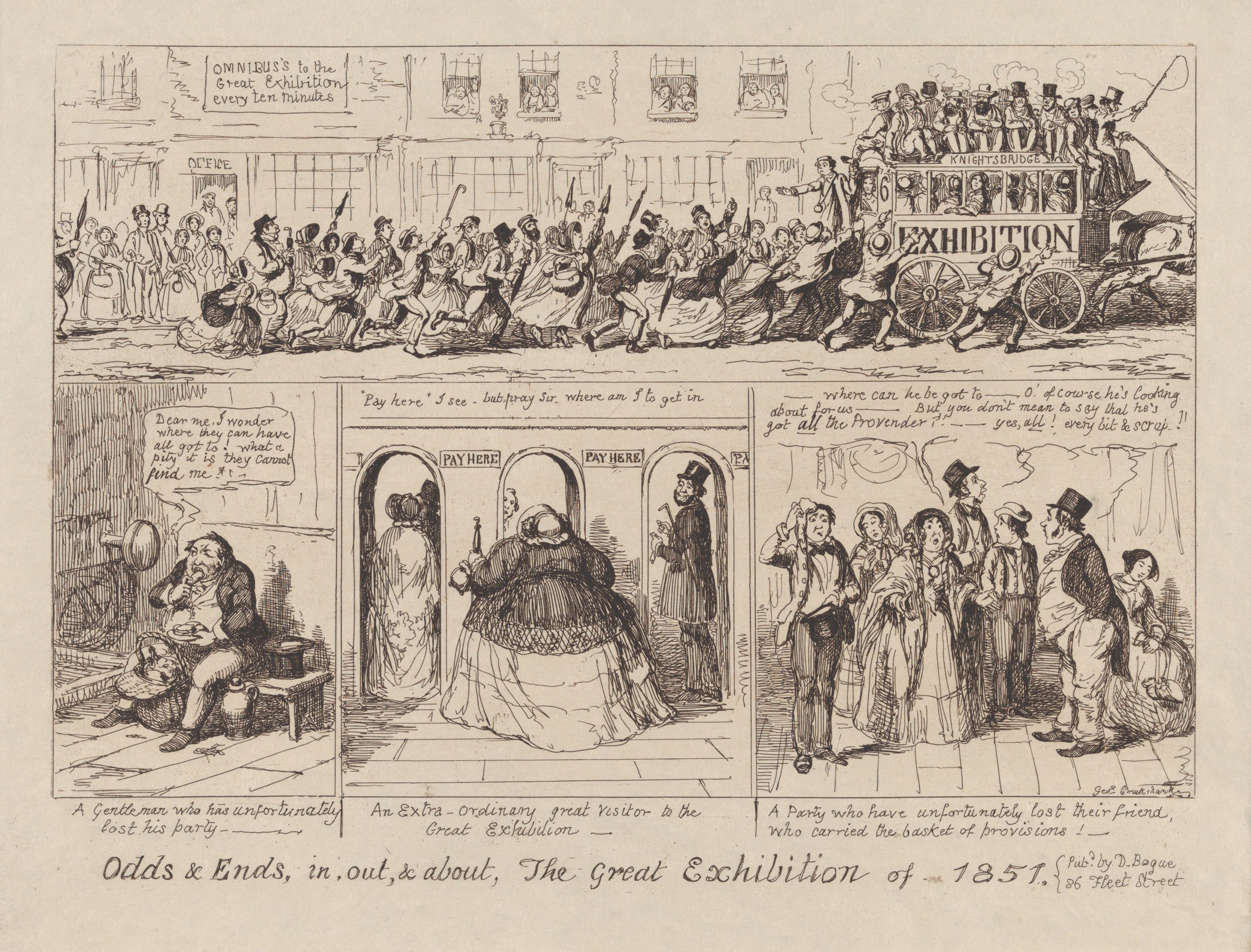
-
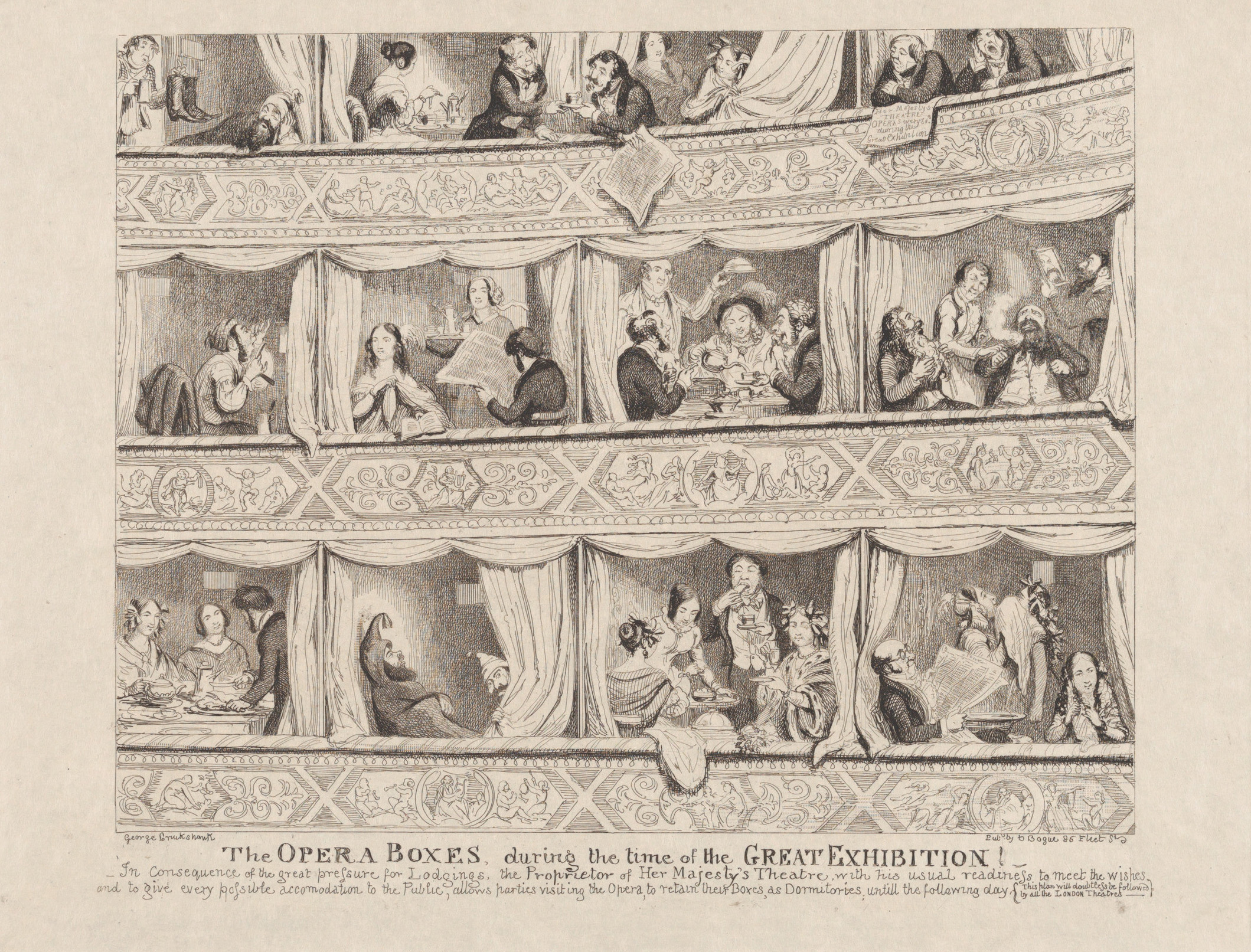
- The Opera Boxes …
-

- Dispersion …

Writing
- How did the Great Exhibition represent non-European cultures and peoples? Focus our attention on a particular detail from one of the images.
- What can you learn from the cartoons about public attitudes toward the Exhibition—or perhaps the larger world?
- How does this Exhibition compare to modern-day versions, such as Disney’s Epcot Center?
Show/Hide Victorian Sensuality HW
Show/Hide Great Exhibition HW
Moving Lines or Visual Details
⤹Click the reply button just below.
“I am half sick of shadows”
⤹Click the reply button just below.
Making sense of the goblins’ fruit
⤹Click the reply button just below.
Non-European Cultures at the Great Exhibition
⤹Click the reply button just below.
Public Attitudes toward the Great Exhibition
⤹Click the reply button just below.
The Great Exhibition vs. Epcot
⤹Click the reply button just below.