Victorian Mourning

Victorian Mourning

Public shows of grief came to predominate in both England and America in the 19th century. In America, the trend was encouraged by bloodshed during the Civil War (the Union paid to embalm fallen soldiers and ship them home for burial) and cemented by the assassination of President Lincoln, whose body travelled in state by railcar from Washington home to Illinois, greeted at every stop along the way by vast crowds of mourners. In Britain, the trend was cemented by the public example of Queen Victoria, whose beloved husband Albert died in 1861 at age 42. She wore black the rest of her reign, some 40 years; the MET in New York has one of her dresses in its collection: link.

Whereas today we spend a fortune on housing, the Victorians spent a fortune on death, as we saw during our visit to Highgate Cemetery. In addition to the expense of a funeral plot and stone monument, Victorians paid for mourning dress—a purpose-made outfit worn for a set period and then ceremoniously burned. If you decide to write on this topic for the interdisciplinary essay, novelist Tracy Chevalier provides an excellent summary of mourning etiquette here, information she learned in doing background research for a work of historical fiction. In addition, scholar Sarah Tarlow provides a brief history of garden cemeteries, available in the “Readings” folder of the course Blackboard site.

The Victorians’ preoccupation with death and mourning is particularly visible in the work of its most prominent poet, Alfred Tennyson. After his best friend, Arthur Hallam, died in 1833, aged 22, Tennyson spent the next 17 years producing a book-length poem wrestling with that loss, titled In Memoriam, A.H.H. obit. MDCCCXXXIII.

Reading: Three pieces by Tennyson mourning the loss of Arthur Hallam.

Writing: Respond to ONE of the following prompts. Keep your response short, posting as a reply under the appropriate heading in the comments section:

  1. Call our attention to a particularly moving line or detail from one of Tennyson’s poems of mourning.
  2. Tennyson originally conceived of In Memoriam with a different title, “The Way of the Soul.” Just based on the three poems here, do you discern a path or journey taking place in his mourning process?
  3. Wearing mourning was a public performance. But Tennyson published In Memoriam, A.H.H. obit. MDCCCXXXIII anonymously, shortly before assuming the title of Poet Laureate. Do these poems strike you as public or private expressions of grief?

Victorian Sensuality

Love and Death

While the Victorians have a well-deserved reputation for sexual prudery, their poetry and art are often suffused with sensuality—yet a sensuality mixed with thoughts of death and the grave.

Reading: Three Poems: note that Keats dates two decades before Victoria’s reign (1837-1901). His widely popular poem can be seen as setting a trend followed by later writers and artists.

Viewing: four Pre-Raphaelite paintings:

  • William Holman Hunt, The Lady of Shalott (1888-1905)
  • John William Waterhouse, The Lady of Shalott (1888)
  • John Everett Millais, Ophelia (1851)
  • Dante Gabriel Rossetti, Lady Lilith (1866-68)

Note: if you’re unfamiliar with the legend of Lilith or with the role of Ophelia in Hamlet, take a moment to google those names.

Writing: Respond to ONE of the following prompts. Keep your response short, posting as a reply under the appropriate heading in the comments section:

  1. Call our attention to a particularly moving line or visual detail from one these paintings or poems.
  2. At the end of Part II, the Lady of Shalott declares “I am half sick of shadows.” Unfold the significance of this key line.
  3. It’s hard not to come away from Rossetti’s “Goblin Market” identifying the goblins’ fruit with sexuality. What details in the poem help to create this association? On the other hand, what details in the poem complicate or undermine the association?

History Painting

Neoclassical and Romantic History Painting

  • Jacques-Louis David, The Death of Marat (1793): mourns the assassination of Jean-Paul Marat, a leading revolutionary, by a partisan from a rival group.
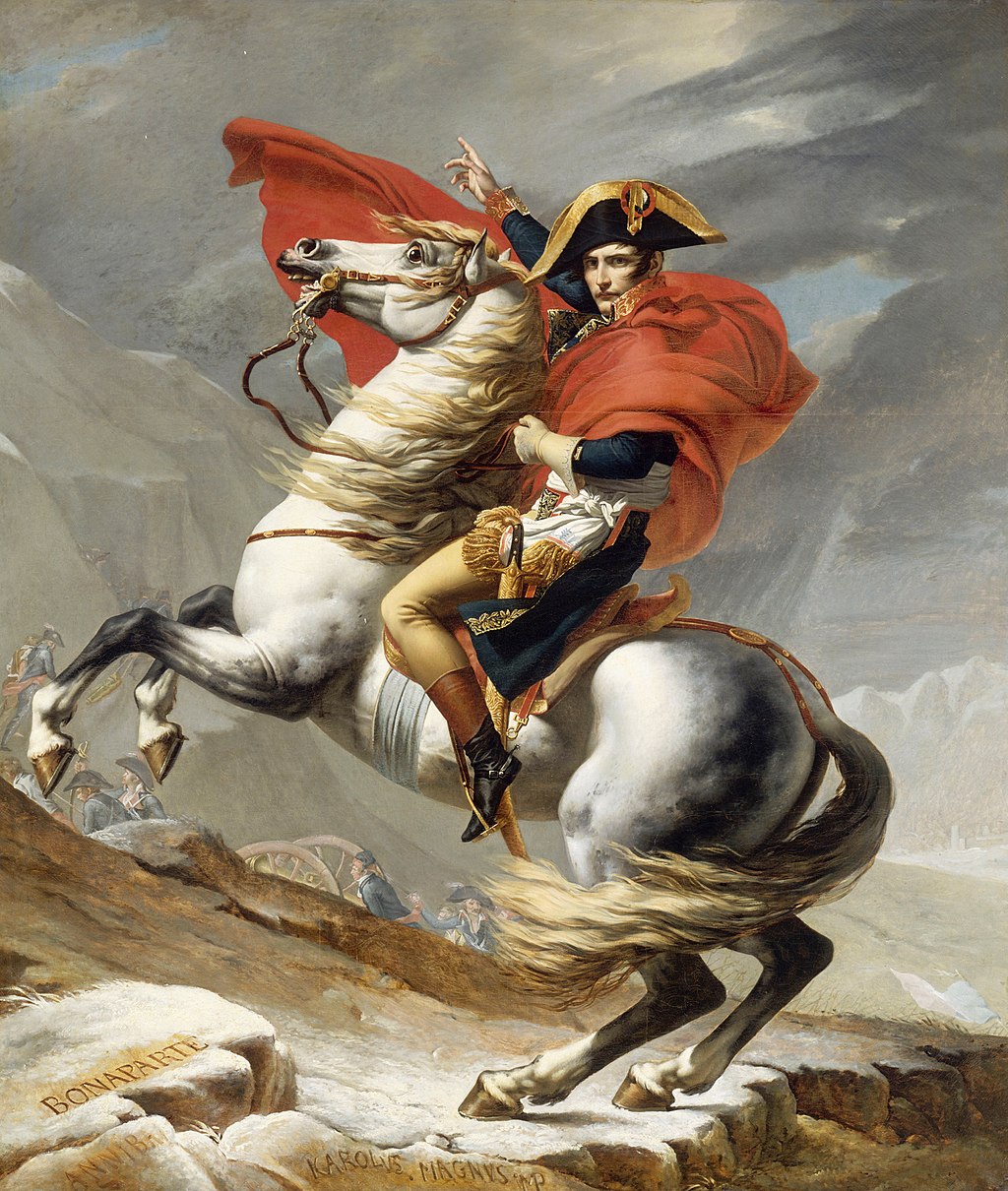
  • Jacques-Louis David, Napoleon Crossing the Alps (1801-05): celebrates Napoleon’s return to the front lines in the battle with Austria over control of northern Italy, after seizing political power in the Coup of 18 Brumaire in December 1799.
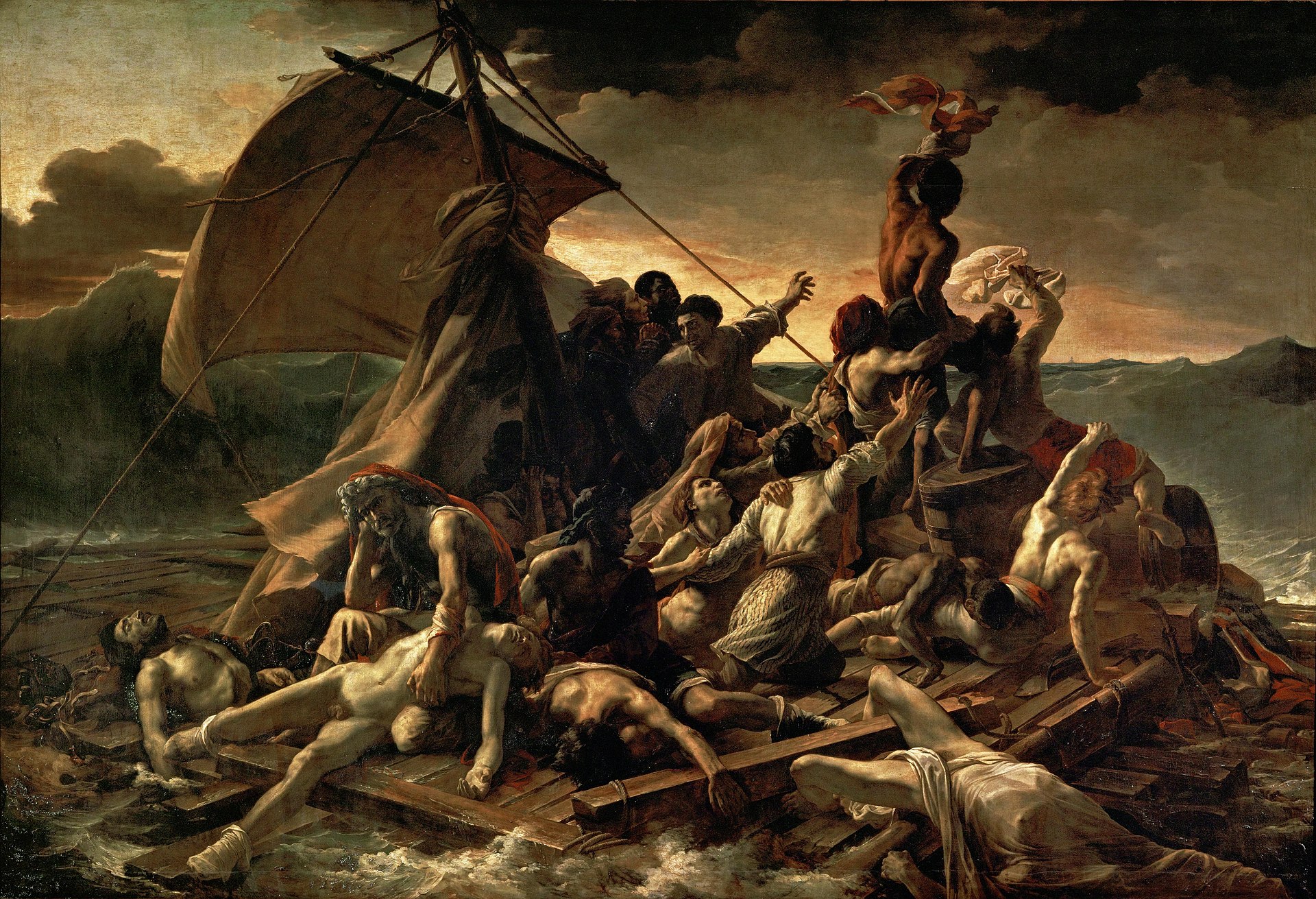
  • Théodore Géricault, The Raft of the Medusa (1818): depicts the survivors of the naval frigate Medusa, which ran aground due to the incompetence of the Captain in 1816.
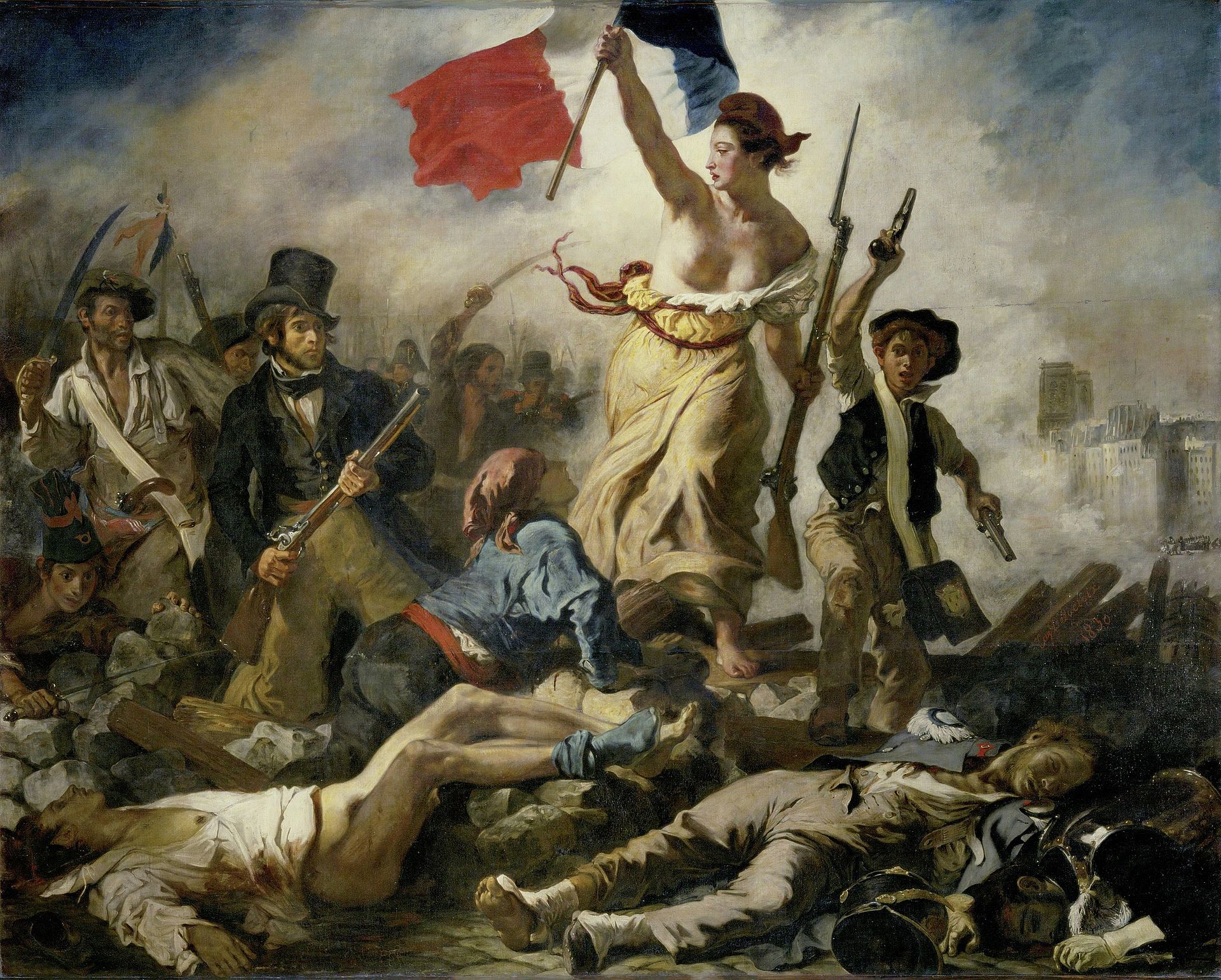
  • Eugène Delacroix, Liberty Leading the People (1830): commemorates the July Revolution of 1830 that deposed King Charles X.

For more on these works, check out Strickland 68-69 and 76-78.

George the Poet

George the Poet, “The Benin Bronzes”

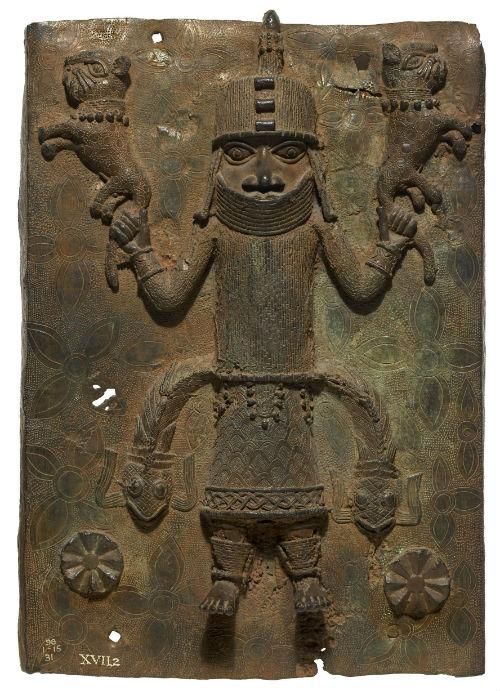
The Benin Bronzes were created for the Royal Court of Benin, an African kingdom that prospered through trade with the Portuguese and other Europeans from the 16th century onward. But in the late 19th century, at a time when the British had come to dominate the West African trade, tensions over the expanded European presence in Africa led to a bloody war and occupation. In the course of pillaging Benin city, these magnificent bronze artworks honoring the kings’ ancestral line were plundered. Many of them are now on display at the British Museum, though some are scattered in other museums around the world. The Nigerian National Commission for Museums and Monuments is in talks with the British Museum about repatriating these artifacts: details on this history and on the current status of negotiations here.

In 2015, as part of the Museum’s “Huge History Lesson” challenge, George the Poet produced the following piece.

Imagining Empire

Imagining Empire

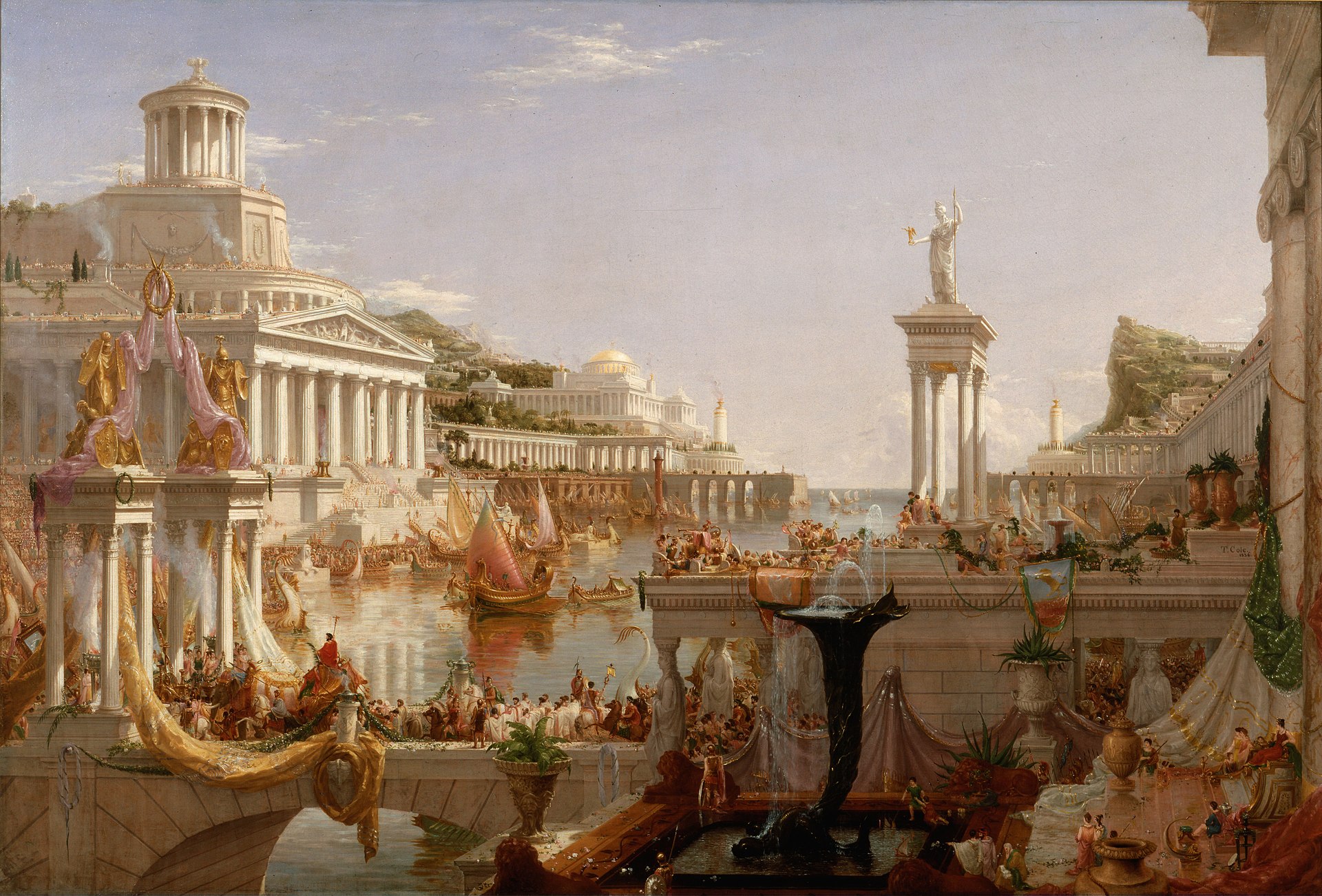
Ancient empires were a recurring topos for the poets and artists of the nineteenth century. In reflecting on the magnificent art of a past age, they pondered the value of the humanities for present-day human beings. And in the great sweep of past human empires, they found a model for pondering the future of their own nations.

Note: we read these poems last semester. But I’m asking new questions about them.

Reading:

  • Percy Bysshe Shelley and Horace Smith, two poems titled “Ozymandias,” 1817 (link)
  • Thomas Cole, The Course of Empire series, 1833–1836 (link)

Writing: Respond to ONE of the following prompts. Keep your response short, posting as a reply under the appropriate heading in the comments section:

  1. All three artists powerfully evoke the era of decay after the fall of a great empire. What do their visions share in common? Alternatively, how do they differ? Either way, call our attention to a particular set of details.
  2. Just as in the preceding section, Shelley and Smith wrote these sonnets in response to an ancient work of art being shipped to England for display at the British Museum. Assuming that they can be read as speaking to that controversy, what do they seem to be saying? Focus on particular details from ONE poem or the other.

Beethoven

Beethoven’s Eroica: a Case Study

In this mini-module, we explore Beethoven’s third symphony, Eroica, as a case study in Romantic ideas about the role of genius in artistic expression and social transformation.

As background for this assignment, it helps to have a sense of the cultural cachet of Napoleon for Romantics. As discussed at the end of spring term, Romantic radicals in both England and Germany had high hopes for the French Revolution as marking a break with the sclerotic aristocratic order. And Napoleon’s seizure of power in 1799 renewed those hopes, not simply by ending the Terror, but because he embodied the Romantic ideal of the great man: someone who rose to prominence not thanks to high birth but merely on the strength of his genius and determination.

Beethoven’s worship of Napoleon is the more striking because, like many composers in this era, he was supported by the patronage of Austrian nobles—the very people most threatened by Napoleon’s rise to power. Indeed, the Eroica had its premiere at the Vienna palace of Prince Lobkowitz; a year later Napoleon briefly occupied Vienna during his successful invasion of Austria, securing significant concessions from the Hapsburgs.

Reading: Christopher Gibbs, “Notes on Beethoven’s Third Symphony.” Three elements to consider: (1) Napoleon as inspiration; (2) Beethoven’s personal angst as expressed in the Heiligenstadt Testament; (3) the initially mixed reception of the public to this symphony as “more sublime than beautiful.”

Listening: Frankfurt Radio Symphony, “Beethoven: 3. Sinfonie (»Eroica«).” Feel free to play the symphony in the background while you do other work. But keep alert for moments that feel particularly striking, perhaps where the mood shifts unexpectedly. Make note of the time, so you can reference this in the homework.

Writing: Respond to ONE of the following prompts. Keep your response short, posting as a reply under the appropriate heading in the comments section:

  1. Call our attention to a particularly striking moment from the Eroica symphony, giving a brief description of what you hear and the emotion(s) it arouses. If you’re musical, feel free to use technical terms in describing what you hear; if not, make up for your lack of vocabulary with vivid language: “short, high-pitched notes,” “deep, languid strings,” etc. Include a link to the moment from the symphony by clicking YouTube’s “clip” feature and pasting the resulting link into your comment (don’t paste the embed code; just the link!).
  2. Draw a connection between what you hear in the Eroica symphony and what you learned from Christopher Gibbs. In your comment, point to a particular section of the symphony, describing in general terms what you hear—a “relentless beat,” “energetic horns,” etc. Explain how what you hear relates to some particular element of Gibbs’ commentary. As above, use YouTube’s clip feature to creat a link to the moment in the symphony you’re talking about.