Chaplin

Little Tramp in a Big Factory

Chaplin created his “Little Tramp” character in 1914-15 as a bumbling vagrant whose aspirations to romance and gentlemanly dignity routinely fall short. Yet he always rebounds from setbacks, ready to try again.

For class today, I’m asking you to watch the final appearance of the Little Tramp character. The 1936 movie Modern Times dates several years after the end of the silent film era (1894-1929). While it draws on the idiom of silent movies, it makes abundant use of sound effects. And at key moments characters speak aloud.

Viewing: Chaplin, Modern Times, available via: Kanopy. (If this doesn’t work, try BOB).

Writing: Respond to ONE of the following prompts. Keep your response short, posting as a reply under the appropriate heading in the comments section:

  1. Focusing on the initial sequence in the factory (00:00-19:10), point to a key detail and comment on its significance—whether political or artistic.
  2. Focusing on the first part of the movie’s love story (42:00-1:00:00), point to a key detail and comment on its significance—whether political or artistic.
  3. Focusing on the movie’s final sequence (1:09:00-1:27:10), point to a key detail and comment on its significance—whether political or artistic.

Collage

Collage and the Modern Age

Both scholars listed below agree on the centrality of collage to modernist art; they disagree only in how broadly they define Modernism. Greenberg focuses wholly on developments within the field of painting, while Hopkins speaks of culture in the broadest sense: literature, film, etc.

Scholarly Reading: Two Perspectives on Collage

  • Clement Greenberg, “The Pasted-Paper Revolution” (1958) (Blackboard)
  • Budd Hopkins, “Modernism and the Collage Aesthetic” (1997) (Blackboard)

Viewing: Analytic and Synthetic Cubism

  • Pablo Picasso, Les Demoiselles d’Avignon (1907)
  • Georges Braque, Violin and Palette (1909)
  • Pablo Picasso, Still Life with Chair Caning (1911)
  • Georges Braque, Homage to J. S. Bach (1911-12)
  • Pablo Picasso, Guitar, Sheet Music and Wine Glass (1912)
  • Juan Gris, The Table (1914)

Reading: T.S. Eliot, The Waste Land, parts 1 and 2 (Norton 1154-1159). Edit: you may find it valuable to listen to Eliot’s poem read by professional actors Jeremy Irons and Eileen Atkins: YouTube. They bring to life the very different “voices” that form the patchwork of Eliot’s poem.

Writing: Respond to ONE of the following prompts. Keep your response short, posting as a reply under the appropriate heading in the comments section:

  1. An American living in Europe (mostly London), Eliot was likely struck by the rigid class hierarchies of the old world. Where does class enter into The Waste Land?
  2. Eliot’s poem is a challenging one—quote a line you find confusing. Then take a shot at making sense of it.

Photography and Motion

Photography and Motion

English photographer Eadweard Muybridge began his pioneering work into the study of motion in 1878. Using multiple cameras with high-speed film, Muybridge established for the first time the stride of a galloping horse, as well as a host of other motions too fast for the eye to follow. He changed the way we see the world. And, by breaking motion down into a series of static frames, his work beckoned the way to re-animation of static sequences as movies.

Around the same time, French photographer Étienne-Jules Marey perfected a method for superimposing multiple moments on a single photograph, as for example the image of a pelican landing.

Both photographers’ influence can be seen in one of the most famous works of Modernist Art, Marcel Duchamp’s Nude Descending a Staircase, as well as Futurist works like Giacomo Balla’s 1912 Dynamism of a Dog on a Leash.

  • Muybridge, Horse’s Gallop (1878)
  • Marey, Pelican landing (1882)
  • Duchamp, Nude Descending a Staircase (1912)
  • Balla, Dynamism of a Dog on a Leash (1912)

Futurism

Loving the Machine

In the years leading up to World War I, a group of Italian artists came together under the banner of Futurism. Whereas Art Nouveau sought compromise with modernity, reshaping metal and glass in soft organic curves, the futurists welcomed the hard edges and high speeds of machinery.

When conflict broke out in 1914, it was greeted with enthusiasm across Europe, but for most that excitement gave way to horror as reports filtered back from the front lines of the meat grinder of trench warfare. Paradoxically, the era’s powerful technologies—machine guns, artillery shells—produced stalemate rather than speedy victory. But while this experience left many determined to make the “Great War” the “War to End All Wars,” the Futurists remained enamored of both machinery and armed conflict, believing that violence could reenergize Italy. Unsurprisingly, in the years after the war’s end in 1918, they allied themselves with the National Fascist Party of Benito Mussolini.

Reading: “The Futurist Manifesto,” published in 1909 by Filippo Marinetti on the front page of the Parisian daily Le Figaro (Blackboard).

Viewing: examples of Futurist art:

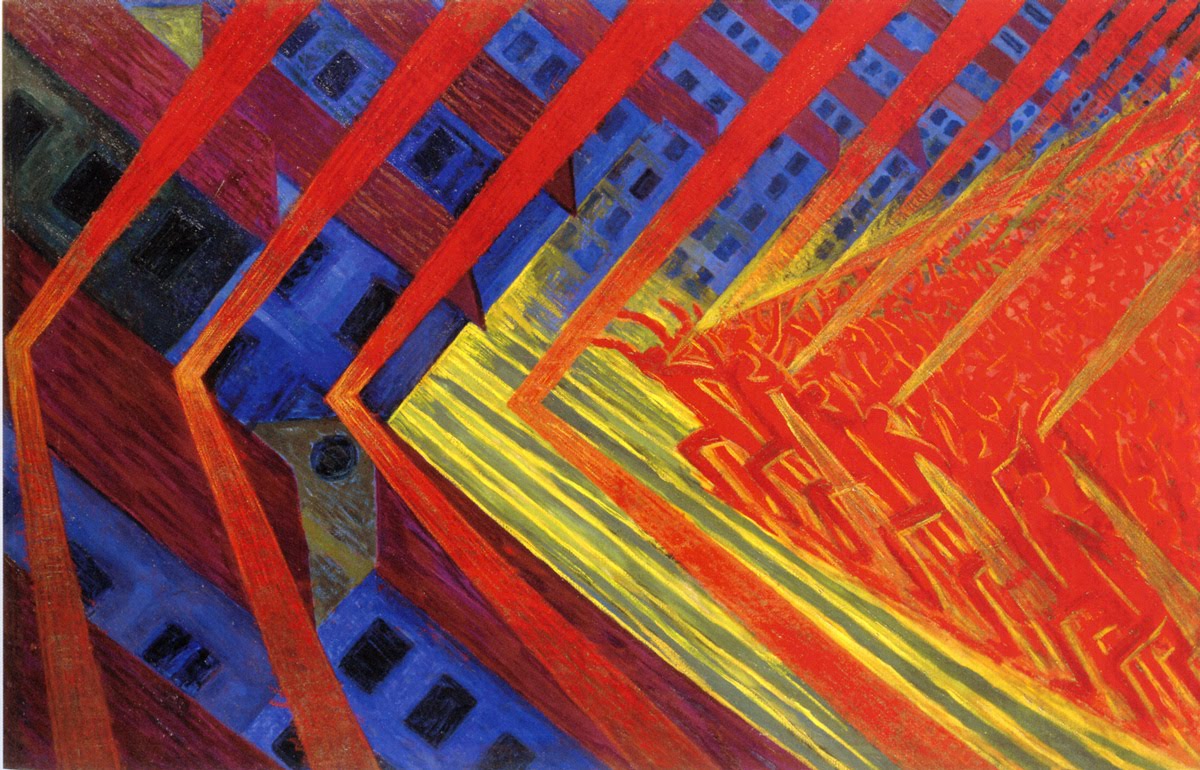
  • Luigi Russolo, The Revolt (1911)
  • Luigi Russolo, Dynamism of an Car (1913)
  • Umberto Boccioni, Unique Forms of Continuity in Space (1913)
  • Gino Severini, Memories of a Journey (1911)
  • Gino Severini, Armored Train in Action (1915)
  • Filippo Marinetti, In the Evening, Lying on Her Bed, She Reread the Letter from Her Artilleryman at the Front (1919)

Writing: Respond to ONE of the following prompts. Keep your response short, posting as a reply under the appropriate heading in the comments section:

  1. Point out a key contrast OR continuity in the Futurist art featured above.
  2. Point out a key contrast OR continuity between Marinetti’s 1909 manifesto and one of the Futurist artworks.

1900 Paris Exposition

The Exposition Universelle

The 1900 Paris Exposition looked back upon a century of unprecedented technological and societal change. Transportation networks and global trade had knit the world together, stimulating cultural exchange. Coal had replaced water power, and by 1900 the streets of Paris and London were illuminated at night by electric lights.

Eleven years earlier, Paris had wowed the world with the Eiffel Tower, built as the centerpiece of the 1889 Exposition. Though the 1900 fair may not have topped that wonder, timing it to correspond with the turn of the century gave it extraordinary symbolic heft. Exhibits ranged from technological marvels (moving sidewalks, a functioning x-ray machine, and a 187-foot-long telescope) to fine arts pavilions filled with contemporary sculptures and paintings. Britain, France and Holland all put up exhibits of featuring the fine arts and crafts of their colonial holdings from around the world.

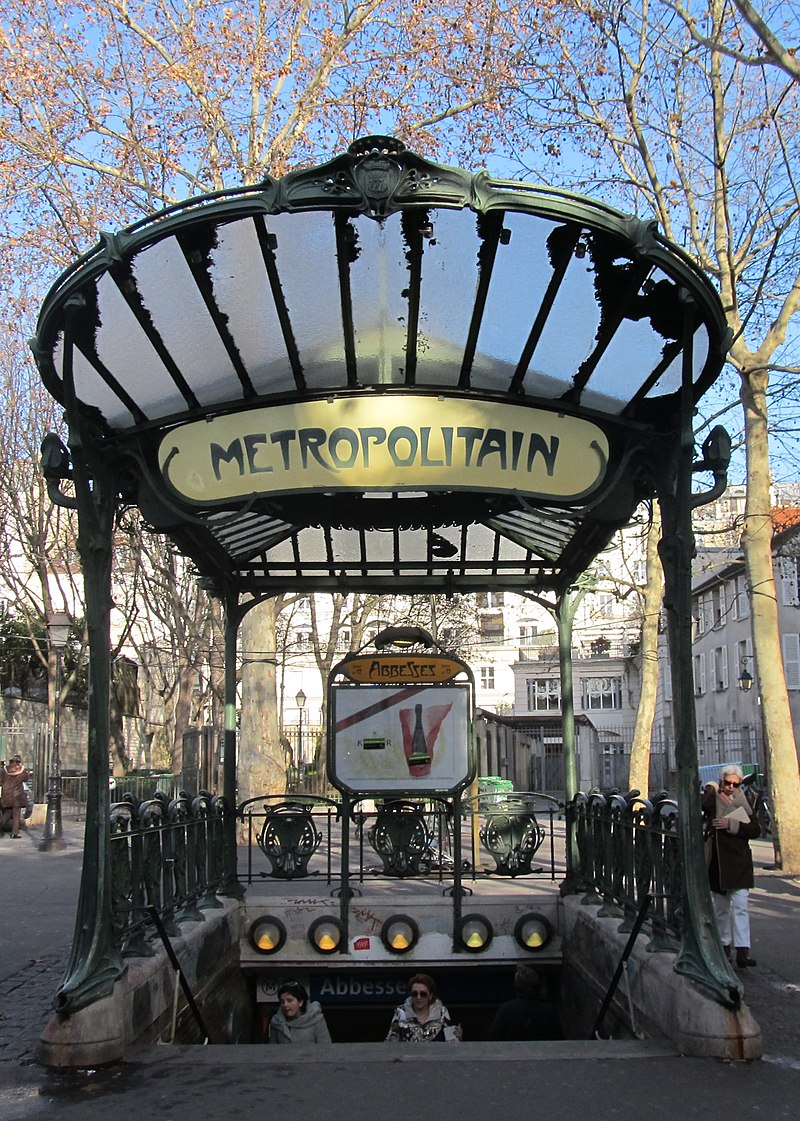
Today, the only remaining traces of the 1900 Exposition are the Paris Metro entrances remodeled for the occasion in the Art Nouveau style. Photo at right (credit Iste Praetor 2012).

Reading: Strickland 89-91: “Architecture for the Industrial Age” and “Art Nouveau.”

Viewing: images from the Exposition Universelle, collected by Arthur Chandler for an online version of a 1987 article (link). The text of the article is interesting, but don’t feel obligated to do more than read bits connected to images you find striking.

Reading: The Exposition stimulated Henry Adams to write “The Dynamo and the Virgin,” a chapter from his memoir that ponders the driving force of the modern world—by contrast to that of the Middle Ages (link).

Viewing: In 1902 French film pioneer Georges Méliès premiered A Trip to the Moon. While based on a pair of Jules Verne stories from 1865 and 1870, many of the movie’s visuals strike me as referencing the giant telescope on view at the 1900 Exhibition (YouTube link).

Writing: Respond to ONE of the following prompts. Keep your response short, posting as a reply under the appropriate heading in the comments section:

  1. Point out a key contrast OR continuity between the 1889 Eiffel Tower and the Art Nouveau style of the 1900 Exposition.
  2. Adams’ essay is insightful, but also perplexing—starting with his choice to write about himself in the third person. Point out a striking idea or perplexing phrase as a basis for discussion.
  3. What themes stand out in Méliès’ depiction of humans venturing into space? Alternatively, what themes stand out in the movie’s depiction of the moon and its inhabitants?

Impressionism

The Painter and the Camera

In The Annotated Mona Lisa, Carol Strickland positions her chapter on the French Impressionists immediately after a section in early photography. While she doesn’t discuss the influence of photography on the Impressionists in particular, several recent museum exhibits have done just that, arguing for “the crucial role of early photography in inspiring [not only] Impressionist iconography, but also, and more emphatically, Impressionist style and particularly its strategies of asymmetry, cropping and the blurring of motion” (source).

Reading:

  • Strickland, pp 92-96, 99-103, 106, 108.
  • Elena Martinique, “How Did Photography Influence The Impressionists?” (link).

Viewing 1, some representative Impressionists:

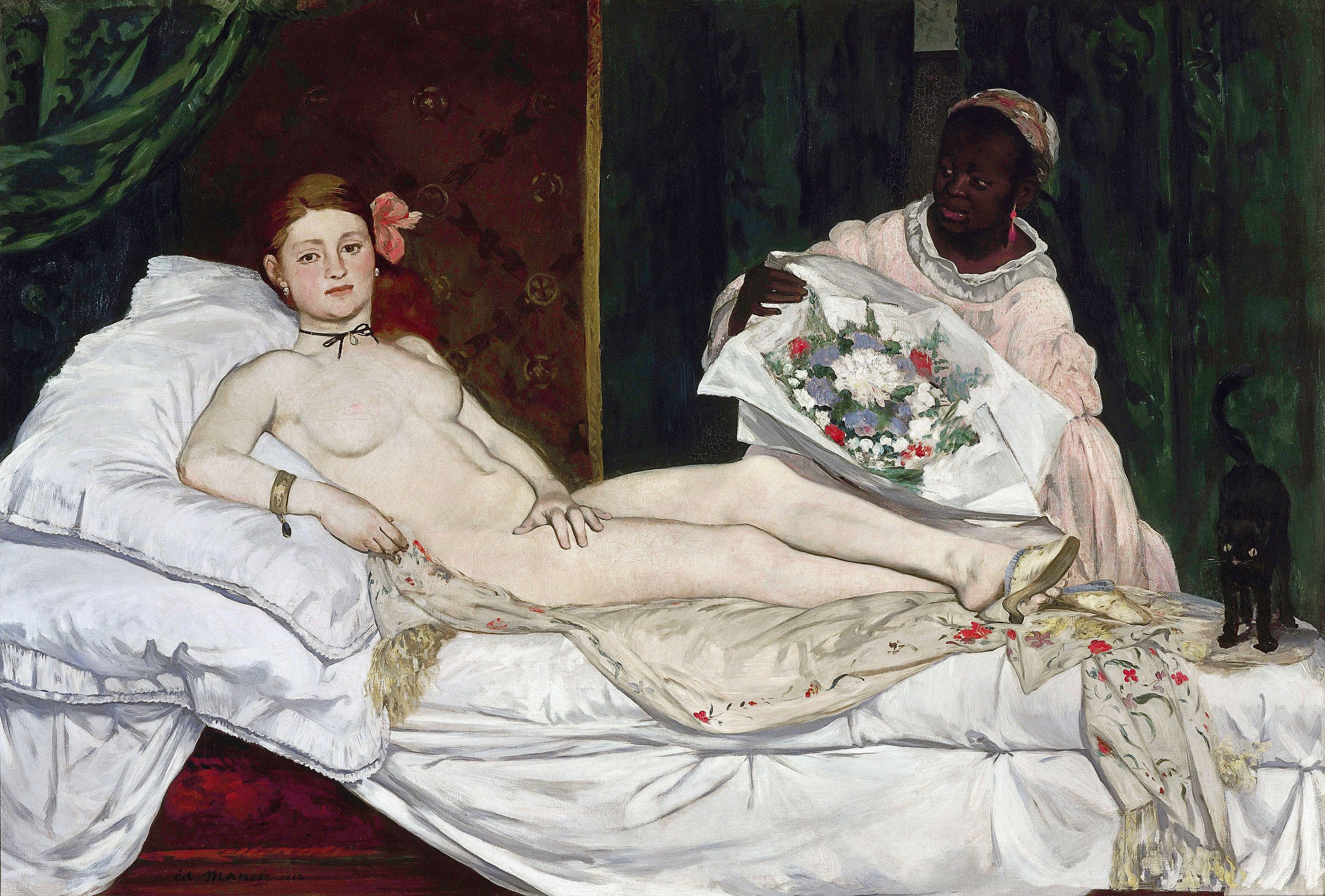
  • Édouard Manet, Olympia (1863)
  • Édouard Manet, Un bar aux Folies Bergère (1882)
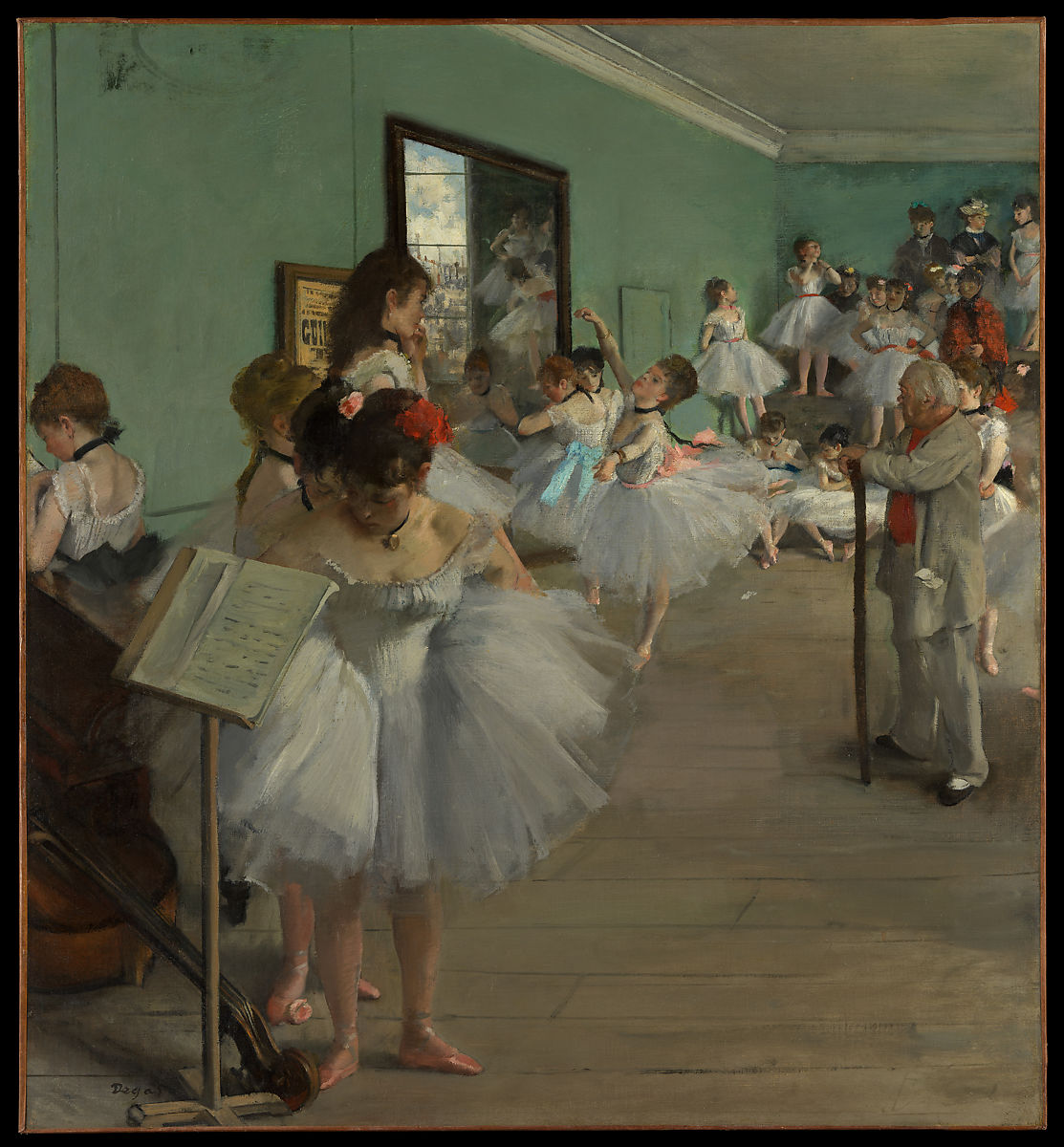
  • Edgar Degas, The Dance Class (1874)
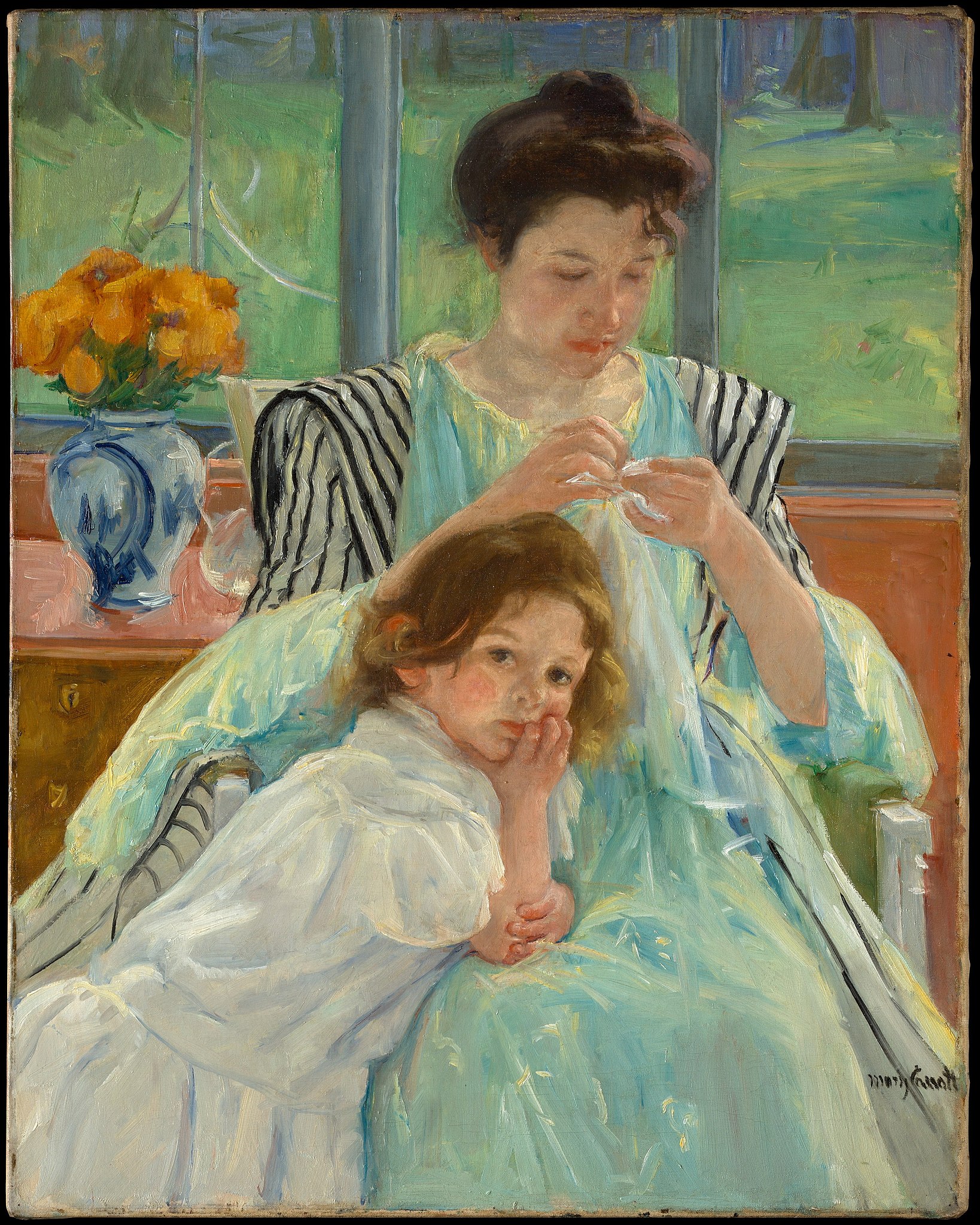
  • Mary Cassatt, Young Mother Sewing (1893)

Viewing 2, a close study of Claude Monet’s Houses of Parliament (1899-1904):

Monet created this exquisite series during a series of visits to London. Fascinated with the city’s fog and other atmospherics, he positioned himself across the river, in front of St. Thomas’ Hospital. The paintings were begun on site, then completed at his home in Giverny with the aid of photographs. A 2006 study published in the Proceedings of the Royal Society showed that the paintings are sufficiently accurate as to provide a useful empirical record of London’s fogs—a phenomenon caused by urban pollution and consigned to history following the passage of environmental legislation in 1956 (source).

Writing: Respond to ONE of the following prompts. Keep your response short, posting as a reply under the appropriate heading in the comments section:

  1. Point to a stylistic or thematic pattern you see in some or all of these paintings.
  2. Point to a striking detail in one particular painting.
  3. Point to a painting that strikes you as betraying the influence of photography’s “way of seeing.”

Conrad, part 2

Conrad, the Return Journey

Reading: Heart of Darkness, Ch. 3 (Norton pp 941-959).

Writing: Respond to ONE of the following prompts. Keep your response short, posting as a reply under the appropriate heading in the comments section:

  1. This last third of the story is filled with memorable moments. Quote a brief but striking phrase, then comment on the implications.
  2. Why does the story end in Europe, rather than in Africa? Is the ending climactic, or is it an anticlimax?

Conrad, part 1

Conrad, Traveling Upriver

When Joseph Conrad published Heart of Darkness in 1899, he helped break the story of atrocities perpetrated in the Congo at the behest of Europeans. Fourteen years earlier, in 1885, the Belgian King Leopold II persuaded the other European powers to cede the region to him as a personal possession, on the assurance that his principal aim was humanitarian: suppressing the slave trade and civilizing the natives. Whereas other European colonies were the possessions of nations, the Congo Free State was held privately by Leopold, at least until international outcry led to its annexation by Belgium in 1908. During that quarter-century interim, Leopold’s agents extracted minerals, rubber and ivory from the Congo River basin through force: imposing production quotas on local tribes and killing and mutilating those who failed to meet them.

Conrad witnessed some of this firsthand in 1890, when he worked for a Belgian trading company. His 1899 novella did not break the story, however; word had already begun to leak out, thanks to stories told by natives to British, American and Swedish missionaries working in the region. These missionaries eventually played a key role in the 1904 Casement Report, the result of an investigation conducted by a British diplomat. By 1910, the Belgian Congo had became a cause célèbre, in part due to a book-length exposé by Arthur Conan Doyle.

Conrad’s novella did not make nearly so big a splash in 1899 as Doyle’s 1909 book. For one thing, Conrad was just getting his start as a writer, whereas Doyle was the famous creator of Sherlock Holmes. But we might also point to Conrad’s penchant for ambiguity and understatement, qualities which make him a challenging writer, but which in the long run helped establish his novella as a great work of literature.

Reading: Heart of Darkness, Chs. 1 and 2 (Norton pp 899-940). To orient you a bit, the narrative is structured as a tale told by a veteran sailor, Marlow, to an audience of friends out for a pleasure cruise aboard a small, two-masted sailboat. When the story opens, they’re on the Thames east of London, down where the river meets the sea.

Writing: Respond to ONE of the following prompts. Keep your response short, posting as a reply under the appropriate heading in the comments section:

  1. Rather than beginning in Africa, the story opens on “the sea-reach of the Thames,” then goes on to introduce Marlow spinning the tale of his experiences in Africa. Pointing to a specific quote or detail from the opening pages, say something about the thematic function of this frame structure.
  2. Conrad characterizes Africa quite memorably. Quote a brief but striking phrase, then comment on the implications.
  3. Conrad characterizes the “Company” memorably as well. Quote a brief but striking phrase, then comment on the implications.
  4. Conrad is equally evocative near the start of the story, in his descriptions of the Thames estuary and of the Belgian capital. Quote a brief but striking phrase, then comment on the implications.

Orientalism

Orientalism and Empire

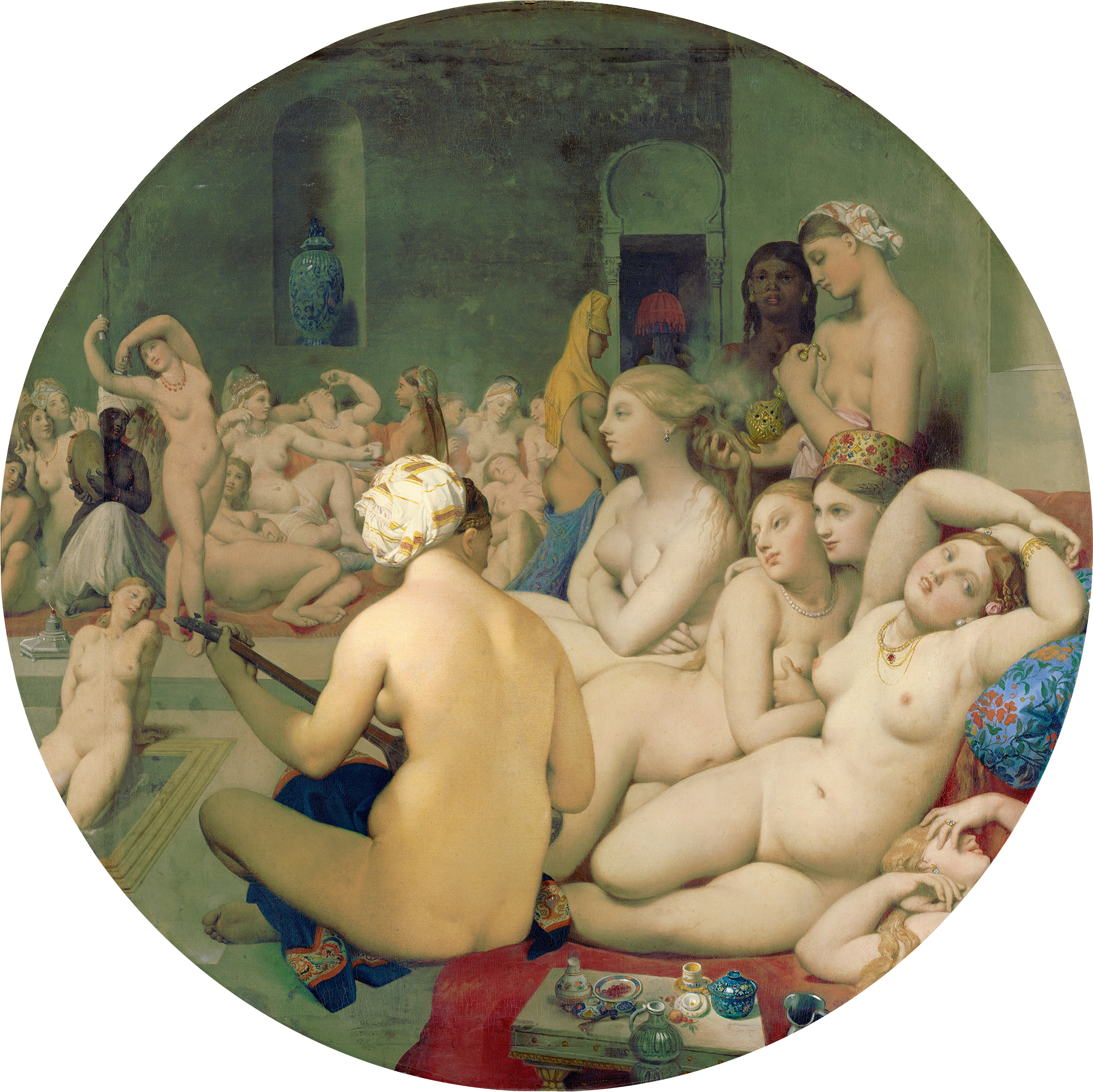
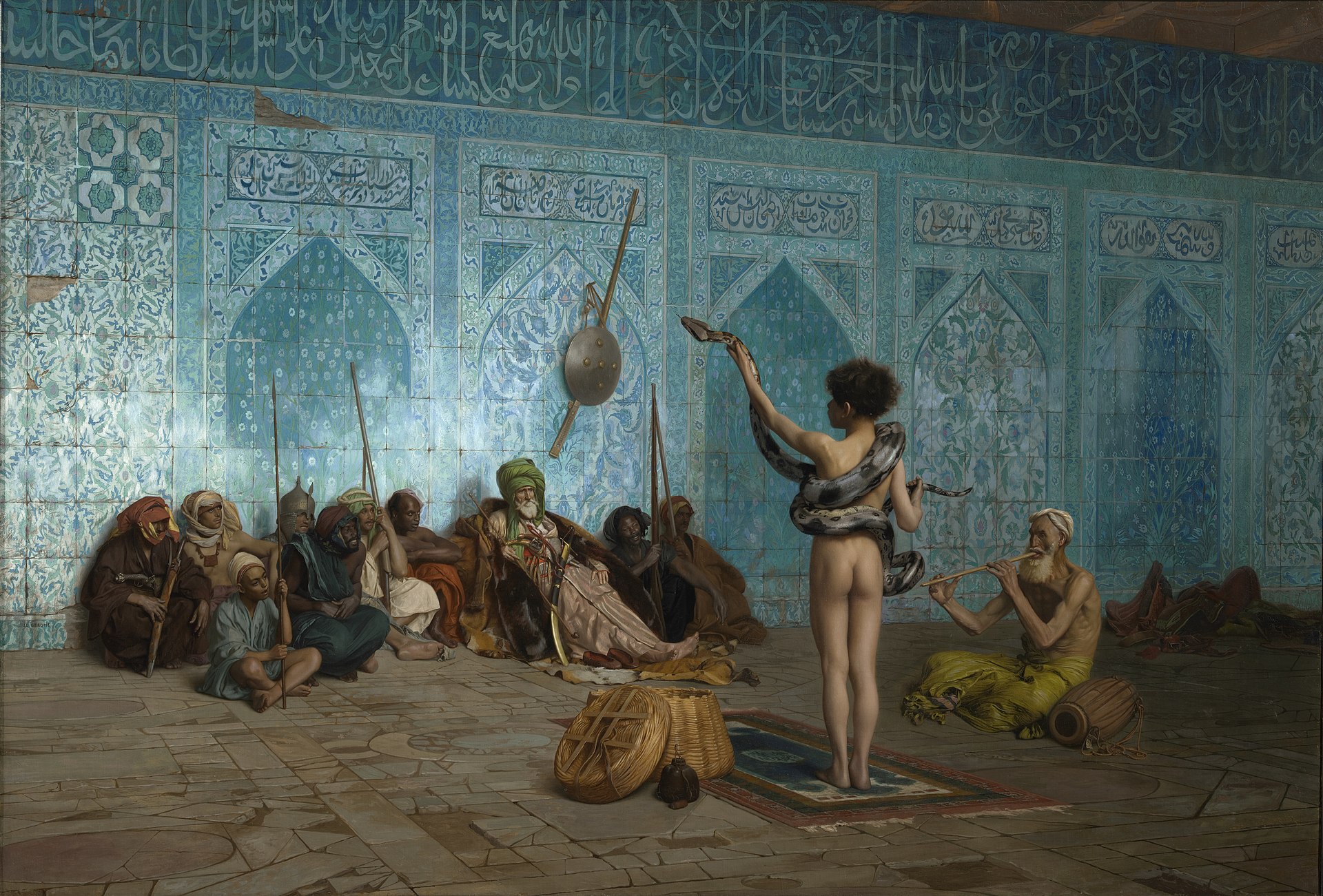
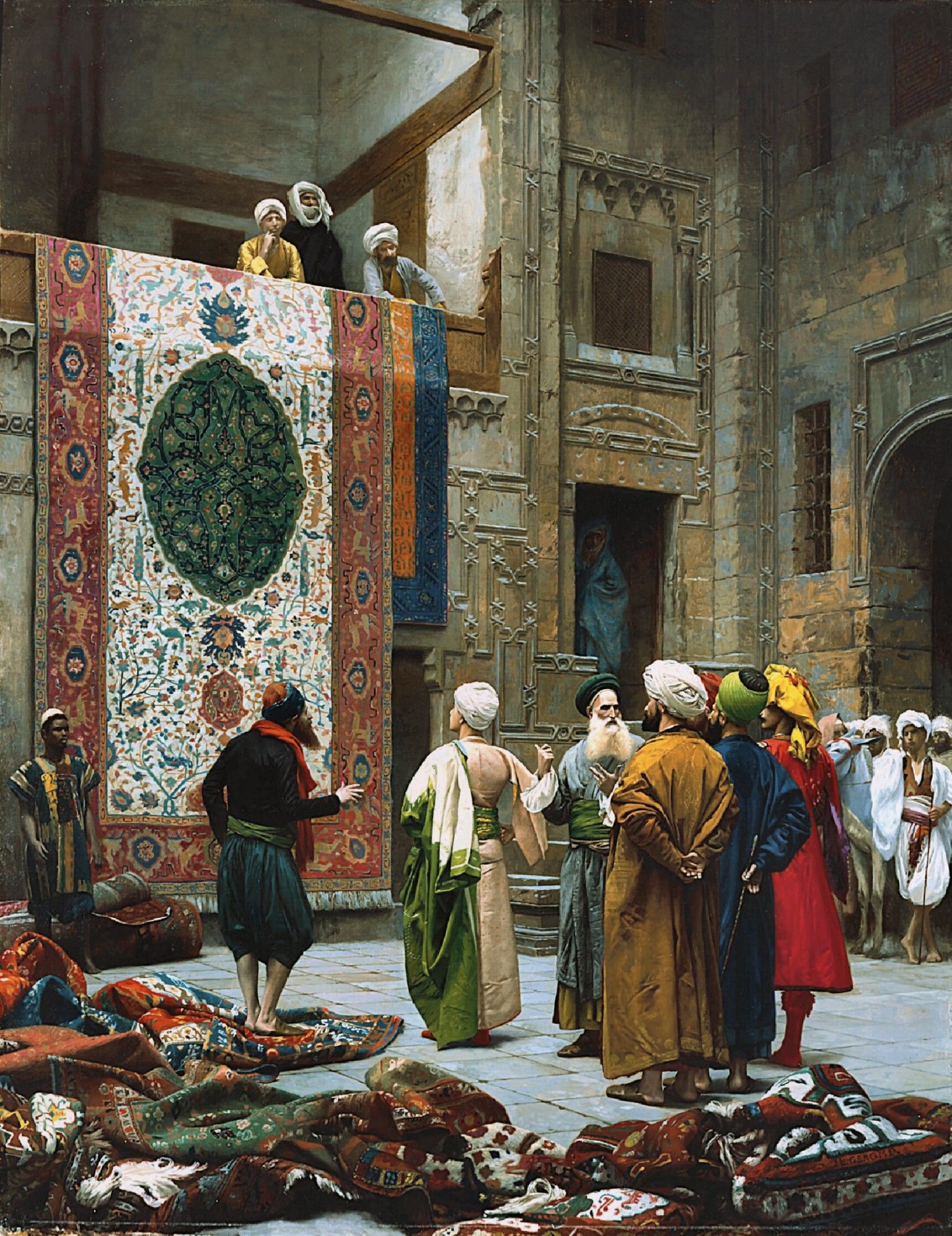
When we touched on Orientalism last semester, it was in connection with Montesquieu and Montagu—writers from the 1720s who showed a fascination with foreign societies, and who used the perspective provided by cultural difference to critique European mores. In my lecture introducing those authors, I noted that Orientalism of this sort became more widespread but also changed in character over the next few centuries, as European nations forged worldwide colonial networks. Many agents who worked on the front lines of Empire became expert in local crafts and customs, but they did so from positions of power within an established hierarchy. When they returned home, these collectors brought their tastes and interests with them, leading to widespread fascination with exotic locales.

In France, painters catered to this interest as seen in the collection of images below. You Take a few moments to look over these paintings, then submit a short written response for HW.

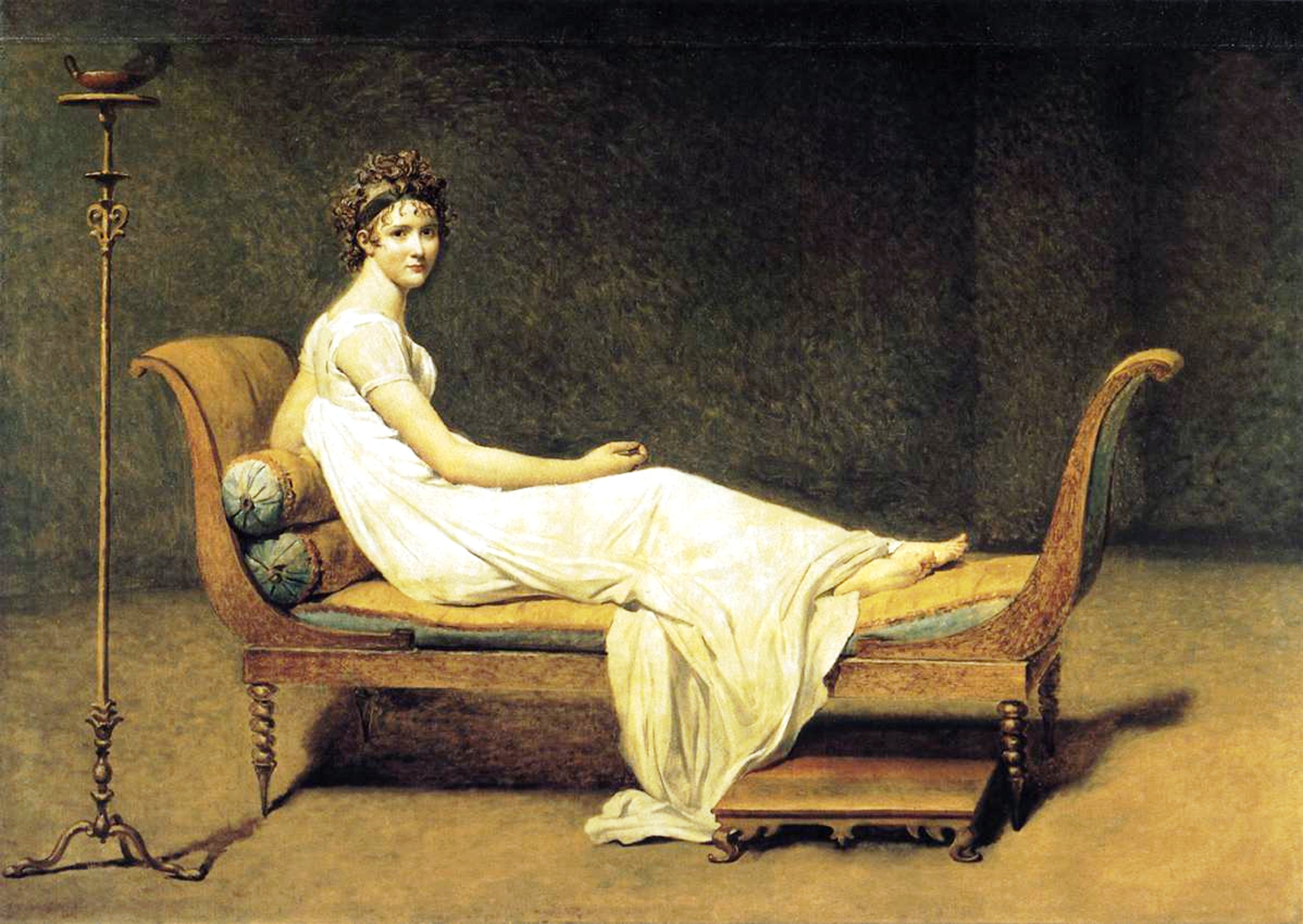
  • Jacques-Louis David, Madame Récamier (1800): this is a Neoclassical piece provided by way of contrast to the later works in this collection. Note the Roman costume and setting.
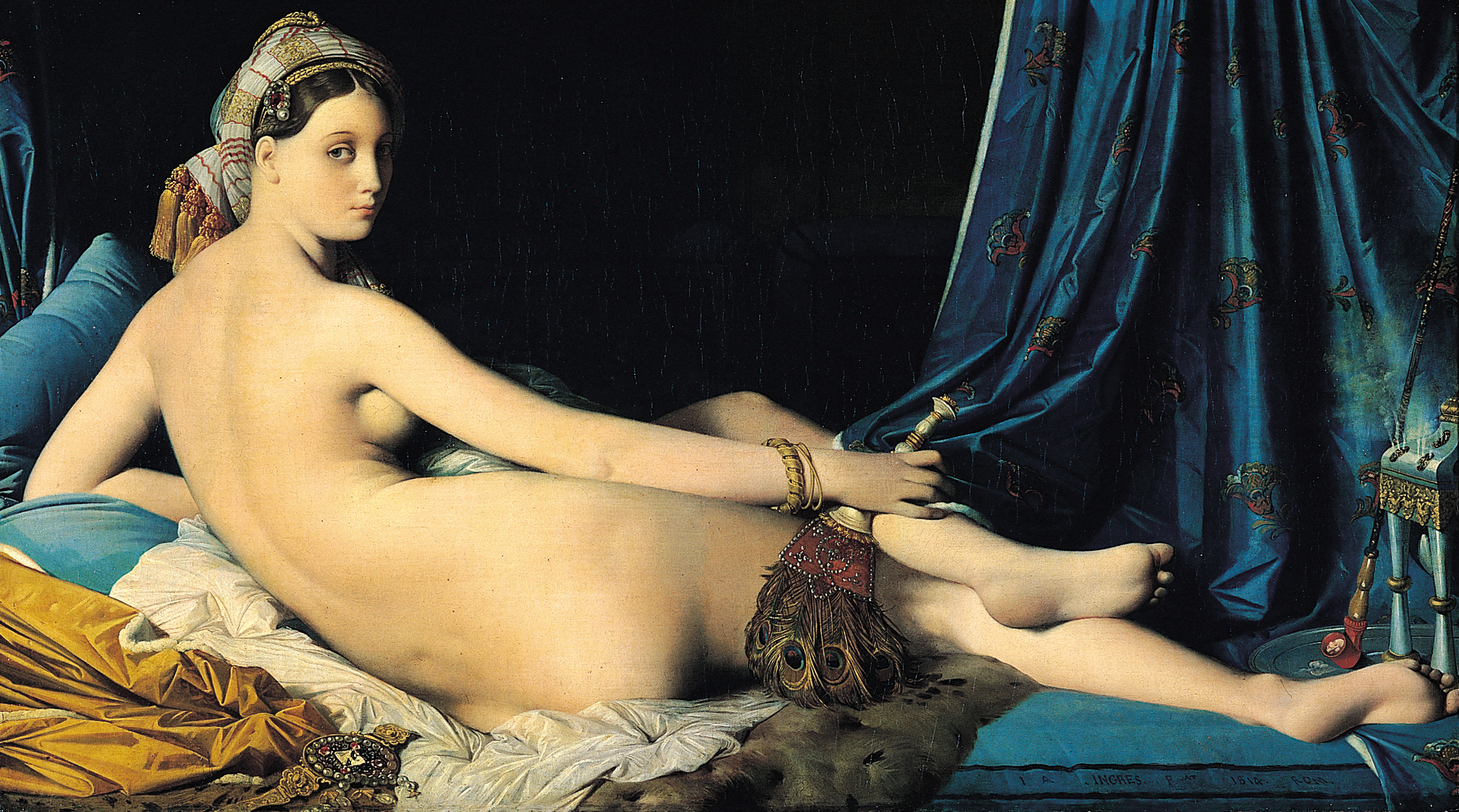
  • Jean Auguste Dominique Ingres, Grande Odalisque (1814). (Strickland provides an brief but interesting account of this image and its impact on tradition on pp 70-71.)
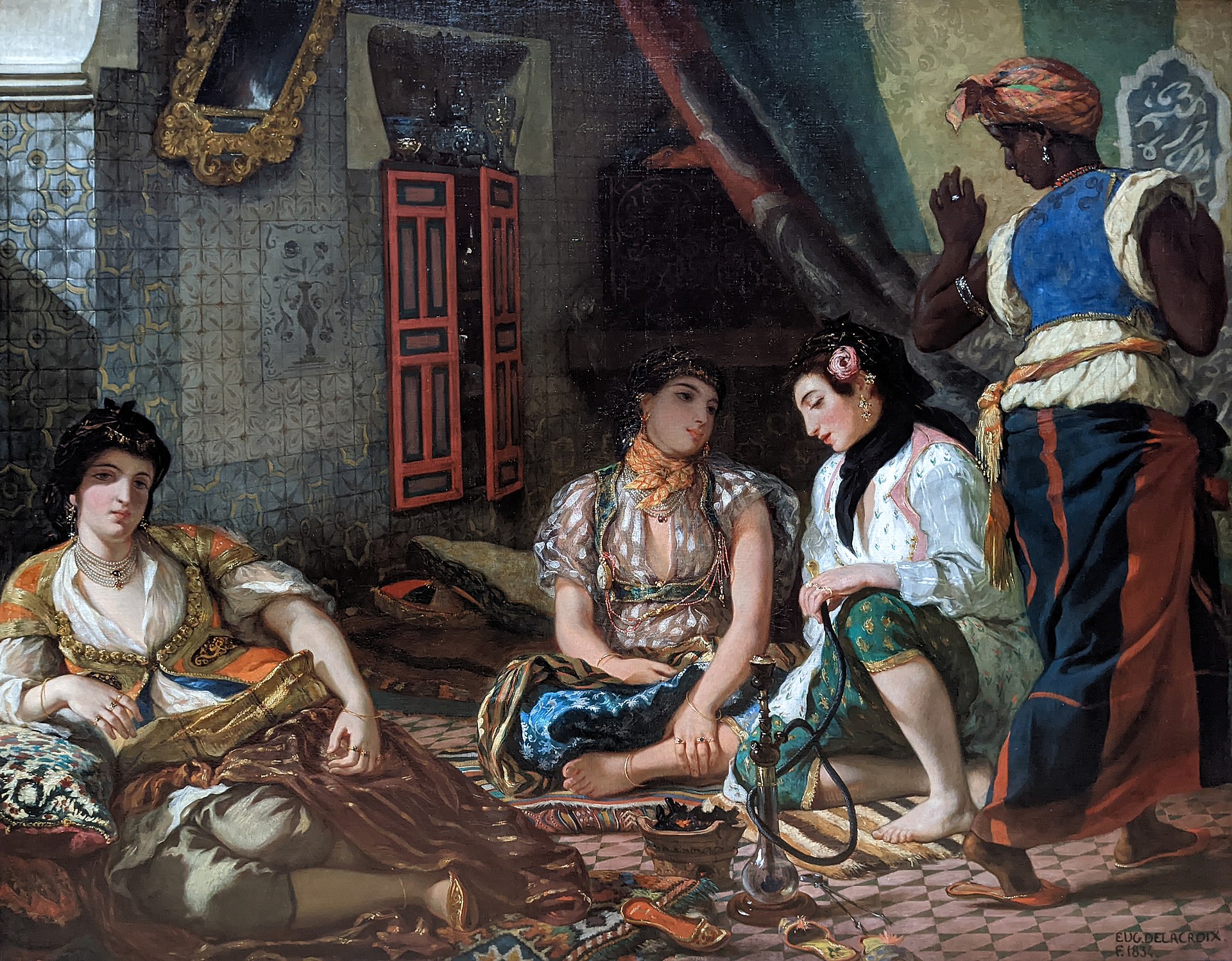
  • Eugène Delacroix, The Women of Algiers (1834).
  • Jean Auguste Dominique Ingres, The Turkish Bath (1852-62).
  • Jean-Léon Gérôme, The Snake Charmer (1879).
  • Jean-Léon Gérôme, The Carpet Merchant (1887).

Writing: Respond to ONE of the following prompts. Keep your response short, posting as a reply under the appropriate heading in the comments section:

  1. Point to a pattern you see in these images, then speculate as to its significance.
  2. Ingres lived in Europe all his life, working in Italy and France, while Delacroix and Gérôme both toured Africa and the Near East. Does this show in their work? Point to specifics, if possible.

Scientific Objectivity

Victorian Objectivity

Lest you come away thinking that the Victorians were wholly ruled by sentiment, it’s worth noting the counter-trend represented by clinical detachment, often under the mantle of science. This was a great era for empirical observation: Darwin’s 1851 On the Origin of Species mobilized bird beak measurements to shake the foundations of religious faith. And while sentimentality dominated in the arts, some poets and painters adopted the cold clinical pose of the scientist:

  • Robert Browning, “My Last Duchess” (1842): a dramatic monologue written from the point of view of Alfonso II d’Este, a Duke of the Italian Renaissance suspected of having killed his wife (details here).
  • Thomas Eakins, The Andrew Clinic, an unflinching painting of a surgery performed in front of an audience of medical students. Strickland has a sidebar presenting this remarkable painting on p86; I also recommend the close reading of the painting found here.