
Jul 23
Surrealism and Alienation
Surrealism
Surrealism seeks to draw upon the imaginative power of the unconscious mind to challenge received ways of thought and so bring about a revolutionary consciousness. I use the present tense in this sentence because while Surrealism first blossomed in 1920s Paris, the movement still has practitioners working in the present day. It first emerged as an outgrowth from Dada. Artists working under the banner of Dada had sought to tear down meaning, but as Surrealists they came to embrace a communitarian ethos—and they engaged in a long running dalliance with the French Communist Party. In the “Manifesto of Surrealism” (1924), Andre Breton theorized imagination, in opposition to the straitjacket of pragmatic utilitarianism, as opening a path to freedom, the first step in reinventing the world order:
Beloved imagination, what I most like in you is your unsparing quality. The mere word “freedom” is the only one that still excites me. I deem it capable of indefinitely sustaining the old human fanaticism. It doubtless satisfies my only legitimate aspiration. Among all the many misfortunes to which we are heir, it is only fair to admit that we are allowed the greatest degree of freedom of thought. It is up to us not to misuse it. To reduce the imagination to a state of slavery—even though it would mean the elimination of what is commonly called happiness—is to betray all sense of absolute justice within oneself. Imagination alone offers me some intimation of what can be, and this is enough to remove to some slight degree the terrible injunction; enough, too, to allow me to devote myself to it without fear of making a mistake (as though it were possible to make a bigger mistake).
Reading: Strickland, pp 148-51.
Viewing: Surrealist art




- René Magritte, The Double Secret (1927)
- René Magritte, The Treachery of Images (1929)
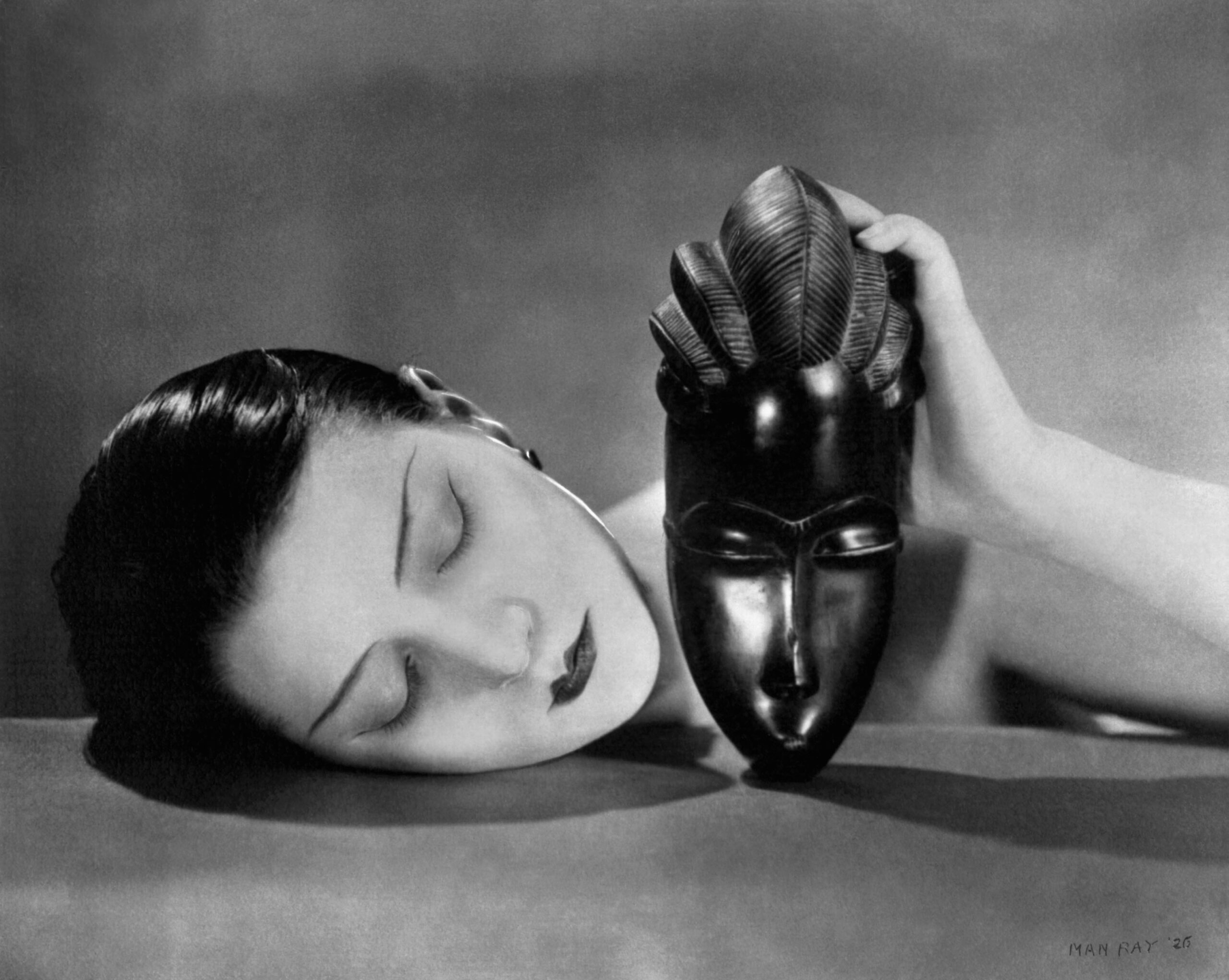
- Man Ray, Black and White (1926)
- Man Ray, Sleeping Woman (1929)
- Salvador Dali, The Persistence of Memory (1931)
- Méret Oppenheim, Object (1936)
- Elsa Schiaparelli and Salvador Dali, Lip Dress and Shoe Hat (1937)
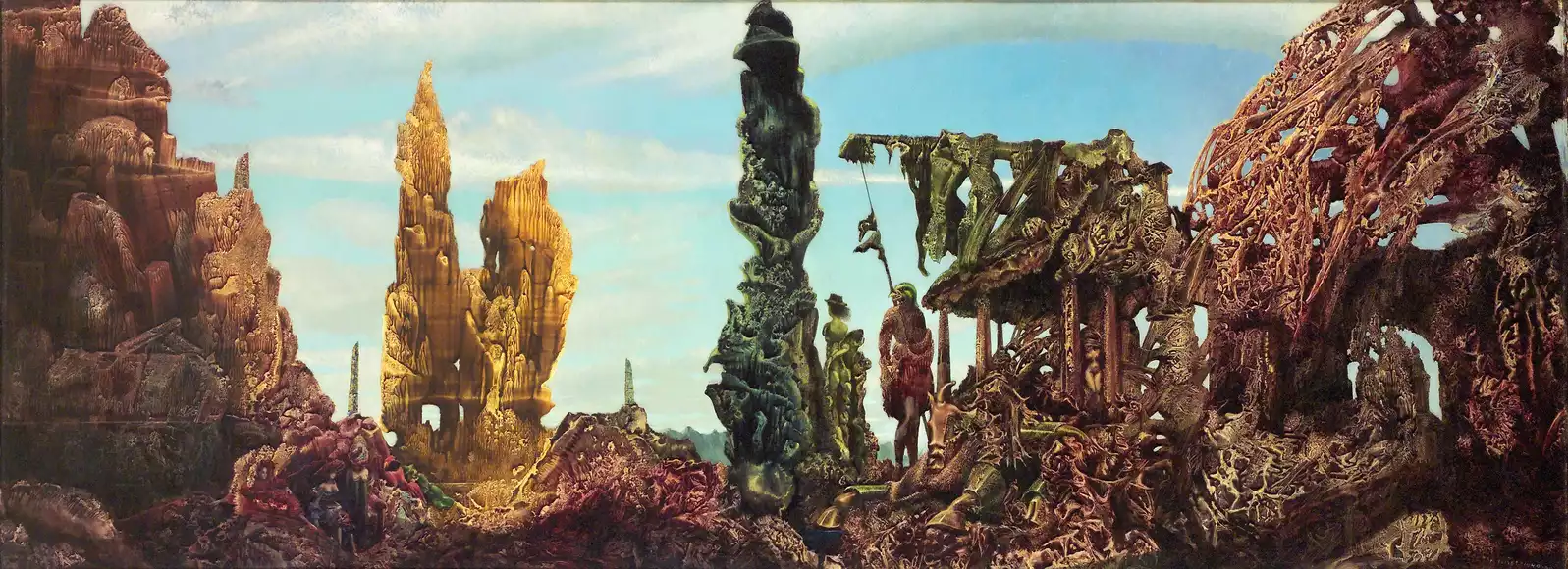
- Max Ernst, Europe After the Rain (1942)
Writing: Respond to ONE of the following prompts. Keep your response short, posting as a reply under the appropriate heading in the comments section:
- Point to a stylistic or thematic pattern you see in some or all of these artworks.
- Point to a striking detail in one particular artwork.
- How does Surrealism compare to Expressionism? Point to a similarity or contrast between specific works.
Show/Hide Expressionism & Surrealism HW
Show/Hide The Metamorphosis HW
Patterns in these artworks
⤹Click the reply button just below.
Surrealism compared to Expressionism
⤹Click the reply button just below.
Striking Details in these Artworks
⤹Click the reply button just below.
Norm Violations in Kafka
⤹Click the reply button just below.
Gregor Samsa as Antihero
⤹Click the reply button just below.
Weird Moments in Kafka
⤹Click the reply button just below.