Conrad, part 1

Conrad, Traveling Upriver

When Joseph Conrad published Heart of Darkness in 1899, he helped break the story of atrocities perpetrated in the Congo at the behest of Europeans. Fourteen years earlier, in 1885, the Belgian King Leopold II persuaded the other European powers to cede the region to him as a personal possession, on the assurance that his principal aim was humanitarian: suppressing the slave trade and civilizing the natives. Whereas other European colonies were the possessions of nations, the Congo Free State was held privately by Leopold, at least until international outcry led to its annexation by Belgium in 1908. During that quarter-century interim, Leopold’s agents extracted minerals, rubber and ivory from the Congo River basin through force: imposing production quotas on local tribes and killing and mutilating those who failed to meet them.

Conrad witnessed some of this firsthand in 1890, when he worked for a Belgian trading company. His 1899 novella did not break the story, however; word had already begun to leak out, thanks to stories told by natives to British, American and Swedish missionaries working in the region. These missionaries eventually played a key role in the 1904 Casement Report, the result of an investigation conducted by a British diplomat. By 1910, the Belgian Congo had became a cause célèbre, in part due to a book-length exposé by Arthur Conan Doyle.

Conrad’s novella did not make nearly so big a splash in 1899 as Doyle’s 1909 book. For one thing, Conrad was just getting his start as a writer, whereas Doyle was the famous creator of Sherlock Holmes. But we might also point to Conrad’s penchant for ambiguity and understatement, qualities which make him a challenging writer, but which in the long run helped establish his novella as a great work of literature.

Reading: Heart of Darkness, Chs. 1 and 2 (Norton pp 899-940). To orient you a bit, the narrative is structured as a tale told by a veteran sailor, Marlow, to an audience of friends out for a pleasure cruise aboard a small, two-masted sailboat. When the story opens, they’re on the Thames east of London, down where the river meets the sea.

Writing: Respond to ONE of the following prompts. Keep your response short, posting as a reply under the appropriate heading in the comments section:

  1. Rather than beginning in Africa, the story opens on “the sea-reach of the Thames,” then goes on to introduce Marlow spinning the tale of his experiences in Africa. Pointing to a specific quote or detail from the opening pages, say something about the thematic function of this frame structure.
  2. Conrad characterizes Africa quite memorably. Quote a brief but striking phrase, then comment on the implications.
  3. Conrad characterizes the “Company” memorably as well. Quote a brief but striking phrase, then comment on the implications.
  4. Conrad is equally evocative near the start of the story, in his descriptions of the Thames estuary and of the Belgian capital. Quote a brief but striking phrase, then comment on the implications.
Orientalism

Orientalism and Empire

When we touched on Orientalism last semester, it was in connection with Montesquieu and Montagu—writers from the 1720s who showed a fascination with foreign societies, and who used the perspective provided by cultural difference to critique European mores. In my lecture introducing those authors, I noted that Orientalism of this sort became more widespread but also changed in character over the next few centuries, as European nations forged worldwide colonial networks. Many agents who worked on the front lines of Empire became expert in local crafts and customs, but they did so from positions of power within an established hierarchy. When they returned home, these collectors brought their tastes and interests with them, leading to widespread fascination with exotic locales.

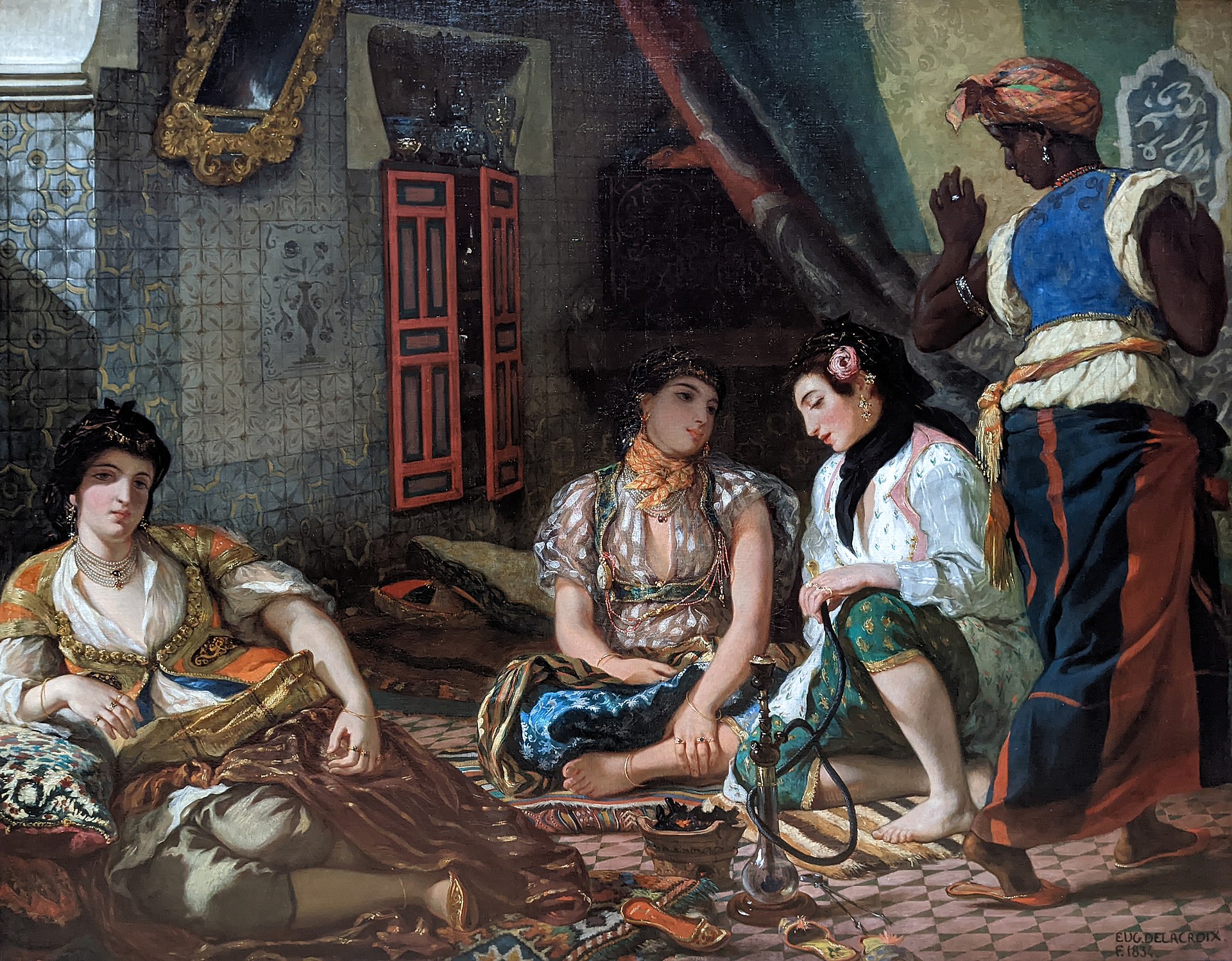
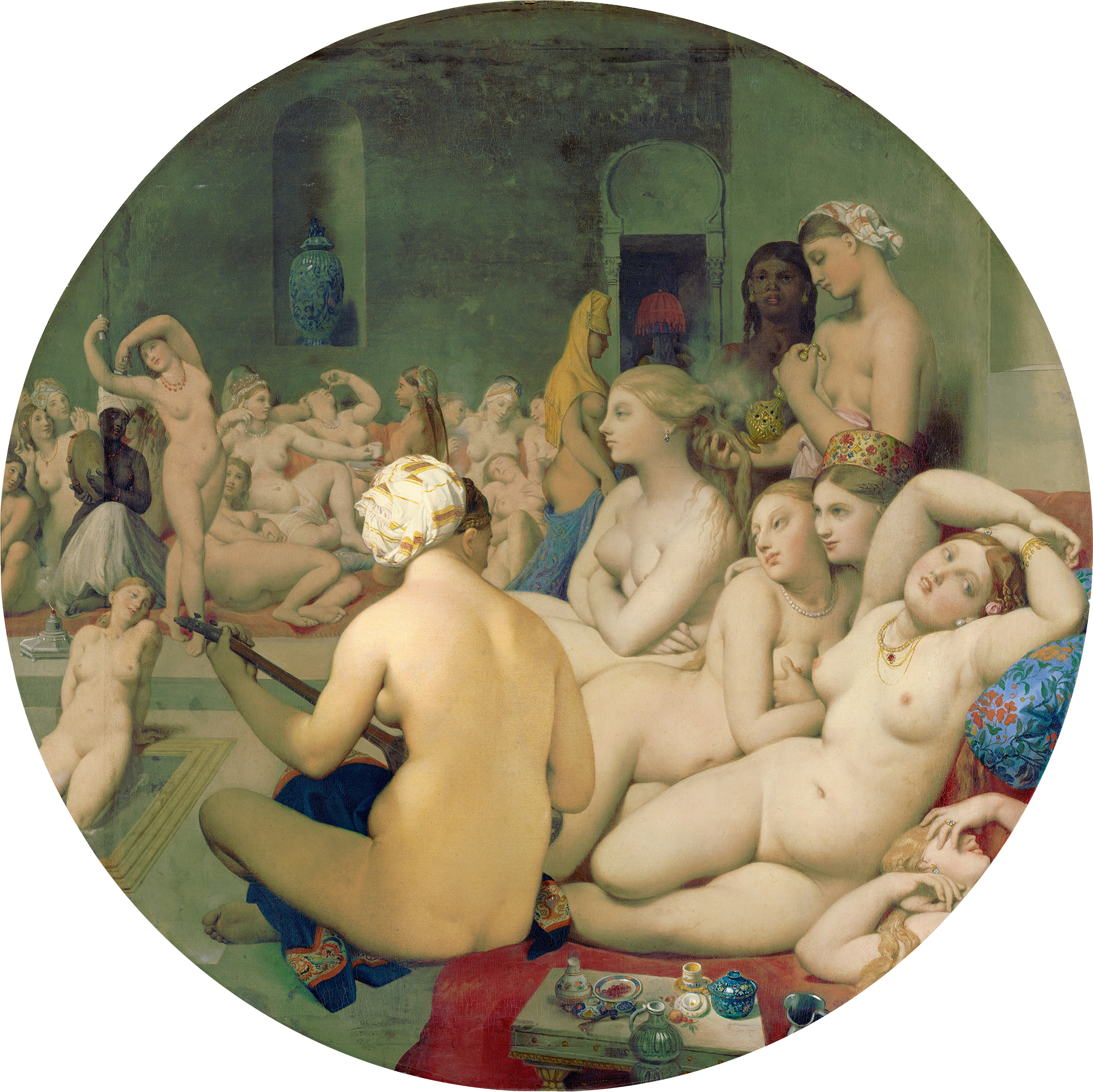
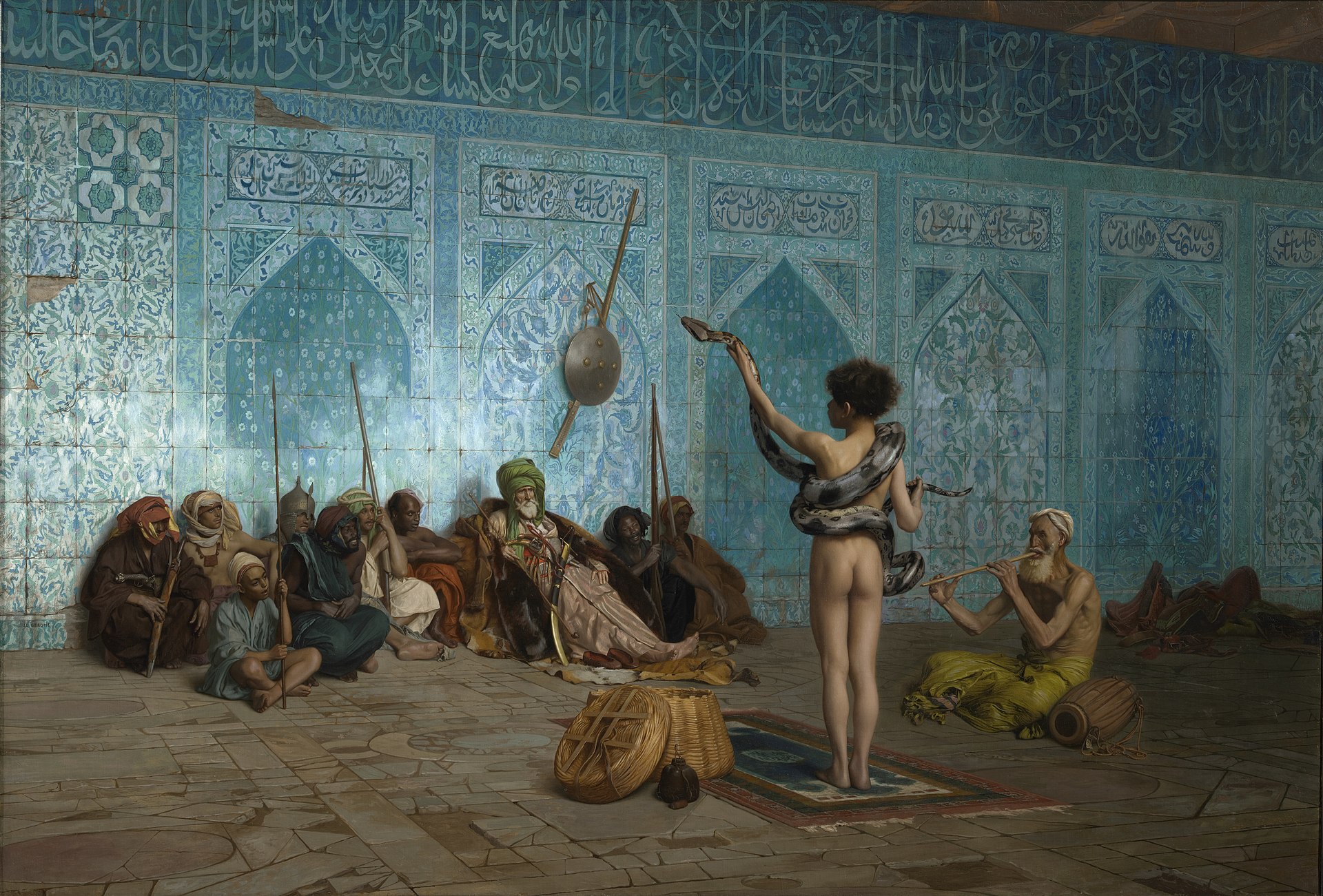
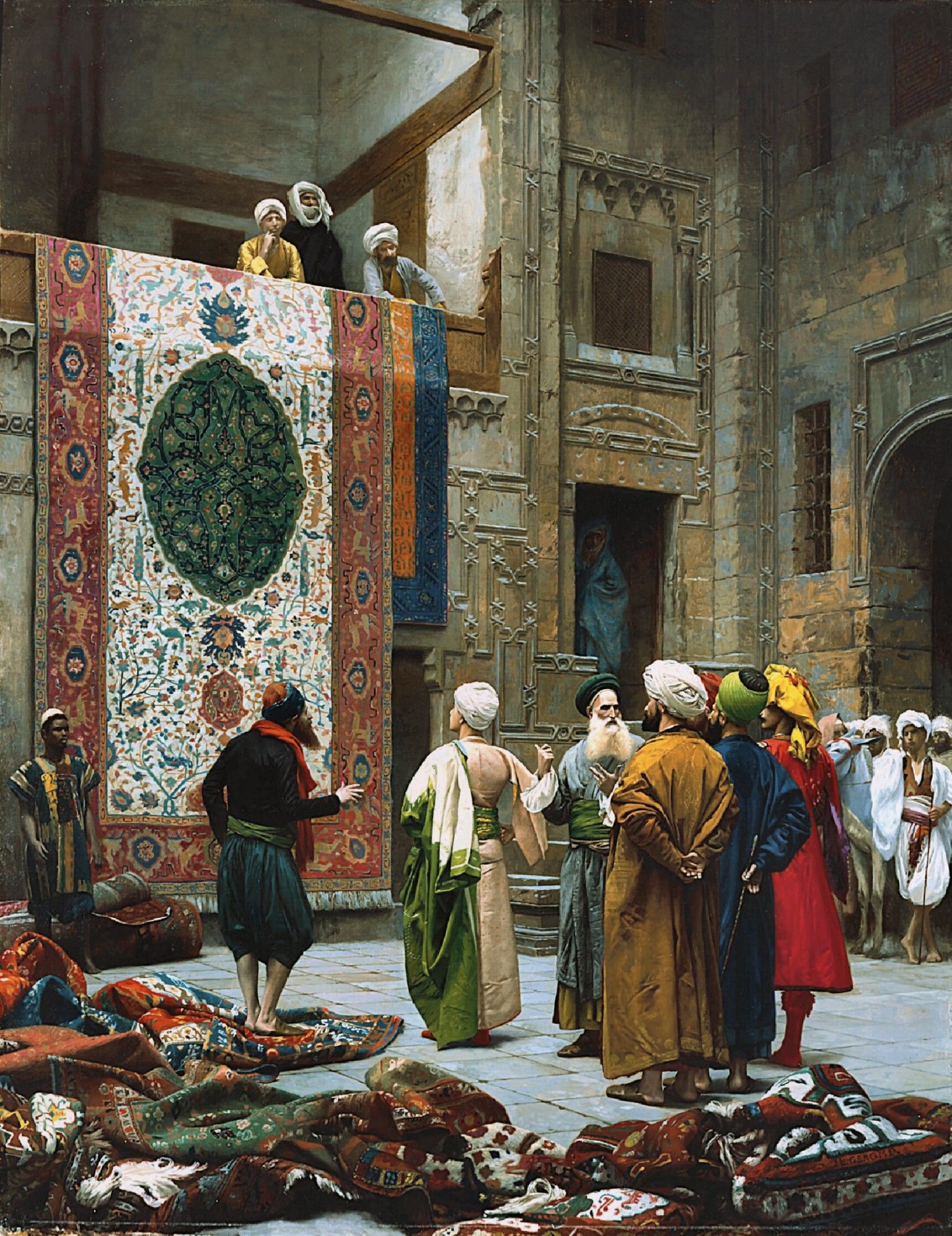
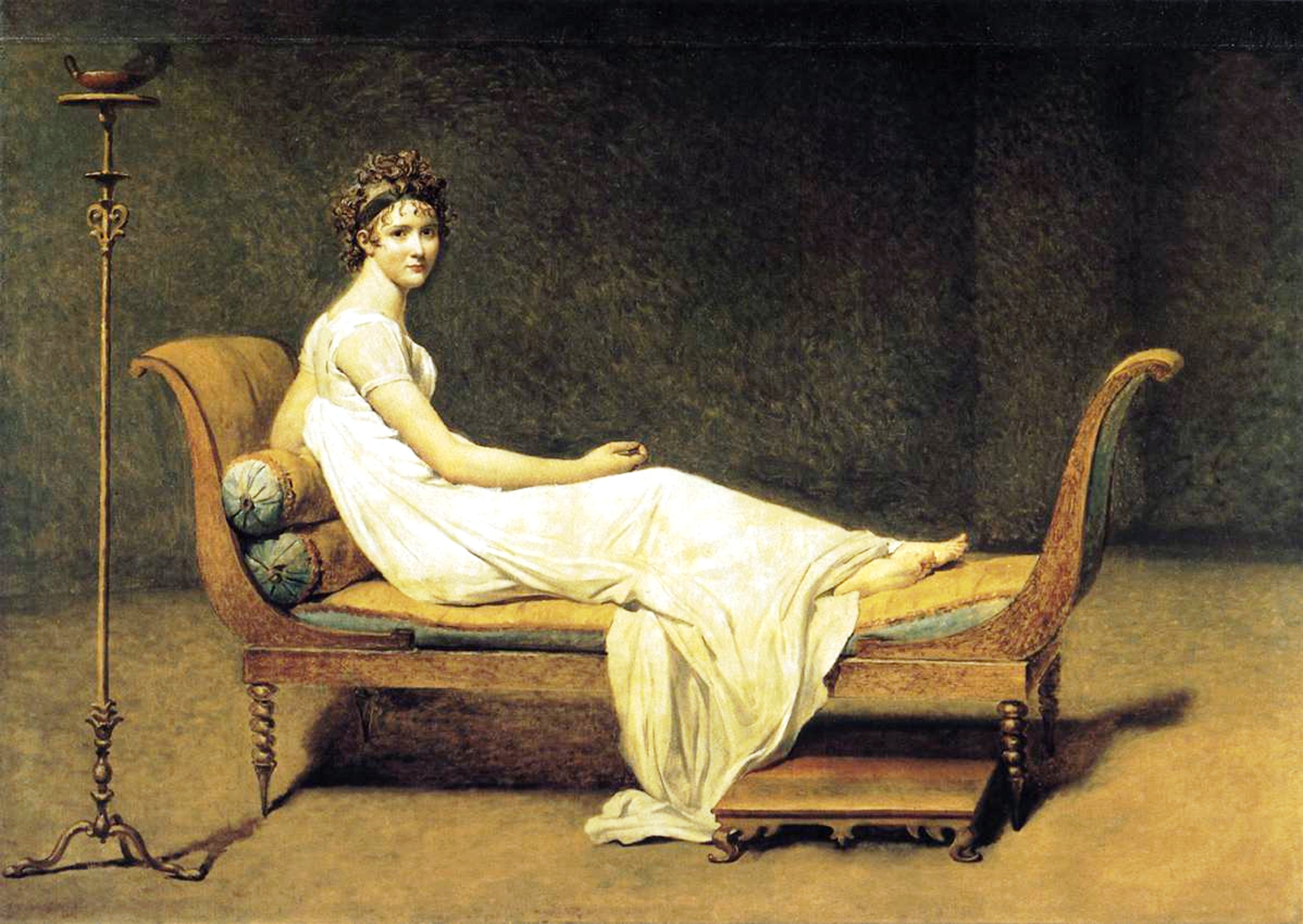
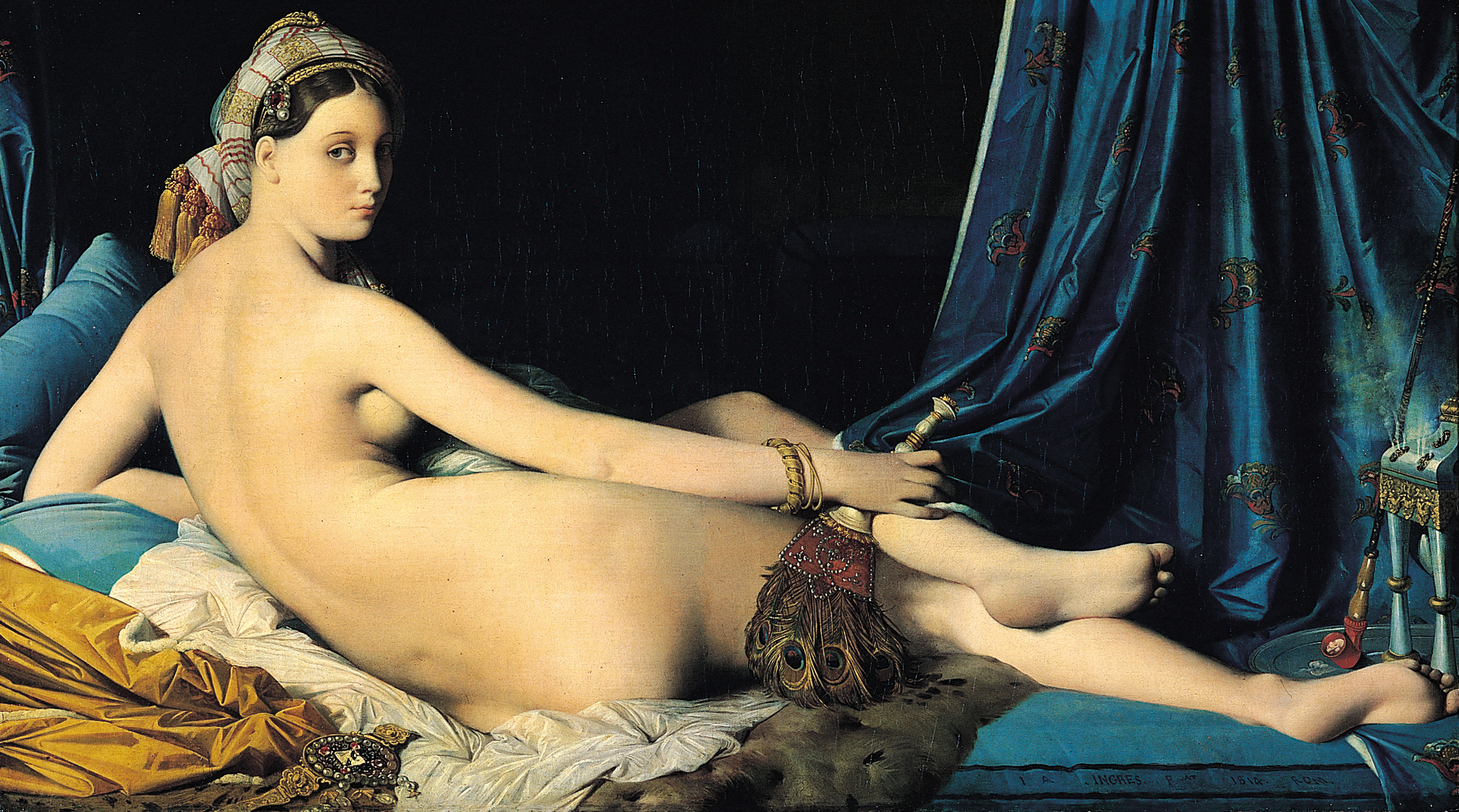
In France, painters catered to this interest as seen in the collection of images below. You Take a few moments to look over these paintings, then submit a short written response for HW.

  • Jacques-Louis David, Madame Récamier (1800): this is a Neoclassical piece provided by way of contrast to the later works in this collection. Note the Roman costume and setting.
  • Jean Auguste Dominique Ingres, Grande Odalisque (1814). (Strickland provides an brief but interesting account of this image and its impact on tradition on pp 70-71.)
  • Eugène Delacroix, The Women of Algiers (1834).
  • Jean Auguste Dominique Ingres, The Turkish Bath (1852-62).
  • Jean-Léon Gérôme, The Snake Charmer (1879).
  • Jean-Léon Gérôme, The Carpet Merchant (1887).

Writing: Respond to ONE of the following prompts. Keep your response short, posting as a reply under the appropriate heading in the comments section:

  1. Point to a pattern you see in these images, then speculate as to its significance.
  2. Ingres lived in Europe all his life, working in Italy and France, while Delacroix and Gérôme both toured Africa and the Near East. Does this show in their work? Point to specifics, if possible.

Scientific Objectivity

Victorian Objectivity

Lest you come away thinking that the Victorians were wholly ruled by sentiment, it’s worth noting the counter-trend represented by clinical detachment, often under the mantle of science. This was a great era for empirical observation: Darwin’s 1851 On the Origin of Species mobilized bird beak measurements to shake the foundations of religious faith. And while sentimentality dominated in the arts, some poets and painters adopted the cold clinical pose of the scientist:

  • Robert Browning, “My Last Duchess” (1842): a dramatic monologue written from the point of view of Alfonso II d’Este, a Duke of the Italian Renaissance suspected of having killed his wife (details here).
  • Thomas Eakins, The Andrew Clinic, an unflinching painting of a surgery performed in front of an audience of medical students. Strickland has a sidebar presenting this remarkable painting on p86; I also recommend the close reading of the painting found here.

Victorian Mourning

Victorian Mourning

Public shows of grief came to predominate in both England and America in the 19th century. In America, the trend was encouraged by bloodshed during the Civil War (the Union paid to embalm fallen soldiers and ship them home for burial) and cemented by the assassination of President Lincoln, whose body travelled in state by railcar from Washington home to Illinois, greeted at every stop along the way by vast crowds of mourners. In Britain, the trend was cemented by the public example of Queen Victoria, whose beloved husband Albert died in 1861 at age 42. She wore black the rest of her reign, some 40 years; the MET in New York has one of her dresses in its collection: link.

Whereas today we spend a fortune on housing, the Victorians spent a fortune on death, as we saw during our visit to Highgate Cemetery. In addition to the expense of a funeral plot and stone monument, Victorians paid for mourning dress—a purpose-made outfit worn for a set period and then ceremoniously burned. If you decide to write on this topic for the interdisciplinary essay, novelist Tracy Chevalier provides an excellent summary of mourning etiquette here, information she learned in doing background research for a work of historical fiction. In addition, scholar Sarah Tarlow provides a brief history of garden cemeteries, available in the “Readings” folder of the course Blackboard site.

The Victorians’ preoccupation with death and mourning is particularly visible in the work of its most prominent poet, Alfred Tennyson. After his best friend, Arthur Hallam, died in 1833, aged 22, Tennyson spent the next 17 years producing a book-length poem wrestling with that loss, titled In Memoriam, A.H.H. obit. MDCCCXXXIII.

Reading: Three pieces by Tennyson mourning the loss of Arthur Hallam.

Writing: Respond to ONE of the following prompts. Keep your response short, posting as a reply under the appropriate heading in the comments section:

  1. Call our attention to a particularly moving line or detail from one of Tennyson’s poems of mourning.
  2. Tennyson originally conceived of In Memoriam with a different title, “The Way of the Soul.” Just based on the three poems here, do you discern a path or journey taking place in his mourning process?
  3. Wearing mourning was a public performance. But Tennyson published In Memoriam, A.H.H. obit. MDCCCXXXIII anonymously, shortly before assuming the title of Poet Laureate. Do these poems strike you as public or private expressions of grief?

Victorian Sensuality

Love and Death

While the Victorians have a well-deserved reputation for sexual prudery, their poetry and art are often suffused with sensuality—yet a sensuality mixed with thoughts of death and the grave.

Reading: Three Poems: note that Keats dates two decades before Victoria’s reign (1837-1901). His widely popular poem can be seen as setting a trend followed by later writers and artists.

Viewing: four Pre-Raphaelite paintings:

  • William Holman Hunt, The Lady of Shalott (1888-1905)
  • John William Waterhouse, The Lady of Shalott (1888)
  • John Everett Millais, Ophelia (1851)
  • Dante Gabriel Rossetti, Lady Lilith (1866-68)

Note: if you’re unfamiliar with the legend of Lilith or with the role of Ophelia in Hamlet, take a moment to google those names.

Writing: Respond to ONE of the following prompts. Keep your response short, posting as a reply under the appropriate heading in the comments section:

  1. Call our attention to a particularly moving line or visual detail from one these paintings or poems.
  2. At the end of Part II, the Lady of Shalott declares “I am half sick of shadows.” Unfold the significance of this key line.
  3. It’s hard not to come away from Rossetti’s “Goblin Market” identifying the goblins’ fruit with sexuality. What details in the poem help to create this association? On the other hand, what details in the poem complicate or undermine the association?

Empire and Commerce

Part 3: Commerce and Empire

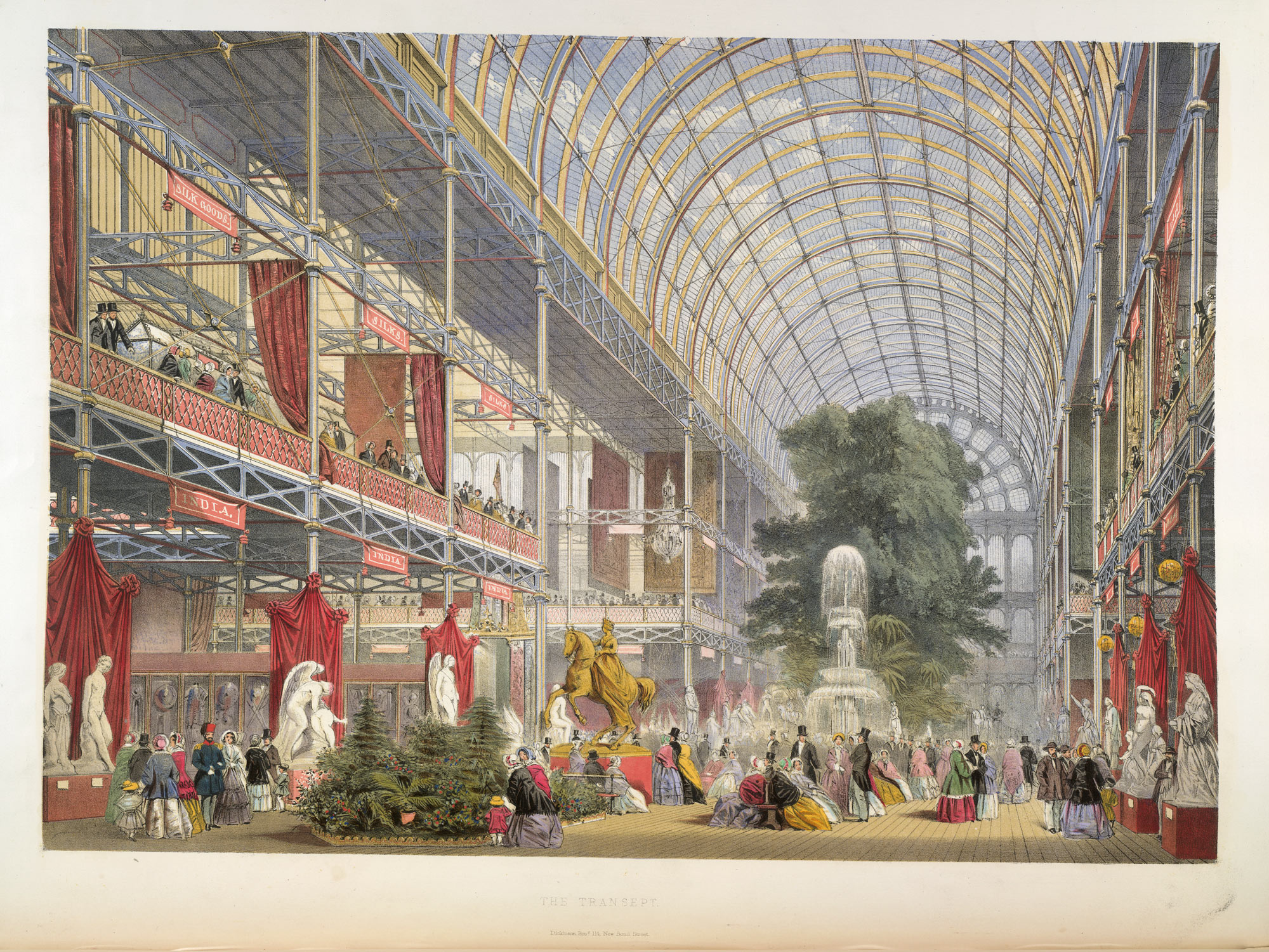
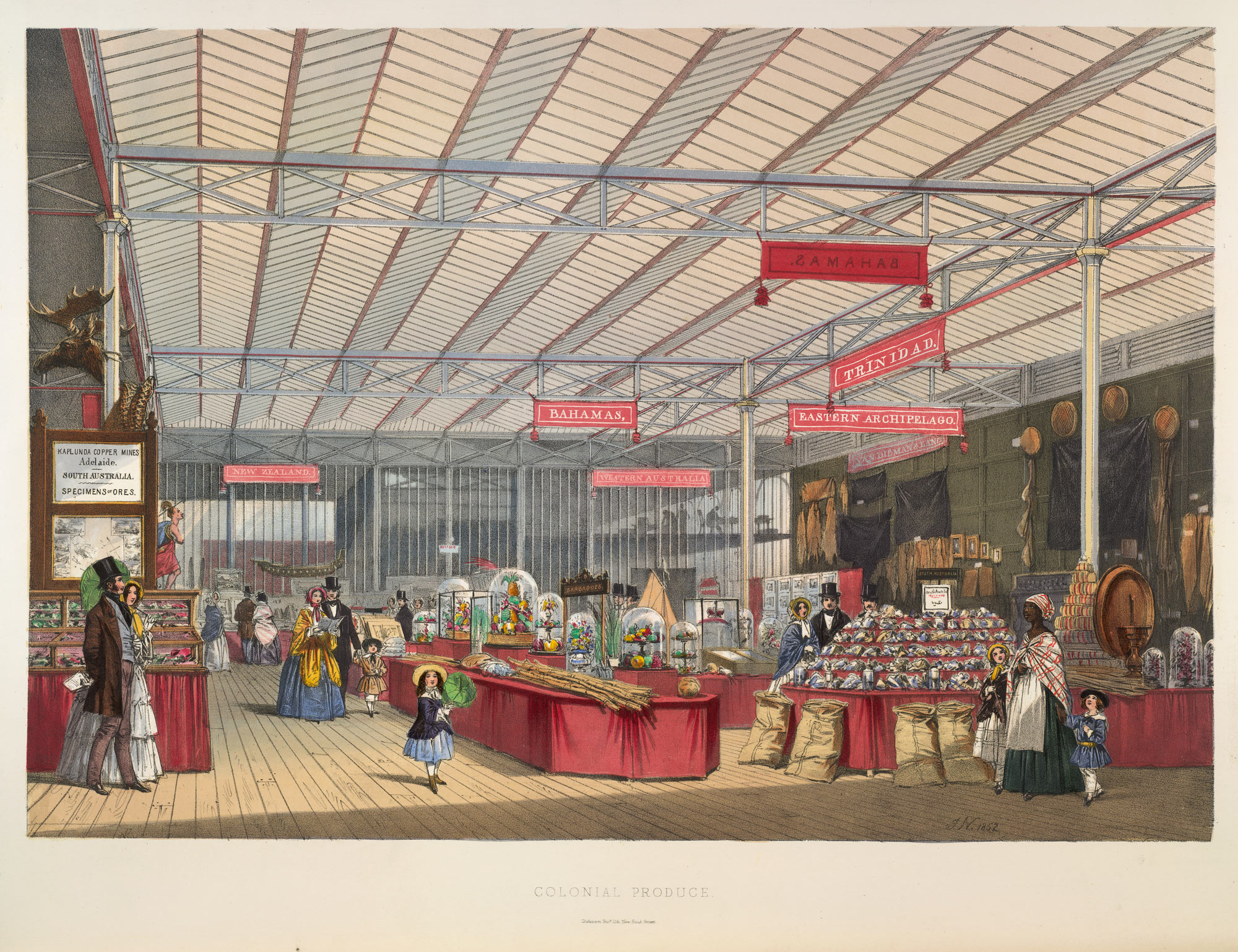
Whereas Victoria ruled over a rapidly expanding empire, her cousin Albert was the junior member of an obscure German noble house. When they married, the terms set by Parliament denied him any English title (though Victoria later proclaimed him “Prince Consort”). Yet Albert proved adept in the use of soft power, campaigning for liberal causes like free trade, educational reform, the end of child labor, and the worldwide abolition of slavery. These passions came together in his plan for the Great Exhibition of 1851, which brought together goods and technologies from around the world in a vast “Crystal Palace.”

Viewing: Period Images of the Crystal Palace

Credits:

  • Opening Ceremony: Eugene-Louis Lami, watercolor 1851 (link).
  • Interior 2: J McNeven, print 1851 (link)
  • Remaining images: Hague, Nash and Roberts, illustrated book (link)

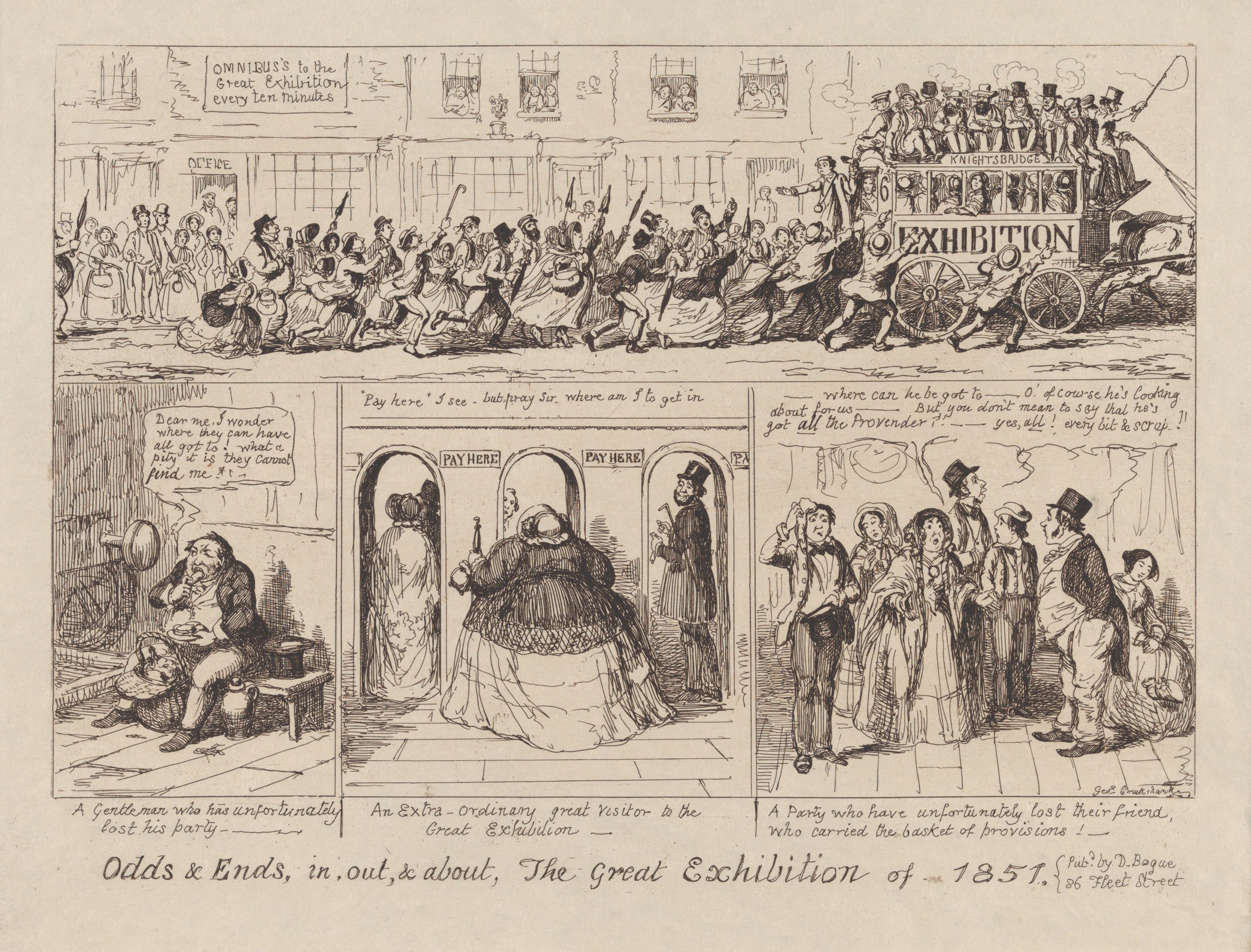
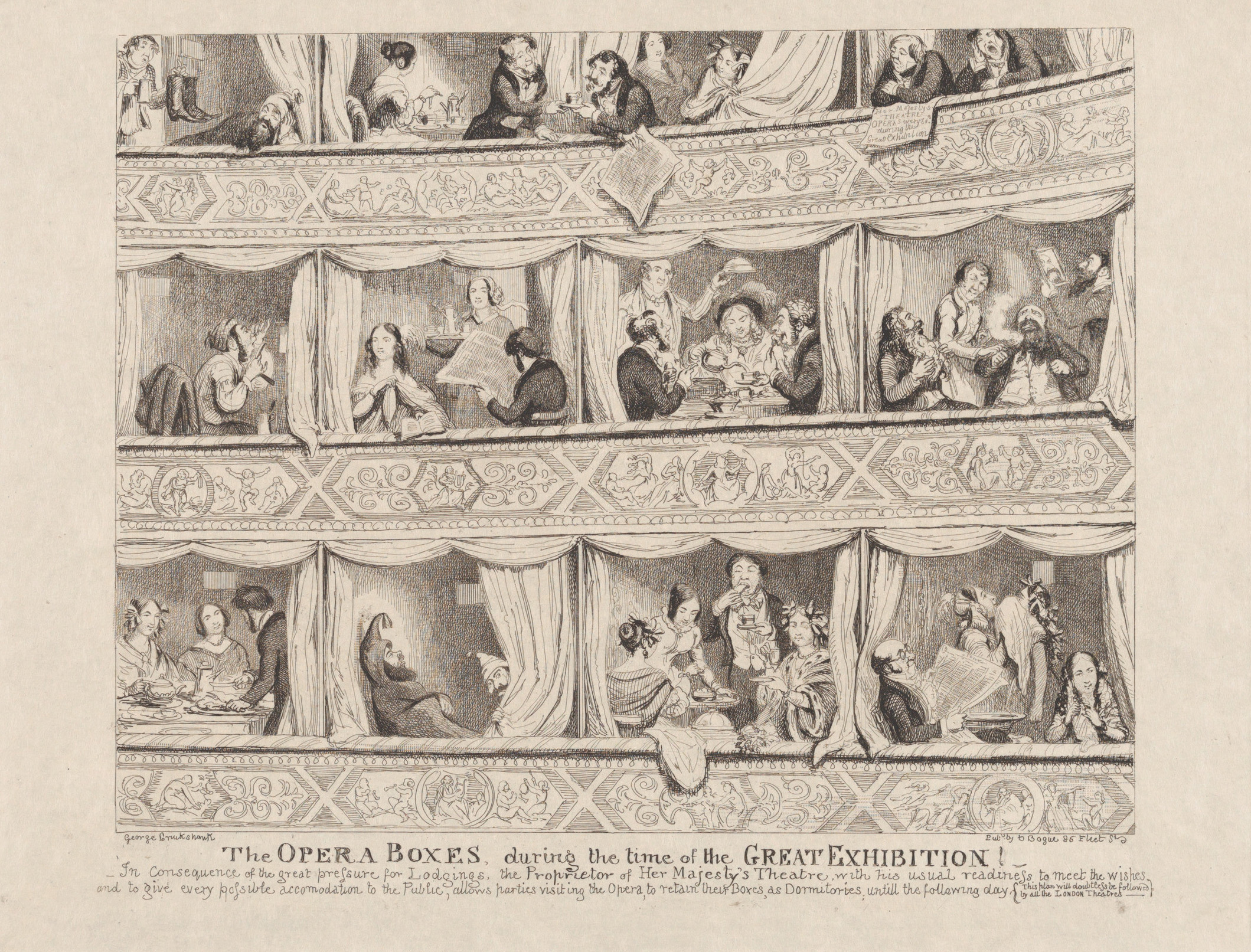
Viewing: Period Cartoons

Credit: George Cruikshank, 1851 (link).

Writing

  1. How did the Great Exhibition represent non-European cultures and peoples? Focus our attention on a particular detail from one of the images.
  2. What can you learn from the cartoons about public attitudes toward the Exhibition—or perhaps the larger world?
  3. How does this Exhibition compare to modern-day versions, such as Disney’s Epcot Center?

Mourning and Sensuality

Part 1: Mourning

Public shows of grief came to predominate in 19th century Britain, as epitomized by the 40-year long period during which Queen Victoria mourned the death of her beloved husband Albert, beginning in 1861 and ending with her death in 1901. Her example helped elevate the practice, as did the work of the era’s most prominent poet, Alfred Tennyson. After his best friend, Arthur Hallam, died in 1833, aged 22, Tennyson spent the next 17 years producing a book-length poem wrestling with that loss, titled In Memoriam, A.H.H. obit. MDCCCXXXIII.

Reading: Three pieces by Tennyson mourning the loss of Arthur Hallam.

Part 2: Sensuality

While the Victorians have a well-deserved reputation for sexual prudery, their poetry and art are often suffused with sensuality.

Reading: Two Poems

Viewing: four Pre-Raphaelite paintings:

  • William Holman Hunt, The Lady of Shalott (1888-1905)
  • John William Waterhouse, The Lady of Shalott (1888)
  • John Everett Millais, Ophelia (1851)
  • Dante Gabriel Rossetti, Lady Lilith (1866-68)

Note: if you’re unfamiliar with the legend of Lilith or with the role of Ophelia in Hamlet, take a moment to google those names.

Writing: Respond to ONE of the following prompts. Keep your response short, posting as a reply under the appropriate heading in the comments section:

  1. Call our attention to a particularly moving line or detail from one of Tennyson’s poems of mourning.
  2. At the end of Part II, the Lady of Shalott declares “I am half sick of shadows.” Unfold the significance of this key line.
  3. It’s hard not to come away from Rossetti’s “Goblin Market” identifying the goblins’ fruit with sexuality. What details in the poem help to create this association? On the other hand, what details in the poem complicate or undermine the association?

History Painting

Neoclassical and Romantic History Painting

  • Jacques-Louis David, The Death of Marat (1793): mourns the assassination of Jean-Paul Marat, a leading revolutionary, by a partisan from a rival group.
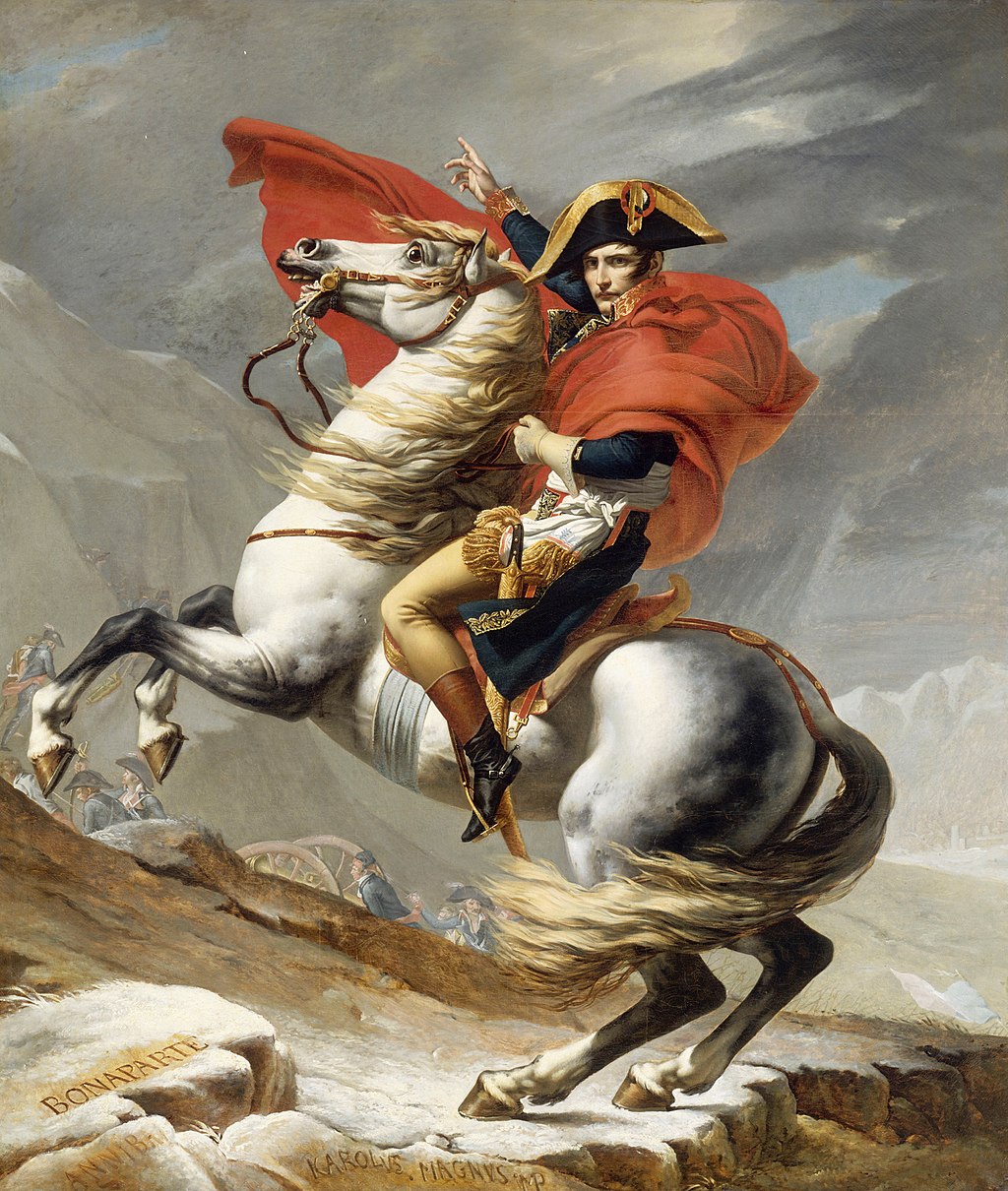
  • Jacques-Louis David, Napoleon Crossing the Alps (1801-05): celebrates Napoleon’s return to the front lines in the battle with Austria over control of northern Italy, after seizing political power in the Coup of 18 Brumaire in December 1799.
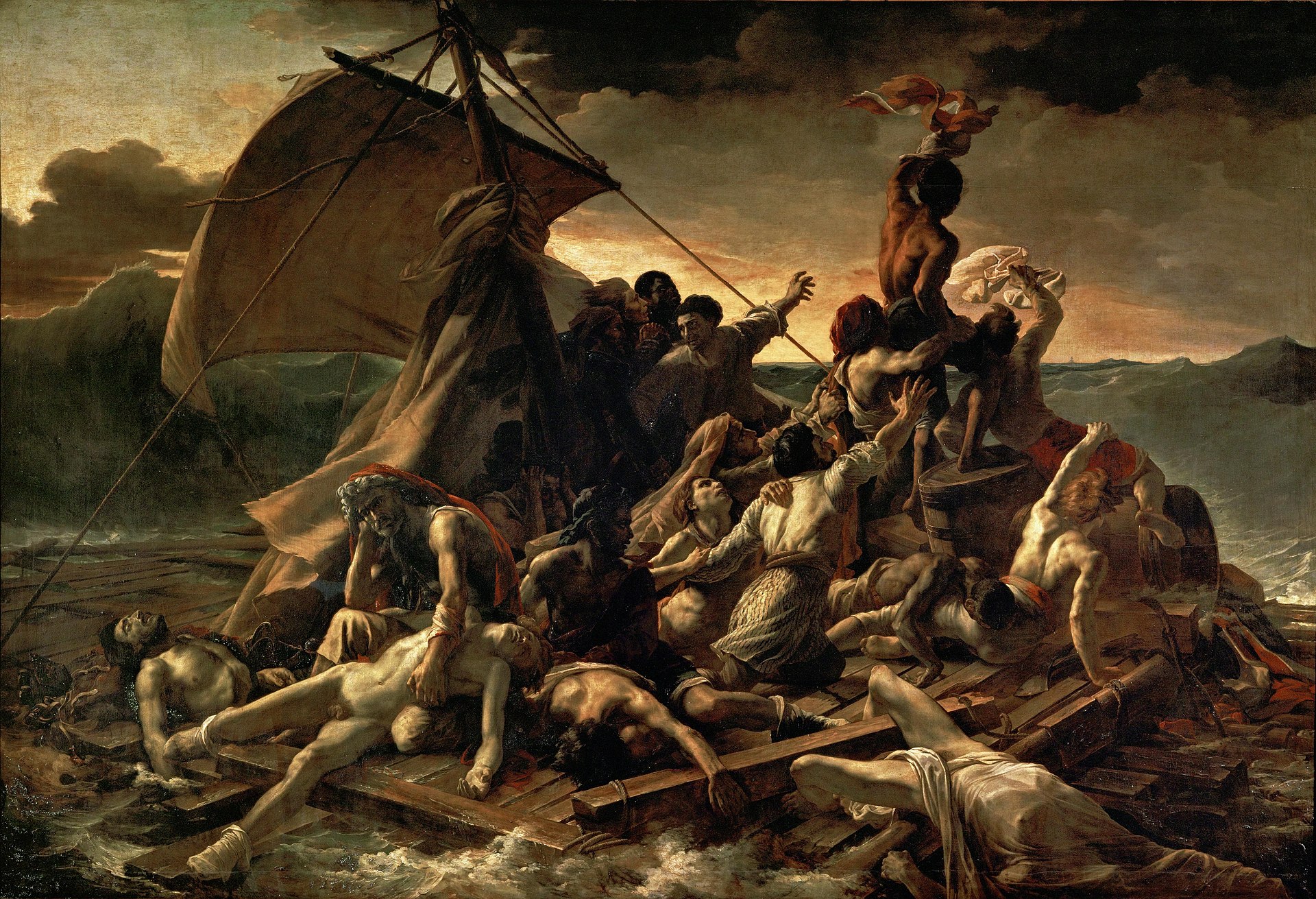
  • Théodore Géricault, The Raft of the Medusa (1818): depicts the survivors of the naval frigate Medusa, which ran aground due to the incompetence of the Captain in 1816.
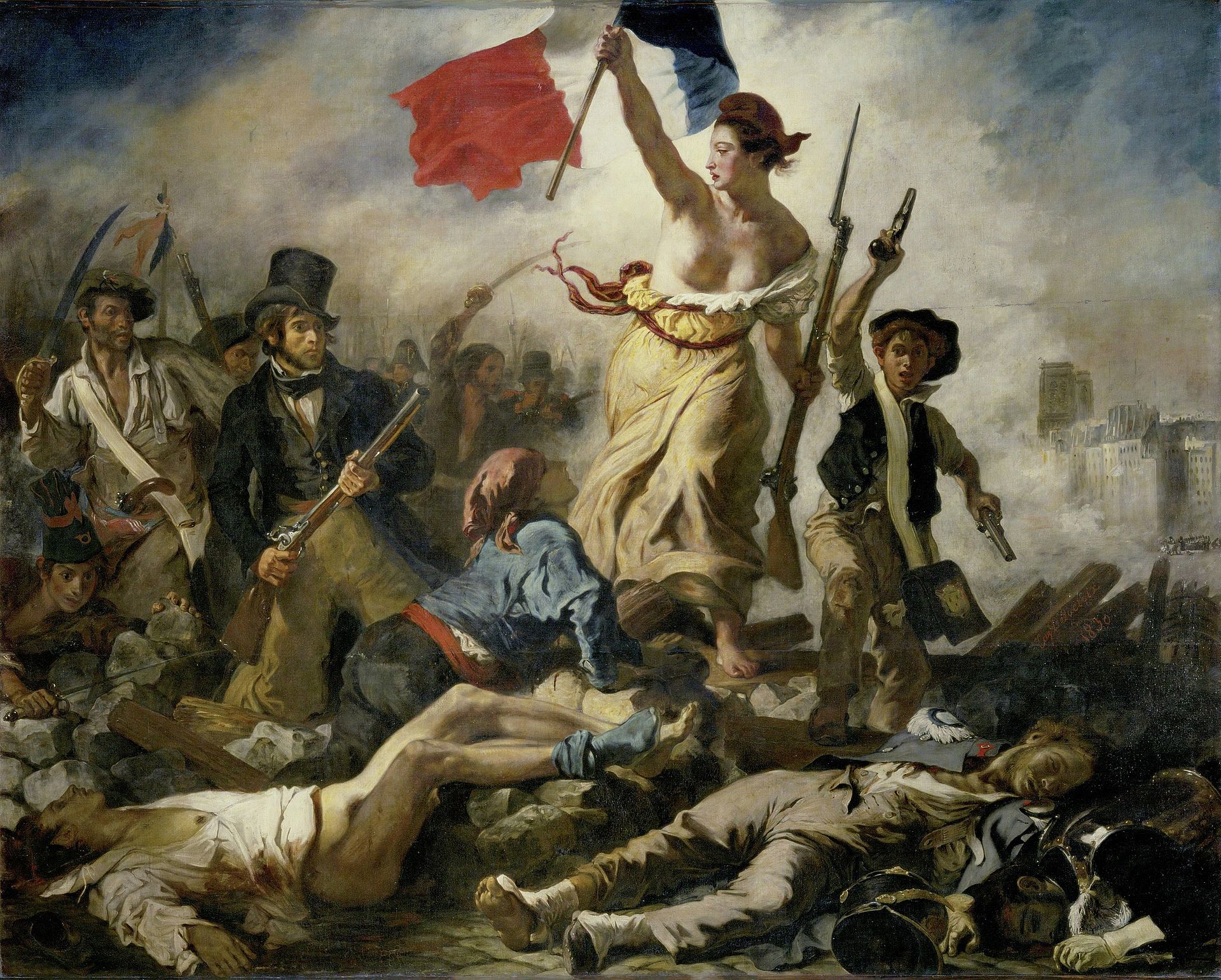
  • Eugène Delacroix, Liberty Leading the People (1830): commemorates the July Revolution of 1830 that deposed King Charles X.

For more on these works, check out Strickland 68-69 and 76-78.

Imagining Empire

Imagining Empire

Ancient empires were a recurring topos for the poets and artists of the nineteenth century. In reflecting on the magnificent art of a past age, they pondered the value of the humanities for present-day human beings. And in the great sweep of past human empires, they found a model for pondering the future of their own nations.

Note: we read these poems last semester. But I’m asking new questions about them.

Reading:

  • Percy Bysshe Shelley and Horace Smith, two poems titled “Ozymandias,” 1817 (link)
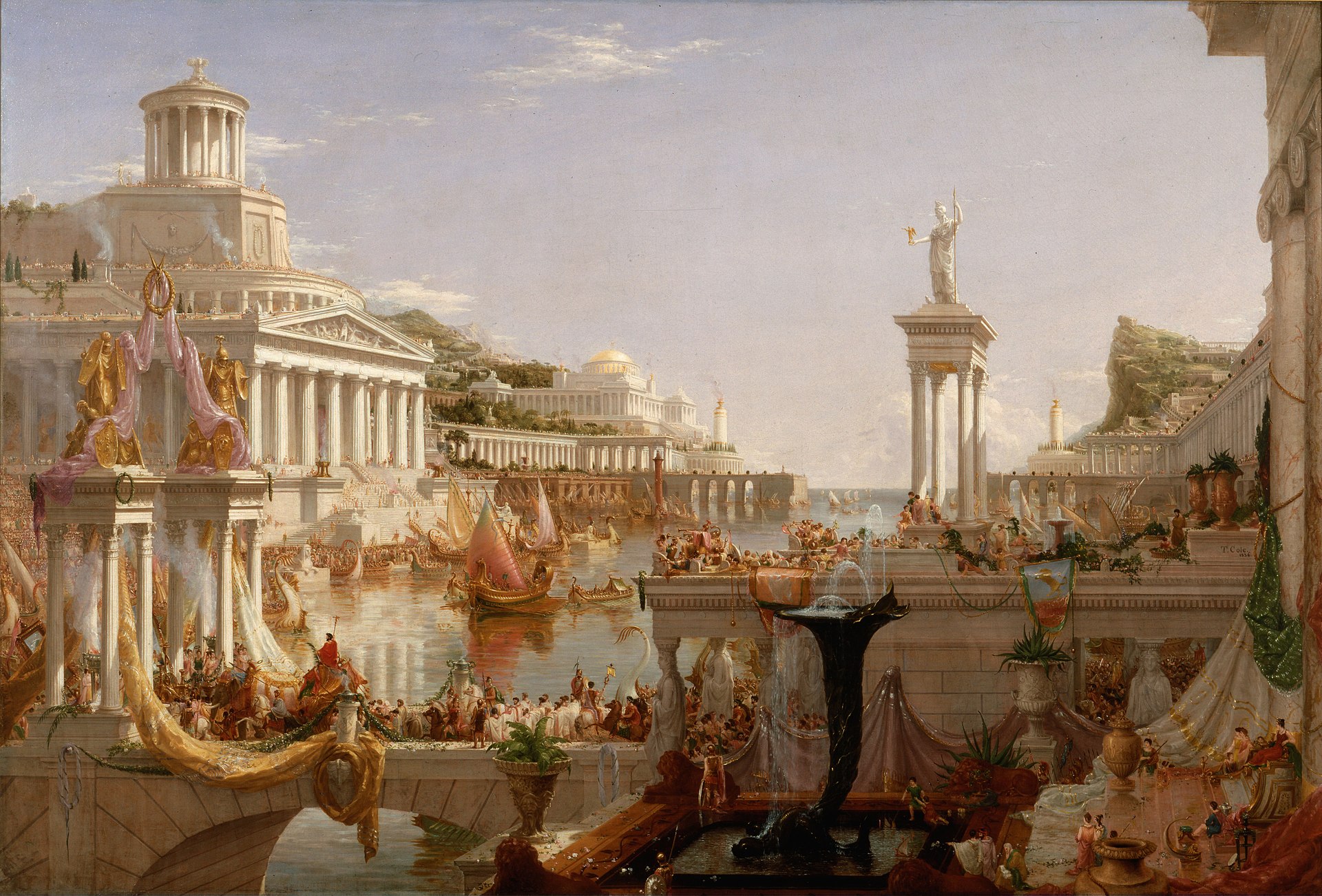
  • Thomas Cole, The Course of Empire series, 1833–1836 (link)

Writing: Respond to ONE of the following prompts. Keep your response short, posting as a reply under the appropriate heading in the comments section:

  1. All three artists powerfully evoke the era of decay after the fall of a great empire. What do their visions share in common? Alternatively, how do they differ? Either way, call our attention to a particular set of details.
  2. Just as in the preceding section, Shelley and Smith wrote these sonnets in response to an ancient work of art being shipped to England for display at the British Museum. Assuming that they can be read as speaking to that controversy, what do they seem to be saying? Focus on particular details from ONE poem or the other.

Debating Museums

Museums and the Legacy of Imperialism

The Parthenon Marbles were transported to Britain over the course of a decade beginning in 1801 under the direction of Lord Elgin, Britain’s ambassador to the Ottoman Empire. The Parthenon had lain in ruins for over a century, many of the sculptures from its marble frieze fallen to the ground after the building was used to store gunpowder and then struck by a shell during a war. Elgin claimed to have received permission for the dig from local Ottoman officials, and his ownership was ratified by Parliament when it purchased them for the Crown, designating the British Museum as trustee on the condition that the collection be displayed as the “Elgin Marbles.”

The presence of the marbles in London has been a matter of international debate since 1983, when the Greek parliament formally requested their return. Pressure intensified in 2009, when Greece completed construction of an on-site museum, and again in the run-up to the 2012 Olympics in London. As detailed in a NYTimes article, “The debate has only deepened in recent years as the actions of old empires have come under new scrutiny, and restitution battles have come to challenge the foundations of Western museums” (link). Some of these battles involve ancient artifacts like the Rosetta Stone, which Egypt in 2003 requested to be returned. Others involve ritual objects taken from living cultures, as for example the Benin Bronzes.

Viewing: some famous acquisitions to the British Museum during the nineteenth century.

Reading: recent NYTimes coverage of museums and the legacy of 19th century imperialism.

Writing: Respond to ONE of the following prompts. Keep your response short, posting as a reply under the appropriate heading in the comments section:

  1. What do the four images included above suggest about public enthusiasm toward archaeology back in the nineteenth century? To put it another way, what emotions do these images evoke: wonder? national pride? something else? In your response, focus our attention on particular details in ONE or at most TWO of the images.
  2. Click over to the British Museum excursion (top right) and use the embedded links to examine some of the artifacts you’ll have a chance to see on your visit. Focusing on one artifact in particular, why is it important for objects like this one to be on public display? What positive cultural function do museums serve in today’s society?
  3. The articles linked above all challenge the claim of museums to being the ideal repository of cultural artifacts. Citing one article in particular, paraphrase the critique being levied against museums.